


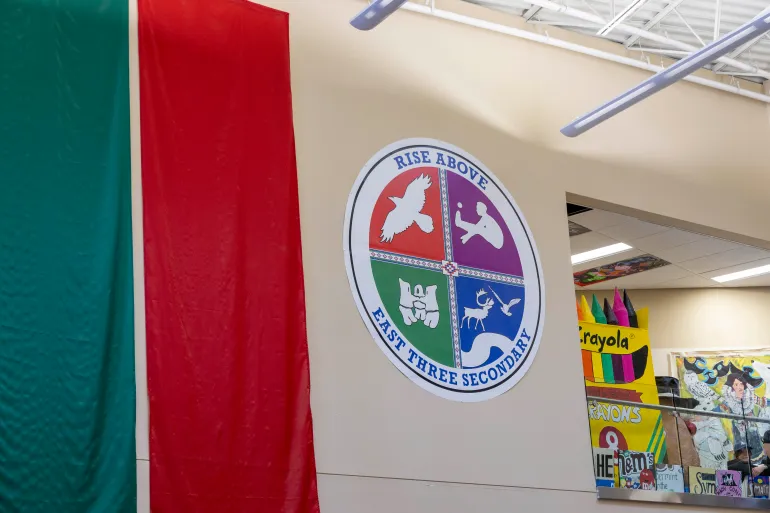
A GNWT distance learning program for high school students will soon be offered in Fort Smith, Hay River, Inuvik and Yellowknife as part of the program’s transition to British Columbia’s education curriculum.
In a news release last month, the GNWT said the Northern Distance Learning program, which has operated since 2014, was previously only available to schools in small and isolated NWT communities.
The GNWT said full eligibility for all students in grades 10 to 12 will begin in the 2026-27 school year.
Cabin Radio spoke with Ed Hartley, the program’s online blended learning coordinator, about the Northern Distance Learning program and what students can expect when they enrol.
“It’s not for every single student, but at the same time we’re trying to be flexible. We’re trying to increase everything so that we can reach out to more and more students,” said Hartley.
Advertisement.
Advertisement.
When they enrol in a Northern Distance Learning course, students are given a Microsoft Surface Pro tablet, noise-cancelling headphones and access to learning programs like Moodle and Microsoft Teams, Hartley said. He said some students experience most of high school in the program, while others may only take one or two courses.
Hartley said what makes the NWT’s distance learning program different from others is that it is offered synchronously – meaning courses are taught live through Microsoft Teams.
“We try to mimic what it is to be in a face-to-face class, but in an online environment,” he said.
Hartley said the Northern Distance Learning program sees a higher success rate for credit acquisition – students passing courses they are enrolled in – compared to asynchronous distance learning programs.
Advertisement.
Advertisement.
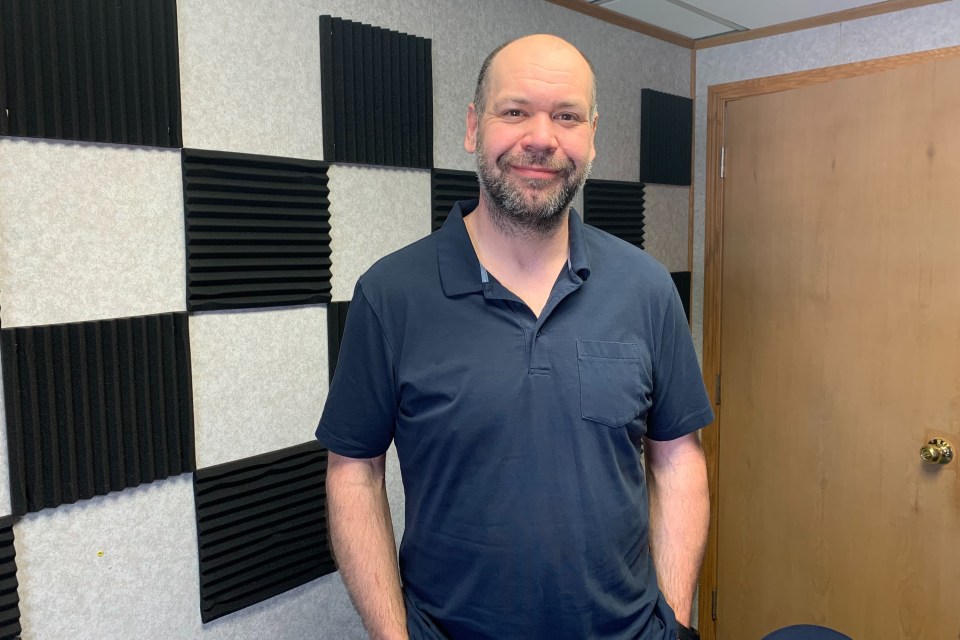
According to Hartley, 23 schools were signed up to the Northern Distance Learning program before its announced expansion, but not every school participates every semester.
The program is taught by five teachers based at East Three Secondary School in Inuvik, and each course is limited to about five students from each school. Hartley said this is to encourage schools to offer certain classes in person if there is a high demand.
“NDL is not designed to replace teachers. We will always say the best place for students to learn is with a teacher in a classroom. We’re the solution when that’s not possible,” he said.
The GNWT has released its course list for the 2026-27 school year, which includes more applied design schools technology courses, like photography or film and television, and a pilot project to offer Grade 10 math over two semesters.
Hartley said this has been done with Grade 10 English language arts – now called English Indigenous peoples. The material is offered in one semester for four credits or split over two semesters for eight credits.
While Hartley said asynchronous programs can leave students “completely on their own” to figure out learning the material, he said he is looking at designing some asynchronous courses as a pilot project in the next few years.
Evaluation recommends changes
Changes to Northern Distance Learning are being guided by an evaluation of the program completed in 2025.
The evaluation, which took place over 2023-25 and used data from 2018-22, identified some unexpected outcomes of the Northern Distance Learning program: improved student confidence and personal growth, exposure to broader opportunities, peer collaboration and community building.
Advertisement.
Advertisement.
“Students benefit from live classes, real-time interaction with teachers, and chances to connect with other students in different communities,” the GNWT said.
The evaluation issued seven recommendations on how to improve the program. The GNWT said it is taking action on the recommendations, though it did not agree with all of them.
The recommendations relate to student attendance and engagement, consistency in data collection and reporting, and the availability of in‑person supports at the school level.
The one recommendation with which the GNWT did not agree involved exploring opportunities to redirect some Northern Distance Learning program funding, following years in which some budget line items were underspent.
In its response, the territory said it requested more funding in the 2019-20 fiscal year because it was going over budget, then schools struggled to hire in-class support persons, “which was outside of the control” of the GNWT.
The GNWT reduced the 2024-25 budget to eliminate the surplus requested in 2019, alongside GNWT funding for in-class support persons and the in-person post-secondary bridging experience.
“Further reductions to [the Northern Distance Learning program]’s budget would continue to erode the program’s effectiveness in providing equitable access to education for students in small communities and the GNWT’s efforts to address reconciliation in education,” the GNWT said.
Hartley said he could see the effect on students in the Northern Distance Learning program of not having in-class support persons.
Advertisement.
Advertisement.
“I’m hoping that things will change and they’ll bring back that funding, because it made it easier, especially for smaller schools,” Hartley said.
He said the in-class support helped not only students, but also the teachers, who used the in-class support persons to learn about what was happening in the physical classrooms.
In its response to another recommendation, related to creating a supportive environment, the GNWT said it is considering requesting that the financial management board reinstate funding for in-class support persons after the GNWT collects data from the 2025-26 school year.
