


Inuit Tapiriit Kanatami has released a poverty reduction strategy for Inuit Nunangat and recommended changes to how Nutrition North Canada operates in the region.
“The strategy is really grounded in an Inuit-defined whole person approach that considers culture, well-being, family, community, livelihoods, leadership, and self-determination,” said Lauren Goodman from the national Inuit organization, also known as ITK.
“We’re hoping that it will be a roadmap for governments, Inuit organizations, industry, and others to partner with us to reduce poverty in Inuit Nunangat.”
The strategy identifies three action areas: economic participation, cost of living and income security, and social services and community infrastructure.
“With renewed national interest in Arctic development, Canada must invest in Inuit communities and finally bring Inuit Nunangat into the rest of the country,” the strategy stated.
Advertisement.
Advertisement.
Goodman said work on the poverty reduction strategy began in 2020 with the development of a Inuit Nunangat market basket measure. A market basket measure is a data set used by Statistics Canada that acts as the country’s poverty line. Until 2021, there was no market basket measure for the NWT and Yukon.
Goodman said the federal market basket measure lacked considerations for the realities of Inuit in Inuit Nunangat.
“Inuit have a different perspective on poverty than maybe a lot of other people have, in that it’s not just about the amount of money, amount of income, and not just about the cost of living, but it’s about a whole person approach,” said Goodman.
An example Goodman provided is that while the federal measure considers bus fares to get to appointments, the ITK version replaces that with costs associated with ATVs or snowmobiles.
Advertisement.
Advertisement.
According to the ITK market basket measure, 41 percent of families in Inuit Nunangat in 2023 had incomes below the poverty line. That compares to 11 percent of Canadians overall.
The poverty reduction strategy includes actions for the federal government, Inuit organizations, industry and partners “to create long-term lasting change and improve poverty in Inuit communities.”
Even so, Goodman said not all of the recommendations will be accomplished in five years, which is when the strategy will be re-evaluated.
‘Build a better bridge’
Accompanying the poverty reduction strategy, ITK also released an Inuit-led framework to replace Nutrition North. This document outlines seven recommendations for a new federal food subsidy program in Inuit Nunangat that’s evidence-based and uses a whole-of-government approach.
Nutrition North is an existing federal subsidy designed to bring down the cost of certain food items. The subsidy is provided by Ottawa to stores, which are expected to flow the subsidy through to customers.
“Food insecurity is so significant in Inuit communities,” said Goodman.
“I don’t think people realize that there are fragmented approaches across the federal government that are trying to address it, but nothing specifically – no federal program, no federal minister – that’s responsible for trying to improve it.
“If you have a bridge that’s not helping you get where you need to go, you don’t repaint that bridge and hope for a different outcome. You build a better bridge, and that’s what we’re hoping to do with this framework.”
Advertisement.
Advertisement.
The framework recommends the federal program offer a food freight and transportation cost subsidy instead of a food subsidy for retailers. ITK also said the federal government should regulate food prices. If prices do need to be increased, this should be justified “based on legitimate cost pressures,” the framework asserted.
ITK wants a new federal food security program to encourage more co-operative or locally owned businesses, and a way for Inuit to get food subsidies directly.
“Rather than relying primarily on retailers to pass savings on to communities, those financial supports and other supports would be directed right at families, so that they can feel the impacts,” said Goodman.
Eighteen communities in the NWT access Nutrition North subsidies during part or all of the year. Subsidy rates depend on the community’s location, products being sold, and how goods are transported.
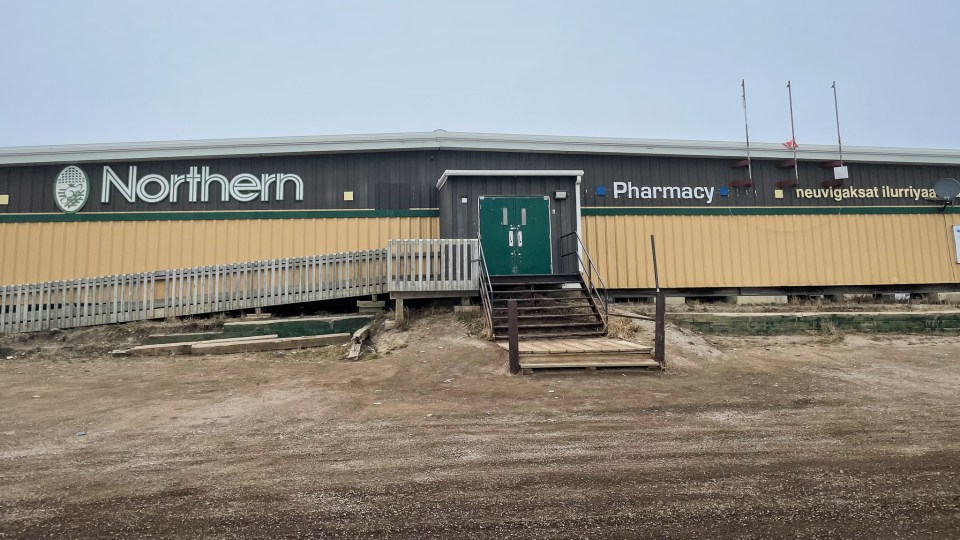
A spokesperson for the North West Company, which operates NorthMart, Northern Stores and Northern Quickstop stores, said its stores try to pass on the Nutrition North subsidy “directly to customers through lower shelf prices.”
The spokesperson said increased costs to get food to isolation communities and inflation mean that food has become more expensive.
“The last meaningful update was in early 2020, and since then, inflation has steadily eroded its impact,” the spokesperson said.
“The absence of an inflation-adjustment mechanism has been identified repeatedly in discussions and reports, yet it has not been addressed.”
Advertisement.
Advertisement.
The North West Company said it has given its own recommendations to the federal government on how Nutrition North could be strengthened.
The company’s recommendations include increasing investments in communities where the “current subsidy levels fall short of actual cost pressures,” expanding the program’s eligible communities, and improving the public’s understanding of how the program works.
“These are measures the federal government can act on directly and relatively quickly, with immediate impact on affordability,” the company’s spokesperson said.
Program reviewed in 2025
Goodman said ITK doesn’t want to get rid of Nutrition North across the country, only reframe how the program is carried out in Inuit Nunangat.
There are aspects of Nutrition North ITK wants to keep in the new program, like the Harvester Support Grant and Community Food Programs Fund. The federal government’s website said these funds were created through collaboration with Indigenous and northern partners in 2020 and 2022 respectively.
The federal government evaluated Nutrition North in 2025, declaring it had “achieved important progress” since 2020 but pointing to “fundamental weaknesses in governance, subsidy design, and coordination.”
The evaluation issued five recommendations, the first being to incorporate Nutrition North “within a whole-of-government food security approach for the North.”
Goodman said the federal government is working to reform the program. She hopes Ottawa uses ITK’s recommendations when making changes.
“We really put a lot of effort into getting this framework out now to help inform the changes that they are currently making to the program,” she said.
Nutrition North did not respond to Cabin Radio’s requests for information on the work to reform the program and whether that work would include ITK’s recommendations.
