


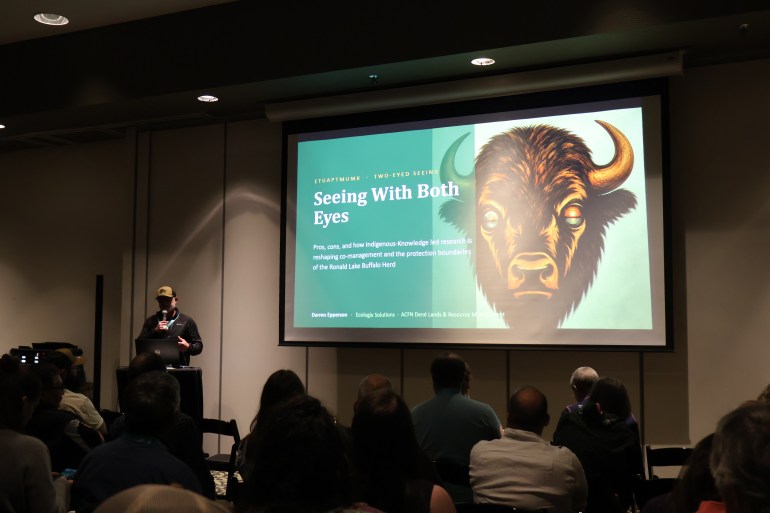
Researchers and Indigenous knowledge holders gathered in Yellowknife this week to explore new ways of understanding caribou populations at the North American Caribou Workshop.
Elder Leon Andrew of Tulita, who now lives in Norman Wells, attended a presentation on DNA research being used to track caribou in the Mackenzie Mountains. He explained that instead of using traditional collars, researchers are now exploring DNA methods to better understand how caribou move across the land.
He said the research is important because it can help people understand population size and the balance between males and females in the herds. In his view, this kind of information will be valuable for long-term wildlife management and planning in the North.
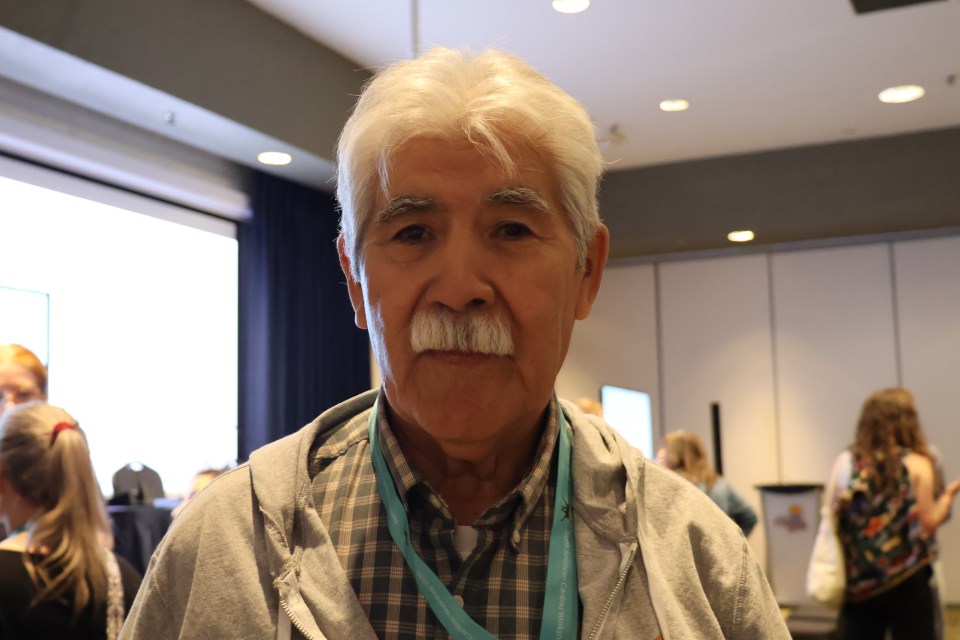
“The North is huge and the DNA can really help understand the different type of caribou that exist out there,” he said, adding that the research and data should be shared widely.
“This kind of information, I think our people can utilize it. We live among the wildlife, and there’s different wildlife that need to be monitored. It could be very helpful too because of disease coming around. It’s important that you have a healthy caribou population and healthy people.”
Advertisement.
Advertisement.
One of the most interesting parts for him was learning that similar caribou research is also happening in other parts of the country, including Saskatchewan and Ontario, not just within the territory.
Andrew said he was looking forward to attending more sessions at the conference and learning from other groups.
Lisette Delgado, a postdoctoral fellow at Trent University, is using genomic data to better understand the relationship between boreal and eastern migratory caribou in Ontario.
Speaking about her research, Delgado explained that the two are difficult to distinguish because they look similar and share overlapping ranges. Her analysis found they are also interbreeding.
Advertisement.
Advertisement.
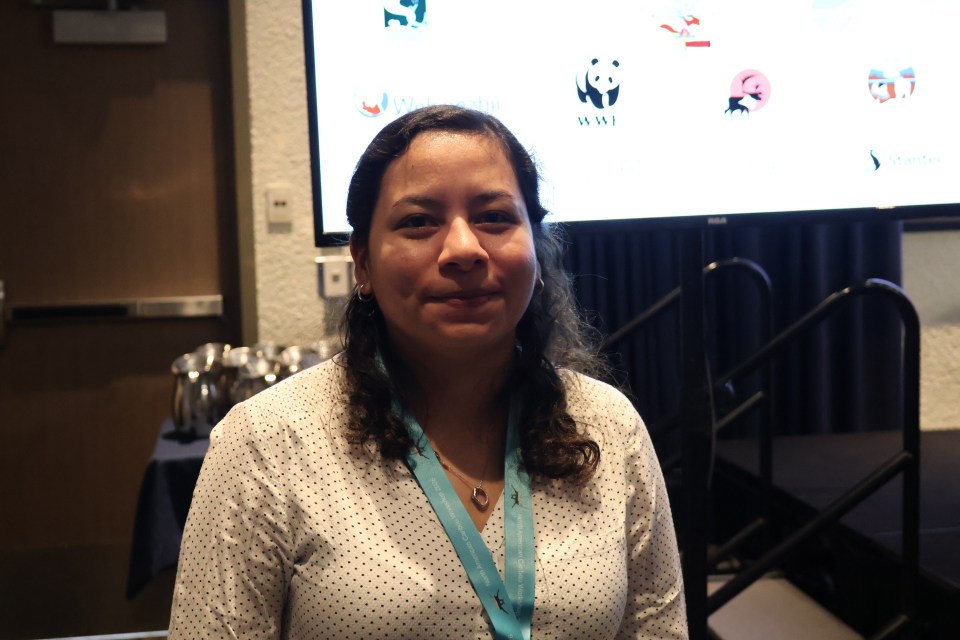
According to her, the findings suggest the situation is more complex than previously thought, and the geographic boundary between the two groups may be larger than expected. This could have implications for wildlife management, particularly when comparing populations in Ontario and Quebec.
Boreal caribou are currently listed as endangered, while eastern migratory caribou are classified as threatened. Delgado noted that if the two groups are mixing, it could affect how scientists monitor population health and apply conservation measures.
“One important thing about this symposium was to show people that we can use genomics to answer questions – even using noninvasive samples,” she said.
“Genetics is a powerful tool and that can help us answer questions about caribou, which we need to also compliment with other type of methods like telemetry or common knowledge of the people.”
Darren Epperson, director of Ecologix Solutions and a research scientist for the Athabasca Chipewyan First Nation, spoke about the approach his team uses to integrate different knowledge systems in research.
Epperson said his training in Western ecology focused on structured research goals and data collection, but over time he saw gaps in that approach, which led him to work more closely with Indigenous communities and rethink how research is designed and interpreted.
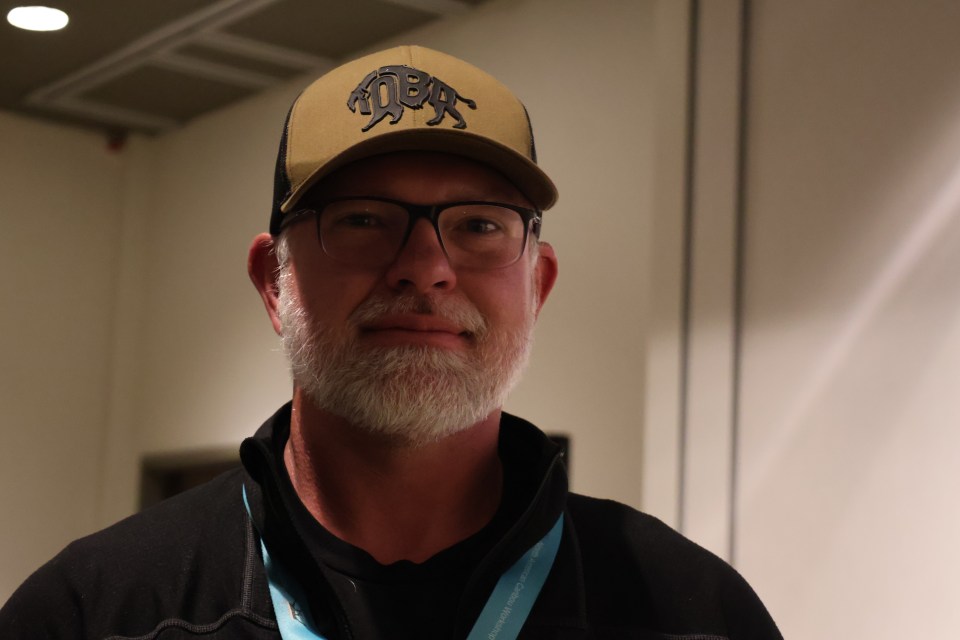
In his presentation, he explained the “two-eyed seeing” approach, which uses Western science and Indigenous knowledge together. He said both should be valued equally with Indigenous knowledge treated as information that can guide research, not just support it.
Advertisement.
Advertisement.
Epperson said the work has contributed to the development of ACFN’s environmental monitoring program and is helping reshape conversations around land protection.
He added that while his core team is small, the broader research effort includes the entire community, whose knowledge and experience inform the work. He said the information he presented ultimately belongs to the community and is shared on their behalf.
“The decisions they’re making every day, it’s line drawn today, but it’s the survival of people and the environment as a whole” in the future, he said. “So these decisions matter.”
