

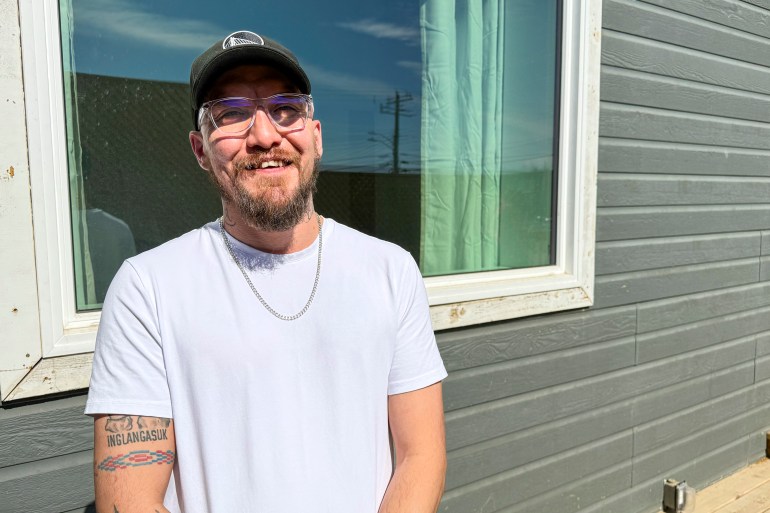
Caleb Lennie calls himself a “homegrown addict.” He’s ready to put that to good use.
Lennie, 34, is a wellness and counselling trainee at a new transitional housing and recovery project in Inuvik.
He’ll be one of the staff helping men who arrive back in the Beaufort Delta after addictions treatment in the south.
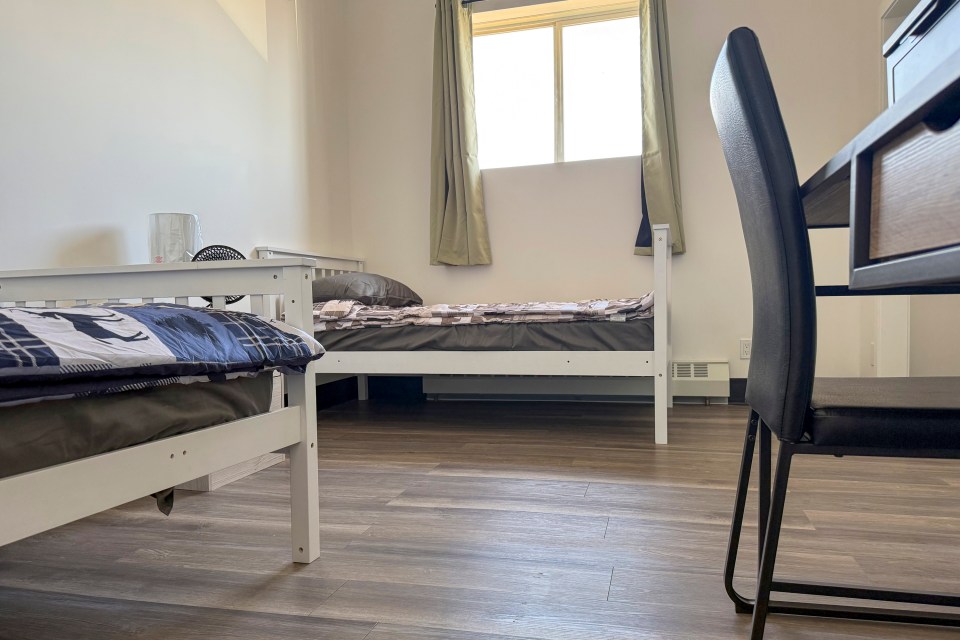
The 10-bed facility is designed to fill what advocates have long said is a huge gap: what happens when you come home after getting help somewhere else?
“Recovery doesn’t end with treatment for some people. The next stage may be the hardest one – coming home, rebuilding routines, staying connected to support and finding safe and stable housing,” said Inuvialuit Regional Corporation Chair Erwin Elias.
Advertisement.
Advertisement.
“That is why this facility matters.”
Elias spoke at what the IRC called a soft opening for the facility on Wednesday afternoon. Housing NWT refitted an Inuvik building into bedrooms, a kitchen and living space, the NWT’s Department of Health and Social Services is providing operational funding, and the IRC will run the project.
“This work is about dignity,” said Elias. “It’s about accountability. It’s about creating conditions where people can keep doing the hard work of healing with support around them.”
NWT health minister Lesa Semmler said the project was an important collaboration.
Advertisement.
Advertisement.
“I’m always going to be Indigenous. I’m always going to be Inuvialuit. But I have to take my hat off sometimes and say, I, as GNWT, can’t run Indigenous programming,” Semmler said.
“We’re just not going to do it well. We have to find ways to collaborate with Indigenous groups.”
‘I couldn’t come back’
Lennie says he grew up five houses away from the new facility.
Now, after two months at the Ravensview treatment centre in Victoria, BC and 11 months at a Nanaimo recovery home, he feels like this project is an opportunity to put everything he knows into action.
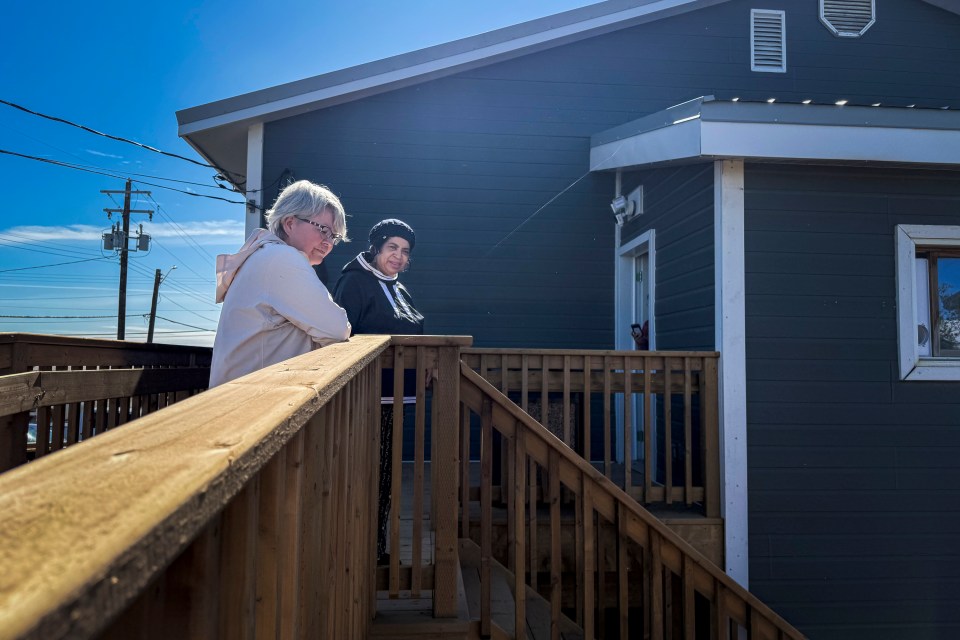
He understands why this transitional housing block – with bright, spacious rooms and a yard that boasts planters and a deck – needs to exist.
“I knew I couldn’t come back home” at the end of treatment, Lennie said.
“I told myself: this is ground zero. No matter what, if I come here” – back to Inuvik – “I am pretty-much just set up for failure. So I made sure I got my feet on the ground solid before I came home, and my dream was to make my own recovery room.
“Now I’m going to be a part of this, which I’m very excited about. I can bring my life experience as a homegrown addict, recovering addict, and then all the experience I have with the recovery house that I was in for 11 months.
Advertisement.
Advertisement.
“The last few months there, they were mentoring me about how it is to run a recovery home. I am so excited to bring this to my people. I did the work on me. Now it’s time for me to hand those tools over to my people.”
Support and stability
The facility is expected to welcome its first residents later in the summer.
NWT housing minister Lucy Kuptana said it would “fill an important gap” and help address a root cause of homelessness by offering “a pathway to stability and self-sufficiency.”
“That’s what we want to provide here, stability,” said Jeffrey Amos, who will be the facility’s coordinator.
Amos has spent 18 years working in wellness for the IRC. He has seen what happens without housing and support like this, and he is ready for a new chapter.
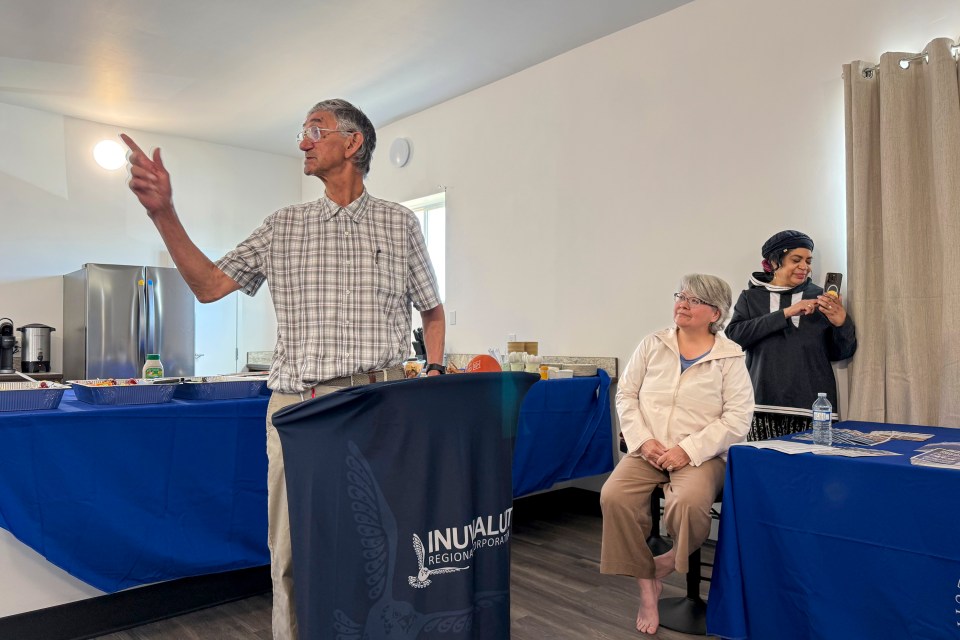
“A lot of people that come back from treatment programs, they do have an aftercare plan but they have nothing really to go back to,” he told Cabin Radio.
“Absolutely nothing, no support. Even though there are counsellors and resources here, there’s nothing to give them that stability.
“I’m really pleased that we have this facility. This is just the beginning.”
Advertisement.
Advertisement.
Amos looks forward to connecting residents of the building with on-the-land programming, a traditional lifestyle, and meaningful local resources whenever “it comes time to talk to somebody about suicide or recovery or reconnecting with family.”
Lennie is ready to help end the stigma of “being tough is being silent, because that’s what’s truly killing our people.”
“The people I work with now, they’re trying to end that cycle,” he said.
“I have two daughters, and I want them to know your feelings are normal. You’re human, that’s why we have feelings. So let it out. And my people, we grew up to hide our feelings.”
