


On Thanksgiving weekend in 2007, Cst Chris Worden went out on an early-morning call in Hay River. He didn’t come back.
At home with their eight-month-old daughter, Alexis, was his wife. This weekend, nearly 17 years later, Jodie Baulkham returns to Yellowknife with her book about surviving Chris’s murder and recovering in the years that followed.
A book release event for Choosing My Tomorrow will take place at the city’s Copperhouse restaurant from 1pm till 3pm on Saturday, featuring readings from the book and an audience Q&A.
The man who killed Cst Worden is seeking early release under a “faint hope” clause, the CBC reported this week. A vigil to remember Chris is held annually in Hay River and he is honoured in a yearly Yellowknife hockey game between RCMP and firefighters.
Baulkham left the North after the inquiry into her husband’s death and remained away from social media for more than a decade. Having recently begun sharing more online, she is excited to meet northerners who have supported her then and now.
Advertisement.
Advertisement.
“I’m looking forward to being able to meet those people face-to-face, and shaking their hands or giving them a hug and saying thank you very much,” she told Cabin Radio.
“I know every year there are memorials and there are hockey games, and it really warms mine and Alexis’s heart to know that we’re still thought of and that Chris is still remembered.”
Jodie Baulkham appeared on Afternoons at the Cabin to discuss her journey since 2007 and this weekend’s event. Below, read a transcript of the interview.
This interview was recorded on February 29, 2024. The transcript has been lightly edited for clarity.
Advertisement.
Advertisement.
Ollie Williams: How is it for you, nearly 17 years later, to talk about what happened?
Jodie Baulkham: My heart still races when I describe what happens. Now, having been almost 17 years removed from it – and speaking about it as often as I have – it’s part of my narrative. It’s part of my story, which makes it a little bit easier each time. I’m able to move beyond what it was like for a lot of the people who remember how it was, how it was portrayed in the media.
I did stay in the North until the preliminary inquiry concluded in July 2008. After that, I went off the grid. I moved away. I wasn’t on social media until last summer. So a lot of the folks didn’t get a chance for closure, to know how Alexis and I fared over the years. Coming back to the North to let people know that we’re OK is really important for me.
How would you describe the stages of the journey you have been on from 2007 to now?
Initially, it was shock. The plans Chris and I had to raise Alexis and have brothers and sisters for her, the way that we wanted to carry forward in our life – that all changed drastically. I was angry for a long time about not having any control over that part of what happens in my life.
I would say acceptance came pretty quickly for me only because of Alexis. When you have a baby who doesn’t realize how her world has changed, she was still able to provide joy while I was experiencing all of the sadness and pain in my life. I attribute her being a part of my life to how I was able to move forward, because I didn’t allow myself to ruminate on: why is this happening to me? I really focused on: what next? What do I need to do for Alexis so that she doesn’t have any more trauma in her life? How can I create the best environment for her?
With those questions in my mind, that’s how I was able to move forward. I threw myself into different causes – in the RCMP, for example, I advocated for backup policy changes so that members wouldn’t respond to calls on their own. I advocated for legislative changes with respect to repeat offenders. I wanted to use the energy that I did have –and it was a lot of anger energy, a lot of advocating energy – to help lessen the likelihood that this could happen to someone else.
I went to Ottawa after I left the North. Chris’s family was from there. He is buried at the National Cemetery in Ottawa. Three months after I moved, I started to need more connection and interaction and began working within the RCMP in their learning and development section. The work there, and the connections and the friendships that I made, really helped to propel me into what my life started to look like, as a grieving widow who was starting over.
Advertisement.
Advertisement.
You mention the role that Alexis played in your life after this tragedy. What role does her dad play in her life?
Alexis mirrors all of the positive qualities of Chris that made me fall in love with him. She has an incredible sense of humour, as did he. She has a beautiful smile, just like he did.
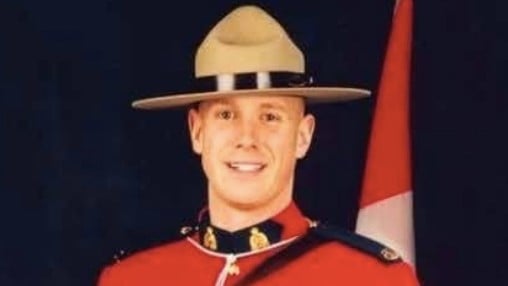
She has red hair. I know many folks only saw pictures of Chris as a bald man, but he does have red hair. The Worden genes are very strong in Alexis. Her essence exudes all of the things that people love about Chris.
While she may not know him like I know him, I really do believe that he has helped to guide her into the young woman she has become. She is incredibly resilient, she is incredibly kind. I am lucky to say that as a mother of a 17-year-old. I haven’t had a lot of the issues that other parents have had with respect to teenagers. And I really do attribute that to a silent relationship that she and Chris share.
You’ve written a book, Choosing My Tomorrow. What do we hear from you in it?
The book is divided into three parts. The first is called The Widow. That is where I explain what happened to me after Chris died. That includes describing the shock that I went through, the planning for the funeral, the investigation, the move, raising Alexis on my own, as well as coming back to the North in 2009 for the trial – and how all of that felt.
Part two is called The Wife. I remarried in 2011 to another police officer. However, he suffers and lives with post-traumatic stress disorder and major depressive disorder. And so I go into talking about how I play a support role for someone that was injured in a different way on duty, and the responsibilities of a support person of a first responder. And Alexis, as wonderful as she is, she has her struggles with obsessive compulsive disorder, so I talk about the challenges that I’ve faced but also the resilience that I have built over the years, and how I navigate those things.
That leads into the last part, my lessons learned. I outline 11 things that I think I have reflected on and learned from over the years that I continue to apply in my daily life, and I offer the reader some reflective questions so they can start to examine their own life with regard to these lessons.
Advertisement.
Advertisement.
The book’s subtitle discusses “harnessing the power of choice.” What do you mean by that?
People can, with intention, choose the very next best step in their life. How you do that becomes the question. I describe how I did it through all of the different stages of my life, but I think what I’ve boiled it down to is a belief that you are worth your value, and you are worth putting yourself first. That is really difficult for some people, because they’re busy helping others.
What I’ve learned – as a support person, especially, and then as a mom of an infant after Chris died – is if you don’t put yourself first, you cannot care for the people that you love the most. What does that look like for yourself? How can you be intentional in your choices to make the best decisions for the outcomes that you want in your life?
What does it feel like to come back to the Northwest Territories?
I have been back to Yellowknife twice since moving away. The first was to attend a memorial of a friend. The second one was a year and a half ago, and I came with Alexis. I was able to walk around the town and show her: “Oh, I had my first contraction outside of this furniture store. And this is where we had dinner right before you were born.” She was able to meet the group of teacher friends that I had when I was 23. She really enjoyed hearing about what her mom and dad’s life was like before they had her. That was an experience I value and treasure very much.
Hay River? I want to have that experience with Alexis. She wasn’t able to come this weekend, but we do plan on going to Hay River together when we are able to find time. That one will probably be a little bit heavier. Coming back to Yellowknife is a homecoming of sorts. Chris and I lived there together, it was a very special place in my heart – different than the Hay River emotions.
I am very much looking forward to seeing friends and seeing people that I know supported me but I may not have realized who they were. Since opening up social media accounts, people have reached out and have told me how Chris has impacted their life. I’m looking forward to being able to meet those people face-to-face and shaking their hands or giving them a hug and saying thank you very much. And I know every year there are memorials and there are hockey games, and it really warms mine and Alexis’s heart to know that we’re still thought of and that Chris is still remembered every year.
