



Kim Robinson carefully wraps sets of buns and sausages in tinfoil to keep them warm, save for two franks for someone who prefers them without buns.
Robinson is preparing for a Saturday morning driving the Street Outreach van around Yellowknife, offering food and safe rides to the city’s street-involved population.
“There’s people out there that don’t have access to programs. Some of them live in tents, even during the cold,” she says. “The shelters are always filled so they can’t get in. So we make sure that they are OK.”
The van, run by the Yellowknife Women’s Society, is on the road seven days a week from 10am to 10pm.
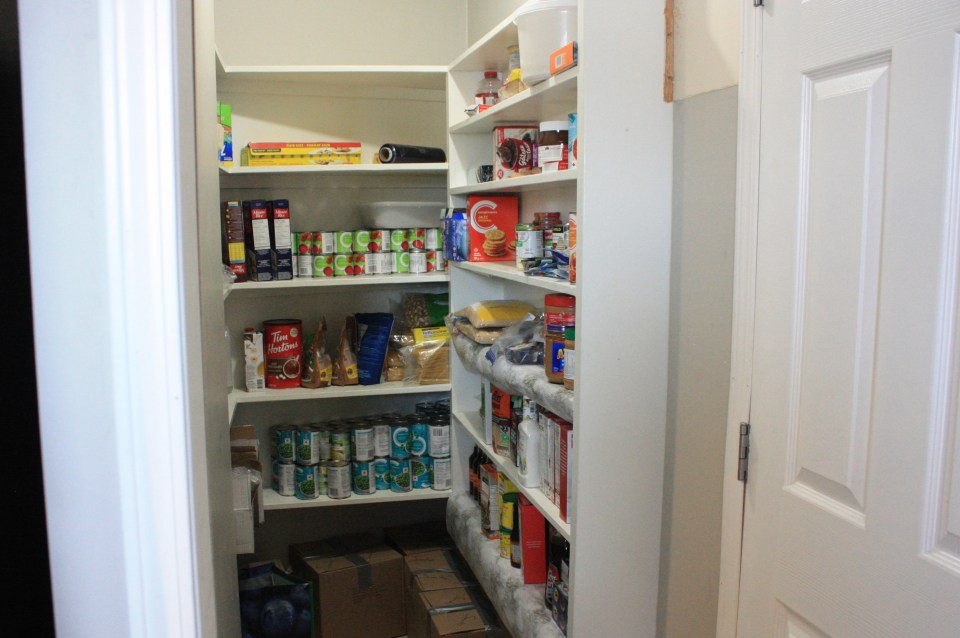
Robinson, the manager of the program, says Street Outreach used to offer snacks like granola bars but now can sometimes provide full meals thanks to donations from Food Rescue, an organization that collects and distributes food from local grocers that would otherwise be discarded. On Friday, she says, staff made eggs, bacon and hash browns. They plan to make ribs on Monday.
Advertisement.
Advertisement.

Robinson likes to make special treats on holidays.
For Valentine’s Day, her partner made 200 heart-shaped waffles. She’s eyeing a maple leaf-shaped waffle maker for Canada Day. For St Patrick’s Day, she made green rice krispie squares.
Beyond food, Robinson says the program helps people make it safely to shelters, to medical appointments and to pick up medication or food hampers.
This Saturday, Robinson begins by driving to the hospital looking for people who need assistance. She stops at the Stanton Plaza to drop off breakfast for one man who accepts a package of sausages and a clementine with a warm smile and a mahsi cho.
Advertisement.
Advertisement.
Robinson gets a call to pick up three people and take them to “the trailers,” or the Yellowknife day shelter. The couple sitting in the back seats of the retrofitted van are in high spirits as they sing along to Bon Jovi on the radio.

At the day shelter, Robinson heads inside to check if anyone has been banned from the facility for the day. When that happens, she says, there are few other places to take people, particularly if they’ve also been banned from other locations. She says a full-time men’s shelter is needed in the city.
The sobering centre in Yellowknife offers a place for people who are intoxicated to stay overnight from 4pm until 8am. Men can also stay overnight at the Salvation Army’s emergency shelter from 8pm to 7am.
At the sight of the van, several people come outside the set of trailers housing the temporary day shelter, eager to get something to eat. The pile of sausages, clementines and a few egg salad sandwiches quickly disappears.
As she hands breakfast to one man, Robinson asks: “Are you behaving?” He responds that he’s doing his best.
Over the next four hours, Robinson transports people from the hospital, Reddi Mart, Centre Square Mall and the city’s visitor centre to the day shelter, women’s centre and Spruce Bough housing facility.
The women’s society launched Street Outreach in 2017 with the aim of meeting the needs of vulnerable people while reducing non-emergency calls to police and emergency medical services. In its first year, the program gave 11,512 rides, or roughly 30 every day.
Now, Robinson says Street Outreach can serve up to 75 people a day.
Advertisement.
Advertisement.

The program receives $360,000 in funding annually from the city, alongside donations.
In the long term, the women’s society aims to expand the program to what it calls an advanced care model, which would include emergency first aid, case management, harm reduction and some public health services. That program is expected to require $1.1 million in startup costs.
City councillors rejected allocating funding for an expanded outreach program when deliberating the municipality’s 2024 budget, calling on the territorial government to provide the money. The NWT’s health and social services minister has committed to meeting with the city to discuss the program.
The federal government has separately committed $100,000 for a consultant to review the program, provide recommendations about the best operating model, and draft a multi-year funding proposal to be presented to the federal and territorial governments.
The city did recently approve a request to designate $230,000 in federal homelessness funding to help the women’s society buy a new, accessible van.
Currently, Robinson says, Street Outreach can’t offer rides to people who use wheelchairs. It’s difficult for people who use mobility aids – such as walkers – to get inside the van.
“I used to work at the Salvation Army in the men’s shelter. There’s quite a few of them I do know from working back then, and I’ve noticed that there are a lot of mobility issues with them now, with their hips, their knees, even their feet,” she says.
“Getting into the van can be quite the struggle and getting this new one is going to be able to help.”
Advertisement.
Advertisement.
For months, the outreach program was operating with one van that had heating and locking issues while another vehicle was in the shop. That led to at least one occasion where the van had to be taken off the road during a cold snap.
Now the more reliable van is back on the road, Robinson says the older vehicle has been retired.

Robinson is clearly passionate about her work and has a close rapport with many people she helps. While she says she has never experienced homelessness or addiction first-hand, it is something that has affected people in her life.
She says she feels lucky to help the people she does.
“Some people think that’s the way of life they want, but it’s not, it just happens, and sometimes it’s hard getting out of that rut,” she says. “But they’re good people, out there.”
