


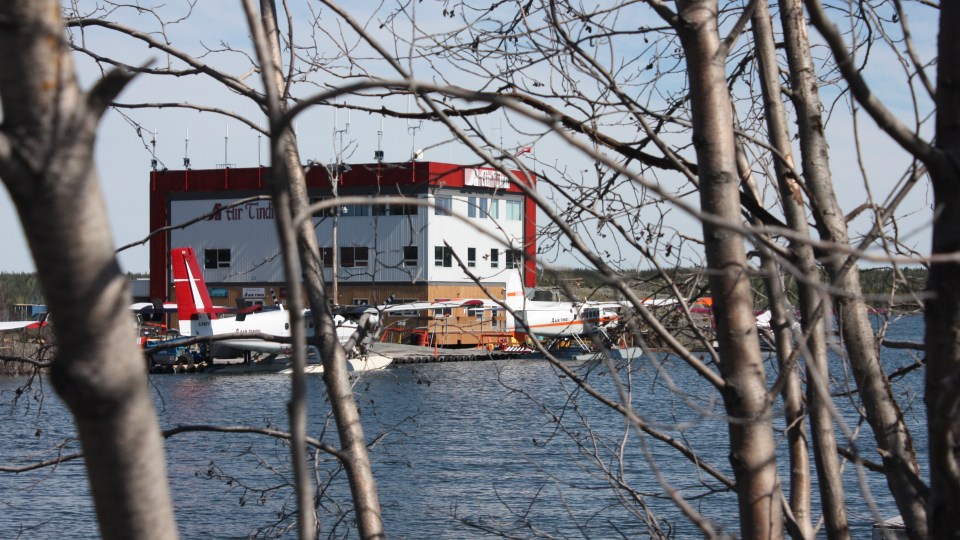
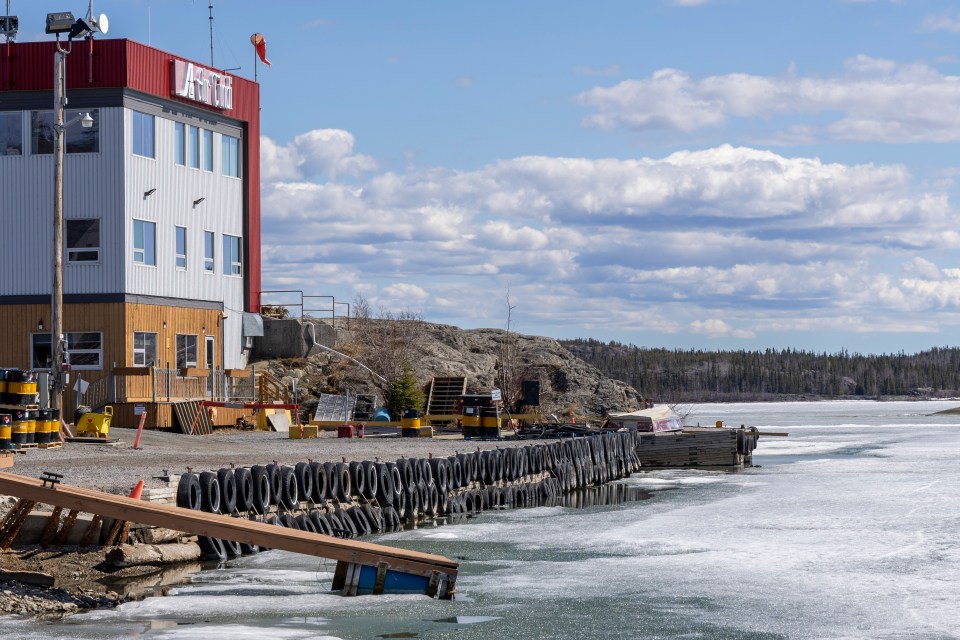
Low water on Yellowknife Bay is mystifying residents but also complicating operations for airline Air Tindi, which has a floatbase on the bay.
Chris Reynolds, Air Tindi’s president, said his company is “stressing about it quite a bit” at a time when ordinarily, planes would be prepping to take off from the bay using floats.
Normally, Air Tindi uses May to bring its aircraft on skis off the frozen lake, perform maintenance and refit them with floats. At the start of June, as the bay transitions to open water, they return to the lake for the summer.
This year, the water is so low that even reaching the dock at the floatbase is a problem.
Reynolds worries that low water means aircraft are sitting lower, which raises the risk of accidents like a propeller striking the dock – if the planes can get to the dock in the first place.
Advertisement.
Advertisement.
Meanwhile, he says the potential is increasing for danger on the bay.
“Pleasure boaters are building out, away from their docks,” he said. “It gets to the point where it’s a dangerous situation and aircraft no longer have room even to manoeuvre to the dock. Everything is getting crowded toward the centre.”
Short-term solutions that could help include dredging or using plastic docks that extend farther out into the bay, although each of those options comes with complications. For example, plastic docks probably can’t handle the heavy equipment Air Tindi uses to help load its aircraft.
Reynolds said Air Tindi is even looking at whether it can use barges or move operations to Long Lake, a smaller, separate lake next to Yellowknife’s airport.
Advertisement.
Advertisement.
If a solution isn’t in place soon, that’ll affect the number of floatplanes available – with a range of consequences.
“It’s a big issue and it’s not just tourism and mining, it’s supporting the local communities and things like search-and-rescue exercises, looking for missing boaters,” Reynolds said.
“It does become an emergency response issue, where you don’t have the capability that you had.”
‘Rocks where there never used to be’
The Yellowknife Bay water level is the lowest on record, significantly lower even than the previous record low in the 90 years or so that data has been logged.
Reynolds says he’s hoping this is “just a one-off year” and remains confident that a plan will come together in the weeks ahead.
“You have a lot of people and a lot of ingenuity,” he said.
“We’re all worried about it, it’s the lowest anybody has ever seen, but we are going off the premise of ‘where there’s a will, there’s a way.'”
Figuring out Yellowknife Bay isn’t the end of the problem, though.
Advertisement.
Advertisement.
The floatplanes serve all kinds of facilities in isolated parts of the NWT, and many other lakes are experiencing the same lack of water, which will pose a problem for pilots trying to safely navigate those environments.
“There are rocks where there never used to be rocks,” said Reynolds.
“You can fly to a place for 35 years and all of a sudden you’re exposed to a rock barely under the water that never used to be there, because there was always a lot of water on top. It’s going to be challenging.”
Noting the NWT has now had a succession of summer disruptions – a pandemic, floods and wildfires have all been recent challenges – Reynolds said this is a fresh hit for industries that rely on aviation.
“It’s unfortunate for the tourism operators,” he said. “They never really got a break since Covid, right?”
