



Advertisement.
Aingeal Stone remembers fleeing Yellowknife the way many residents do: the panic, the stress, and the helpers and heroes who made the three-week evacuation a little easier to bear.
Aingeal, a Yellowknife librarian, was born and raised in Durham Region, Ontario, where her family has farmed since 1852. Some of her relatives still tend farmsteads in the area.
She grew up in the 1970s, surrounded by a large extended family who lived across the street, across the field, or even next door.
Aingeal eventually moved to Whitby, Ontario, where she lived for 19 years and raised a family of her own with her first husband. Once her children grew up and moved out, Aingeal and her second husband, Harry, moved around, settling where they could find work.
Advertisement.
Advertisement.
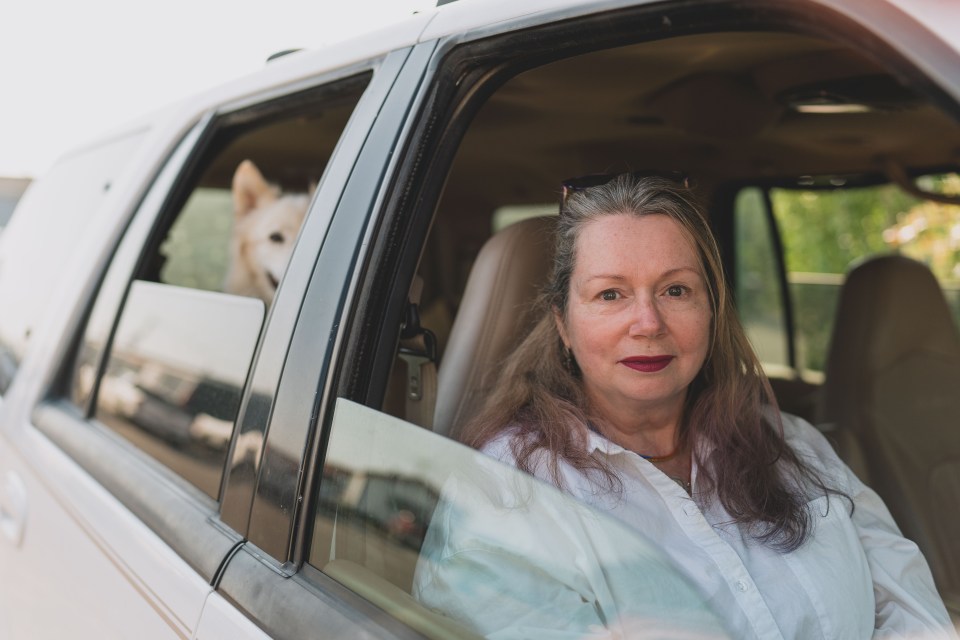
They eventually headed north, ready for what Aingeal called a “big adventure.” She now lives in Yellowknife – her second time living in the city – with her husband, roommate and six dogs, works as a government librarian, and is writing her first children’s book.
Here is Aingeal Stone’s account, as told to LJ Weisberg.
We have wildfires every summer. This is the Northwest Territories.
The problem is there hadn’t been any fires in the area in a number of years. There was a great buildup of brush and debris. We had a fire. It spread. When the conditions were just right, the wind pushed the fire right toward Yellowknife.
The city has never been prepared for this eventuality. We’ve got Great Slave Lake on one side. The city’s built on rock. We can shelter in place.
Advertisement.
Advertisement.
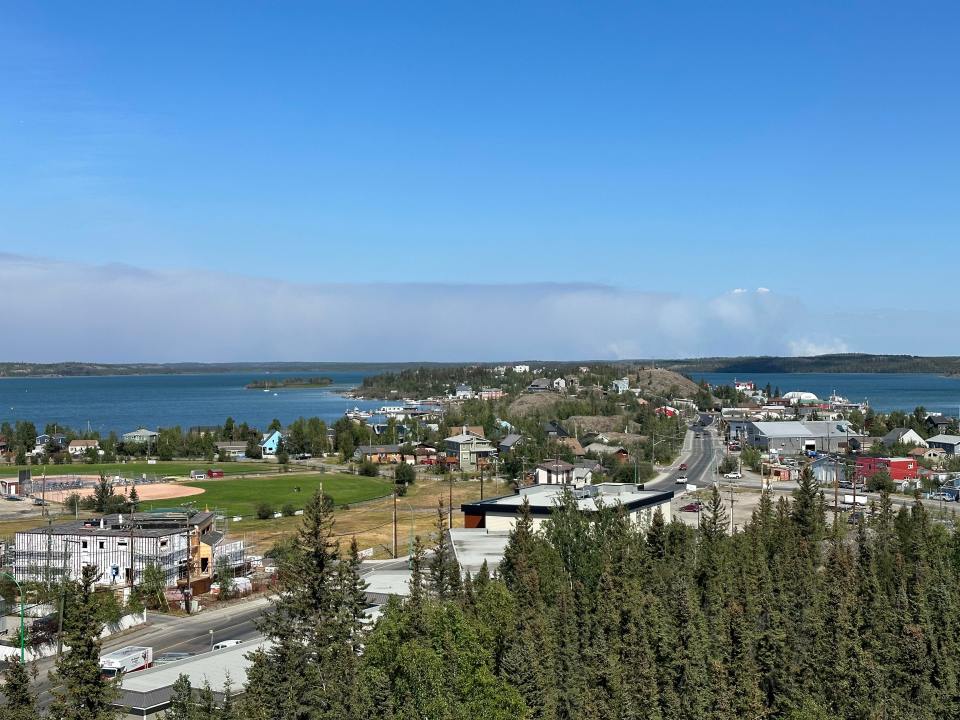
I remember the evacuation order coming through. I remember conversations flying back and forth with co-workers through Microsoft Teams, discussing our plans and looking out for each other. A friend let me put my art collection in her basement storage area. There’s very few basements in this town because it’s rock. I thought, “This is the one place in town that has an actual basement. My art will survive.” I have originals of local artists that you can’t replace.
Our roommate’s family invited us to evacuate to their cottage on an island in Great Slave Lake. I heard your animals have to be in a crate to fly out. I have six dogs and I do not have six crates. I am not leaving my dogs. As the fire came closer, the warnings came out that you’re not going to be safe if you have cottages on the lake because the smoke will suffocate us to death. We had to change our plan to driving south.
The only way out of Yellowknife is one highway. At that time, the fires were right up to the highway and people were leaving town that night. The smoke’s so thick, they couldn’t see more than 10 feet ahead with their headlights on. They could see the glow of the fires from the cars. We said, “We’ll wait till the next day.”
It was late morning or early afternoon when we went through. There was no heavy smoke. I’m really glad we didn’t leave with that mass. We just drove south.
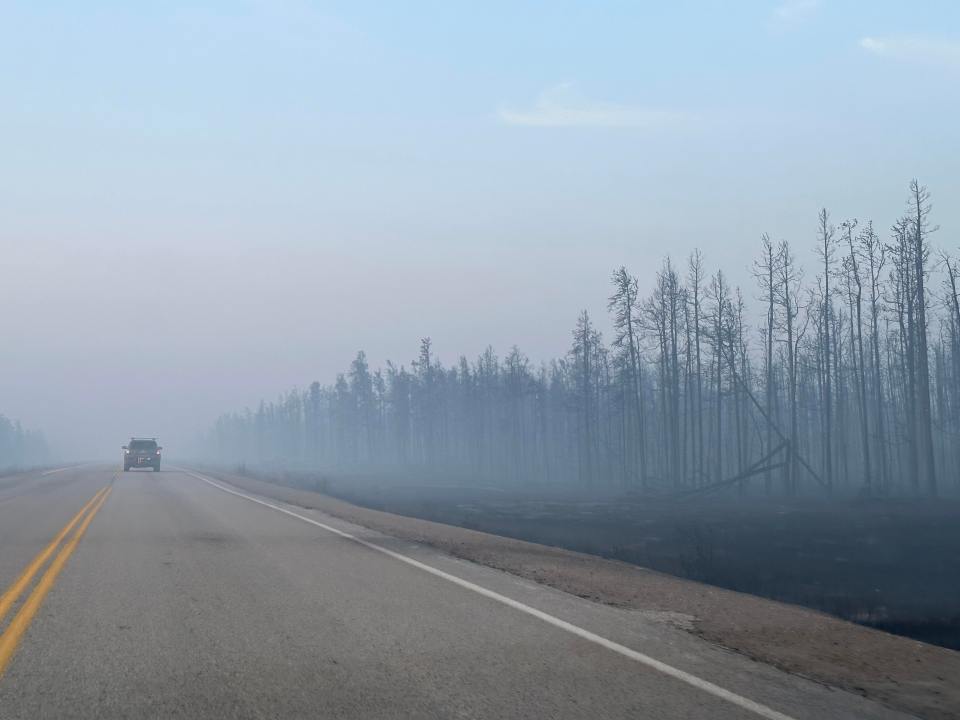
On the drive down, we went through Enterprise. Something like 85 percent of the town was destroyed. I remember feeling sick to my stomach: seeing power lines on the ground, smoke still coming up from the ground. That’s seared into my mind. People lived here, and they can’t live there any more. Their homes are gone. I feel very sorry for the families. Not everyone has home insurance. When they lose everything, there’s no getting anything back.
At the first place to get gas, there was a huge lineup because of course, you’re trying to evacuate 20,000 people – everyone has to get gas, and everyone will stop and line up to get gas. When we finally did get into the gas station, they had tankers there giving gas. There was a truckload of package-like lunches, as well. Volunteers were handing out sandwiches, snacks and juice boxes. That touched my heart. Northerners helping northerners.
We eventually made our way to High Level. The evacuation centre was wonderful. We were there late and they had a midnight order of fresh pizzas. We slept in our SUV. I didn’t want to leave the dogs alone. At 5:30am or 6am, I couldn’t sleep any more. I was texting with friends and realized one was there at High Level, too. She said, “Do you feel like coming in for a cup of tea?” She needed someone to talk to and so did I. I went inside and chatted until we both felt calmer.
The next morning, we heard Edmonton was opening an evacuation centre. We know Edmonton, we’ve been there many times. We were so tired when we arrived it was like we were inebriated. We’re in this crowd. It was noisy, people talking, children crying, running around. Everything was so slow. It wasn’t nice food they provided: little cafeteria buffet-style meals. They have cots for you to sleep overnight, but I can’t leave my dogs alone in the car.
Advertisement.
Advertisement.
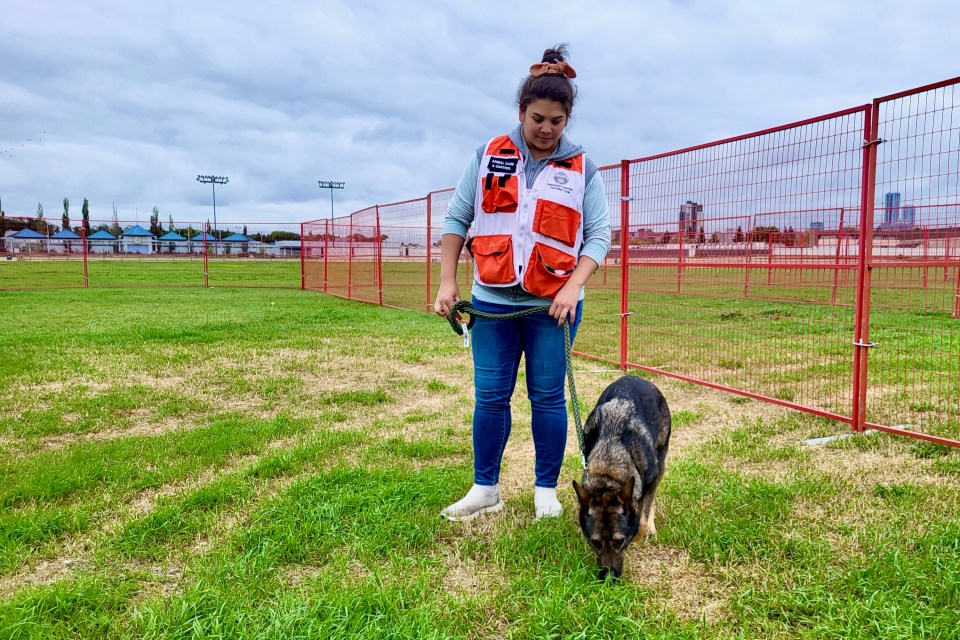
You hear about smaller cities like Red Deer who were really generous with food vouchers for restaurants and free stays at hotels. Edmonton, a huge city, couldn’t do the same? I don’t want to sound too critical. The one thing about the Edmonton evacuation centre that was outstanding: free dog daycare. We would go there just to drop off the dogs so we could do whatever we needed to do. They also handed out a care package, a change of clothes with a toothbrush, comb, soap, a razor blade. That’s pretty handy when you’ve only brought three days’ worth of clothes.
I met up with a friend at the evacuation centre. She’d been here since the day before. Still hadn’t been assigned accommodation for her or her disabled mother. There were people who waited three days to get assigned accommodations. I’ve got these dogs, I can’t wait three days.
I said to my husband, “Let’s just get our own hotel for four days. Once we’re rested, we’ll come back here, see what the situation is.” We got a dog-friendly hotel room. I posted on social media asking if someone was interested in sharing a four-bedroom cabin.
A friend of mine had seen that. She had a friend of a friend who had an RV in Beaumont, Alberta that they were willing to have us stay in for the duration of the evacuation. What a lifesaver. We drove down and stayed in that RV for three weeks. Their property had a big yard, fenced in because they had dogs. It was perfect. The family who welcomed us into their RV, their property, they’re pretty special people.
We lived our lives. The Beaumont public swimming pool gave us free entrance. I got a temporary public library card there. The people of Alberta are so lovely. One of my dogs got sick and the vet in Beaumont waived the visiting fee because we were evacuees. We help each other, because someday someone will need help from me and I want to be able to do the same. I’m surprised how emotional I’m getting, talking about those little kindnesses. You think, “Oh yes, it’s done and over,” but no. You put it into a little compartment, open it up again, and the memories come back.
When we got the order to come back home in September, we packed up, said our goodbyes. There was still the smell of smoke on the way home. The fires weren’t out. It’s just that it was safe for us to come back.
All the workers who stayed behind built hundreds of metres of fire breaks around the city. You drive down the roads and you can see the change in the landscape: all the trees and underbrush scraped away to bare rock. I was gobsmacked when we came back. It was amazing. The workers, they’re heroes.
We knew going back home that not all the stores would be fully stocked and they wouldn’t be fully staffed. You walk into the grocery store and there’s all these pallets lying around, but they don’t have the staff to stock the shelves. There’s people who evacuated south who did not return. We’re all prepared for this. Yellowknife is transient. People who aren’t from here don’t necessarily bond with the community. I think there are a lot of healthcare staff that didn’t return after the fire. I heard someone say to me the other day the hospital has 34 openings not filled. Elective surgeries got cancelled and pushed back.
Advertisement.
Advertisement.
It’s an experience I will never forget. There are a lot of things that have effected change in me. It may take the rest of my life to figure out exactly what. My understanding of the science of wildfires has grown immensely. Everybody I know now has an emergency getaway bag.
The city and the territorial government need to work together to take care of fireproofing. Let’s not just have one road out of Yellowknife. We need more than one escape route. We have to stop using fossil fuels. Our electrical plants, they’re all diesel. Why can’t we put wind farms up here? When we have 20 hours of sunlight a day, why can’t we use solar power?
I’ve always been conscious of the state of our planet, but it seems more real when climate change has affected you directly. I know there are a lot of other people who are more conscious of how their way of life is impacting their community and natural surroundings.
That’s all we need to do to see change. It will soon become a global thing. I know I’m not alone in thinking this way. I’m hoping we can all work together to do something good.
This testimony was co-created by members of the Climate Disaster Project. The project is an international teaching newsroom that works with disaster-affected communities to document and investigate their stories. For more information, please visit www.climatedisasterproject.com.
From Tuesday: Walking the path to recovery a year on from the Enterprise wildfire
From Wednesday: ‘People never imagined a climate disaster in Yellowknife’
