

Advertisement.
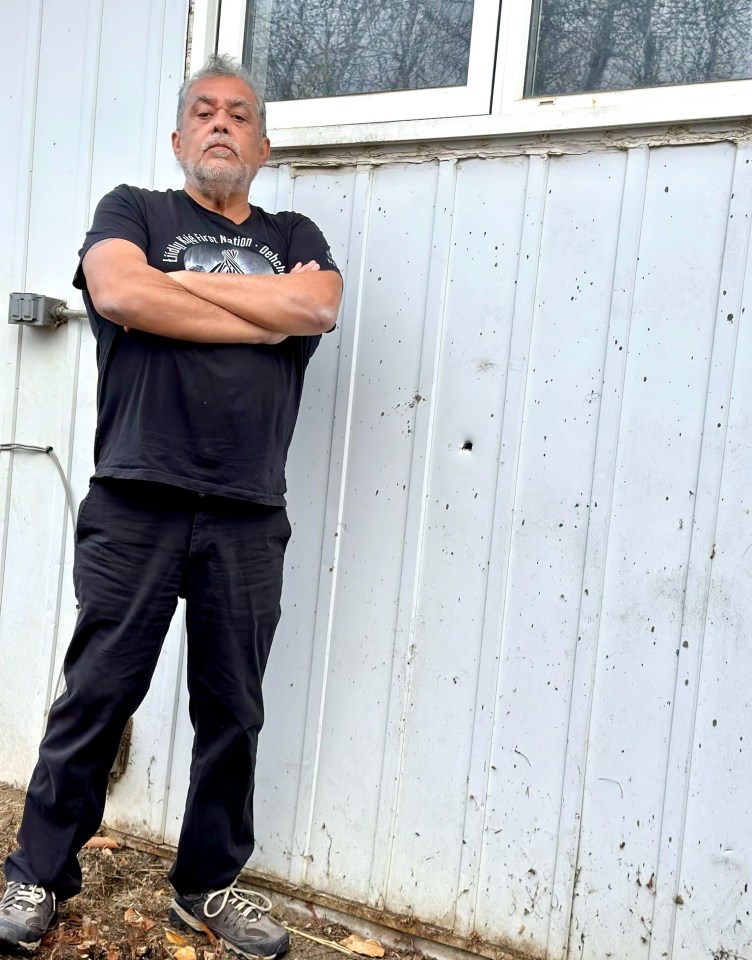
A man accidentally shot in the leg by an NWT wildlife officer has reached a settlement with the territorial government.
Five years ago, Dennis Nelner – in his home at the time – was struck while the wildlife officer was trying to shoot a black bear that had strayed into a residential area of Fort Simpson.
Nelner settled with the territorial government over the incident last month, as first reported by the CBC.
However, Nelner expressed his dissatisfaction with the legal process, calling it “clinical” and “numbers crunching.”
Advertisement.
Advertisement.
The Department of Environment and Climate Change, or ECC, declined to respond to questions regarding the settlement process.
The wildlife officer who shot Nelner did not face charges, which Nelner supports, stating that “it’s not his fault.”
Nelner says the government bears ultimate responsibility for the incident, as he believes wildlife officers were sent into the field without adequate training in firearm use.
“There’s no remorse, there’s no regret, there’s no formal apology,” said Nelner. “I’m a 14-year Canadian Ranger, a veteran, with two service medals on my lapel.”
Advertisement.
Advertisement.
Of the settlement, Nelner says there should have been a more significant financial penalty to the territorial government in terms of punitive damages, in order to set a precedent and compel change.
“This is more than just an average shooting accident,” Nelner added. “I’m hobbled because they didn’t follow their own procedures.”
‘This is a public safety issue’
Documents obtained by Cabin Radio suggest that in the year Nelner was shot, wildlife officers in the NWT had to pass an “ENR Defense Tactics/Firearms certification process” – ENR being the initials of a former department – then go through proficiency testing and certification once a year.
In 2019, the GNWT delivered firearms training to wildlife officers internally with firearms instructors and range officers.
ECC, which has assumed the duties of the former department, told Cabin Radio it has since “completed a review of its firearms program, which includes a review of standard operating procedures, training and equipment.”
“We are working to implement recommendations from that review, including increased training for firearms instructors and officers,” ECC spokesperson Thomas Bentham said in a statement.
“Other operational procedures have also been reviewed, such as debriefing after incidences and updates to the training manual for new officers.”
ECC has trained officers since 2022 through an external contractor, Canadian Tactical Firearms Training, which “specializes in this type of training for enforcement agencies,” the department said.
Advertisement.
Advertisement.
Components of that training now include annual “demonstrated firearms competency” alongside bear awareness, wildlife handling and euthanasia techniques.
Still, Nelner is concerned that ECC officers do not receive training and certification from the Western Conservation Law Enforcement Academy, a wildlife officer training program formed through a partnership between British Columbia, Alberta, Saskatchewan, Manitoba, and the Yukon in 2007.
“There’s only one agency that I know of in Western Canada that trains wildlife officers with an actual certified gun range, a range officer, and someone that signs off on the certification. There’s nothing like that in the NWT,” Nelner asserted, referring to WCLEA.
During the legal process, Nelner says he learned that NWT wildlife officers do not go through WCLEA programs. When asked for evidence that officers in 2019 were trained and certified, Nelner says the GNWT was unable to produce a response.
Cabin Radio was unable to independently verify whether the officer who accidentally shot Nelner had up-to-date firearms training and certification at the time. A reporter tried to reach the WCLEA but was told nobody could field enquiries.
ECC is adamant that GNWT training is comparable to that offered by WCLEA.
“Our training is specifically tailored to align with the department’s mandate, NWT legislation and the unique needs of the territory,” said another spokesperson, Shannon Graf.
‘I’m not the same’
Nelner says his life has completely changed since he was shot. While he can walk, Nelner says he suffers “debilitating” pain in his leg.
Advertisement.
Advertisement.
The bullet hole remains an open wound in his kitchen. Nelner says he was also let go from his job at the GNWT, which he asserts was related to his gunshot wound. Cabin Radio was unable to independently verify claims regarding Nelner’s employment status.
Nelner fears the injury will keep him from going out on the land. He says the experience has taken a toll on his mental health, causing nightmares and “emotional outbreaks.”
“I don’t know if I can ever do the same things that I did in my life without some difficulty, or maybe not at all. I have to wrestle with that fact,” said Nelner.
“As an Indigenous, Aboriginal man, I still have desires that are hard-wired into my DNA to be on the land and to practise my culture. I still have that desire and ambition to build my own cabin in the woods … It’s just how we’re designed, how we need to be a part of the land.
“I’m not the same person any more.”
