


Some former NWT MLAs have mixed views on a proposal for an independent members’ caucus, largely depending on how they see consensus government.
Three current MLAs – Kieron Testart, Robert Hawkins and Richard Edjericon – pitched their plan at a press conference last week to form an independent caucus that could vote as a bloc, which they said would “save consensus government.”
The trio said they want to be taken more seriously by cabinet and make greater progress on issues regular MLAs care about.
“If there is a very clear group of members working together with a clear set of numbers behind them, they can leverage that to advance issues. And right now, there’s no expectation that regular members vote together,” Range Lake MLA Testart said.
Four other MLAs have publicly said they do not currently plan to join a voting bloc.
Advertisement.
Advertisement.
Premier RJ Simpson has called for regular MLAs and cabinet to work together without partisanship, saying that collaboration is the foundation of consensus government.
Cabin Radio spoke with four former NWT MLAs about their thoughts on the idea of an independent members’ caucus.
‘This is not the boogeyman’
Daryl Dolynny was the MLA for Range Lake in the 17th Legislative Assembly. He said he appreciates what Testart, Hawkins and Edjericon are doing, describing it as an opportunity to look at democracy under a microscope.
“From someone who has been in the House and has seen how things work and manifest … over the years the message is very, very loud and clear: We need to look at making some changes to the consensus-style model,” he said.
Advertisement.
Advertisement.
Dolynny said when he was a member of the assembly, he witnessed “a lot of paralysis” around decision-making. He said it’s difficult to reach an agreement under the current process and regular MLAs often “operate as an island.”
“Accountability was definitely not as transparent as one would think,” he said. “Only a select few MLAs get information and the far majority do not. And it’s a real cat and mouse, real David and Goliath scenario, which, in my opinion, doesn’t make good decision-making for the people.”
Dolynny said while party politics also has flaws, it allows voters to know where politicians stand and what their platform is.
“When you’re a member of the House, you come in with a certain set of ideology, but that slowly gets beaten down,” he said.
“There’s a lot of bureaucratic influence, a lot of administrative influence that shows this is where they’re going as a government and that they try to align their ideology early on in a mandate for an assembly, which kind-of overshadows what the people or the citizens were looking for, for a better life.”
Dolynny said he believes the proposal for an independent caucus could create more of an opposition in the assembly and modify the NWT’s consensus model. He said the concept warrants further political discussion.
“This is not the boogeyman here,” he said.
“If there is a group of current MLAs putting it on the table, I think we owe them the courtesy to find out more about it, to inform ourselves about what exactly does this mean.
Advertisement.
Advertisement.
“Is it an enhancement of consensus or is it the preamble of a potential new political system that could be looked at in the future? Those are great questions, but I think having a wholesome debate is worthy.”
‘It’s a bad idea’
Michael Miltenberger has a different view of the proposal.
“It’s a bad idea and it’s an even worse time to bring it up,” he said.
Miltenberger served four consecutive terms as the MLA for Thebacha between 1995 and 2011. In the first two terms, he was a regular MLA. For the last two, he was a cabinet minister.
Miltenberger described the independent caucus pitch as “the latest attempt to undermine and get rid of consensus government.” He noted that Testart has previously tried to introduce political parties at the territorial level, which Miltenberger said he does not believe is the right fit for the NWT.
“In the North, we get by because we have a very diverse and small population. We want to work together and you do that through collaboration and consensus, not by what I see as the divisive failed process of first-past-the-post party politics down south,” he said, adding the Yukon also has political parties at the territorial level.
Miltenberger said under the NWT’s current system, being heard by cabinet can be a challenge for regular MLAs if they take an adversarial approach.
“It’s easy to have communication problems but you have to figure out how you’re going to work together,” he said, noting that regular MLAs have a majority.
Advertisement.
Advertisement.
“Ideally, you want to find the common ground between the executive and the legislature. That’s the whole goal of consensus government … where can you get that sweet spot on whatever the particular issue is?”
Miltenberger said he believes if politicians want to change the NWT’s political system, they should propose those ideas while running for office and they should be debated in the House.
Now is the worst time to have that debate, he asserted, as Canada faces a trade war with the US and President Donald Trump has repeatedly threatened to annex Canada, which could affect the North’s water and resources.
“We’re not ready, we’ve got to get organized,” Miltenberger said.
“Do we want to waste our time – right now, in this time of national crisis – having a complete debate on consensus versus party politics?”
Miltenberger added that Edjericon, Hawkins and Testart all unsuccessfully ran to become cabinet ministers, while Testart also put his hat in the ring to become premier.
He said when he was a member of the assembly, some MLAs who did not secure cabinet roles would be accused of “being twisted and bitter” over not receiving the necessary votes.
Another committee won’t solve concerns
Jane Groenewegen was a Hay River MLA for five terms from 1995 to 2015, during which time she served as both a regular MLA and cabinet member.
Advertisement.
Advertisement.
She argued the independent caucus proposal would add an unnecessary additional layer of committees to the assembly. She pointed out all regular MLAs already sit on the Standing Committee on Accountability and Oversight.
“If you are not, as a regular member, feeling like you can find common ground with the other regular members to push for the cabinet to recognize what the priorities of members are, then that’s not going to be solved by adding another committee,” she said.
“That’s going to be solved by getting together, finding out what you agree on and then holding fast to that.”
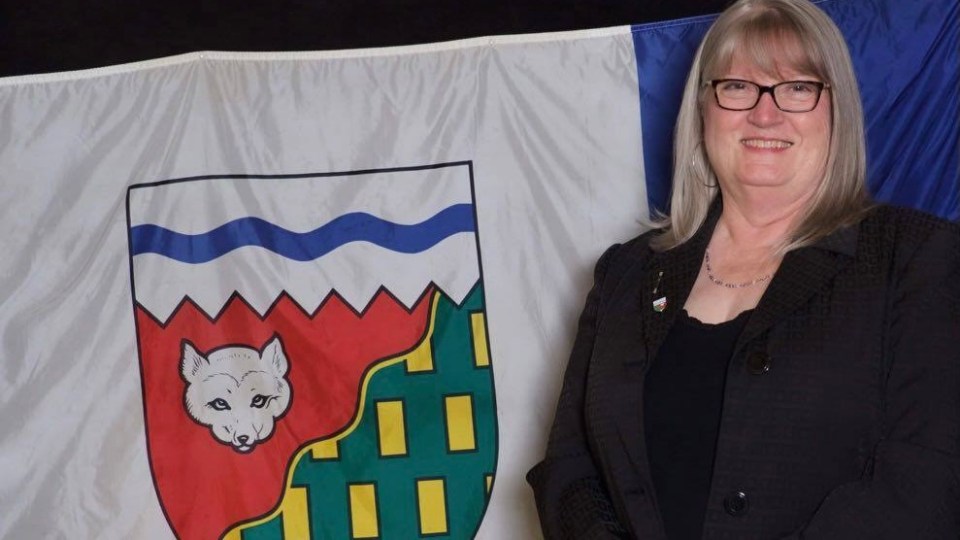
Groenewegen acknowledged it can be frustrating being a regular MLA as cabinet members can “cozy up to certain members,” while some regular MLAs may fear upsetting cabinet if they want ministers to support a project in their district.
“It’s subtle. It’s never direct. But the threat of losing something because you aren’t nice enough to the members of cabinet? It is there,” she said.
Even in cases where some regular MLAs just happen to agree with cabinet, Groenewegen said it can feel like a “little tinge of betrayal” to have a colleague vote against you.
But she said regular MLAs can get things done under the current system and, regardless of challenges, she believes consensus is the best style of government.
“Doing government where everybody’s an independent is a bit like herding cats at the best of times, but I really loved the challenge of trying to build consensus with the regular members,” she said, “and then having us carry whatever that ask was to the floor of the House and seeing it through to getting what we wanted.”
Advertisement.
Advertisement.
Groenewegen said MLAs have to be amenable to working together as well as making tough decisions about which hills to die on.
“You can’t take every bit of government business to the wall,” she said. “It would be so adversarial you never get anything done.”
She suggested that rather than creating a new committee, MLAs consider changing the chair of the current committee if they feel “they need to put a little more punch” behind it.
Unclear how caucus would change assembly
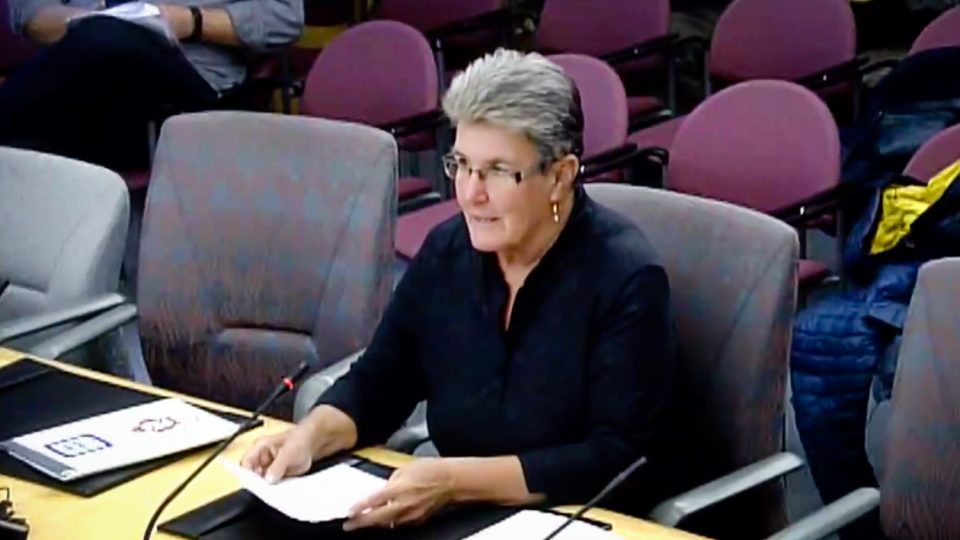
Wendy Bisaro questioned how an independent caucus would change the way the legislature operates.
Bisaro represented Yellowknife’s Frame Lake district for two terms from 2007 to 2015.
She said, in her experience, it was sometimes frustrating when all 11 regular MLAs agreed on an idea in committee but a few would end up voting differently in the assembly.
“By and large, cabinet will always be able to pick up three members to go with them to get through anything that they want to do,” she said, adding that is one of the downsides of consensus government.
“I really don’t understand how an independent caucus will overcome that obstacle.”
Advertisement.
Advertisement.
Bisaro said the only way an independent caucus could change that is if all 11 regular MLAs joined and pledged to vote the same way.
She said if that were the case, regular MLAs could defeat budgets and stop new legislation or changes to existing legislation.
Bisaro said she believes it is unlikely, however, that all 11 MLAs – who come from different communities and have different perspectives – would agree to that idea.
She added that currently, budgets and legislation can be amended through negotiation between cabinet and regular MLAs.
Bisaro said while consensus government has challenges, it also has benefits.
Under consensus government, she said, regular MLAs are able to provide input on budgets and projects before they are made public. While cabinet may not always adopt that feedback, she said in party politics, regular MLAs would not be given that opportunity.
“I just can’t see where we would be able to really do well with party politics,” she said.
“I really struggle, in my own mind, visualizing how party politics would work for us because we’re so diverse and spread out and … our communities are just so small.”
Advertisement.
Advertisement.
By comparison, she said the Yukon is able to make the party system work as around 80 percent of that territory’s population lives in Whitehorse.
Bisaro said the question of how the consensus system could be improved is difficult to answer.
She suggested trying a structure closer to how municipal governments operate with a mayor and council. Instead of separating powers between cabinet and regular MLAs, she said, ministerial portfolios could be spread throughout the 19 MLAs.
“Municipal governments work on basically a consensus system,” she said.
“It’s a bit of a different animal but, for me, the concept of a municipal organization is something that we should maybe think about for our territorial Legislative Assembly.”
