



When a drought happens in the Northwest Territories, barges can’t run on the Mackenzie River. When a drought hits parts of Brazil, you don’t get coffee.
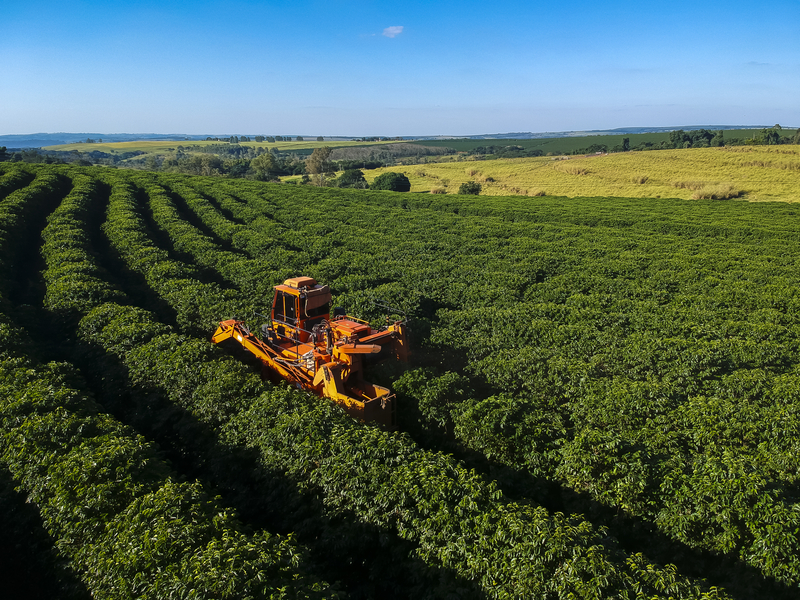
Shifts in Brazilian rainfall patterns driven by a changing climate are contributing to a global shortage of coffee that’s starting to be felt all the way up in Yellowknife.
Last week, Eric Binion – owner of Barren Ground Coffee and Birchwood, two of the NWT capital’s coffee shops – warned customers that their regular blends may not be available, at least for a time.
Binion says he’s having trouble securing the right beans for the right price in a market where costs are increasing fast.
“The main problem right now is we want to continue bringing in high-quality, specialty-grade coffee,” he said.
Advertisement.
Advertisement.
“But the price of that coffee has now doubled. Some of it has tripled in the last three months.
“We’re already operating at the fringes of the supply chain in Yellowknife and with higher labour costs. Now we have this on top of it.”
Where previously you could walk into Barren Ground and select, say, a Guatemalan blend, now you’ll be given a simple choice of light, dark or medium roasts. The origin of the coffee won’t be guaranteed as Binion tries to secure beans for the best price.
He says climate change in Brazil – which is a huge coffee producer – is being compounded by turmoil in the broader commodities market as the United States’ approach to tariffs changes by the day.
Advertisement.
Advertisement.
“Anything that’s going on right now in the commodities market is linked to the US dollar, and the US dollar is going up, down and around. That’s impacting coffee prices,” Binion said.
“Coffee was already on the rise through much of last fall, and there was already worry about what was going to happen for 2025.
“Everyone’s saying it’s going to keep going up. Without panicking, I’m just taking a breather to figure out what we’re going to do.”

A block away from Barren Ground, the Javaroma coffee shop is navigating similar difficulties.
“Eric’s right. The coffee market has definitely been challenging lately,” said Javaroma’s Rami Kassem by email. The company operates multiple locations throughout the city, including one at the airport.
“Prices for green beans have gone up quite a bit due to a mix of things – climate issues in growing regions, shipping costs and overall inflation. It’s been getting harder to keep prices stable, especially when we try to maintain quality,” Kassem wrote.
“At Javaroma, we roast our own beans, so we’re feeling the pressure directly. One of the added challenges is that there’s now a tariff applied to coffee coming from our main supplier in the US to our suppliers here in Canada, which adds another layer of cost.”
What this ultimately means for the price of your coffee in the months ahead isn’t yet clear, but you should expect similar cost increases if you buy your coffee at the grocery store, too.
Advertisement.
Advertisement.
“We’re still doing our best to absorb some of the increases without passing too much on to customers, but it’s a balancing act,” said Kassem.
“We’re sourcing mainly from trusted partners who’ve been fair with us, but they’re also warning about more increases down the road.”
Binion thinks he will be able to stay away from huge leaps in price but says people need to expect an increase ahead.
“I’m not going to have to declare bankruptcy this year but I suppose the main message is people need to be primed not just for Barren Ground Coffee or Birchwood prices to go up, but for coffee prices across the board to be getting more expensive over the next six months,” he said.
“We will have to raise prices at some point here over the next couple months, but I’m hoping to mitigate a lot of that and keep things kind-of within the range that we’re operating in.”

Things continue to change quickly. As recently as a month ago, Binion said he was looking at expanding by opening a new store on Old Airport Road, on the other side of Yellowknife from his existing locations.
“But now I’m like, ‘No, this is not a good time to be doing anything like that.’ Right now is survival mode for getting through the next year,” he said.
Asked if he’d envisaged any of this when he first started Barren Ground seven or eight years ago, grinding a few bags of beans a day as a hobby, he laughed.
“I should have opened a cement factory,” he said. “It would have been a little bit easier.”
