



Advertisement.
The Alberta premier’s visit to Yellowknife inspired two groups to hold protests that joined forces on Wednesday evening.
Danielle Smith is in the NWT capital for a western premiers’ conference. On Wednesday night, she arrived at the territorial legislature for a reception unseen by the crowd protesting outside.
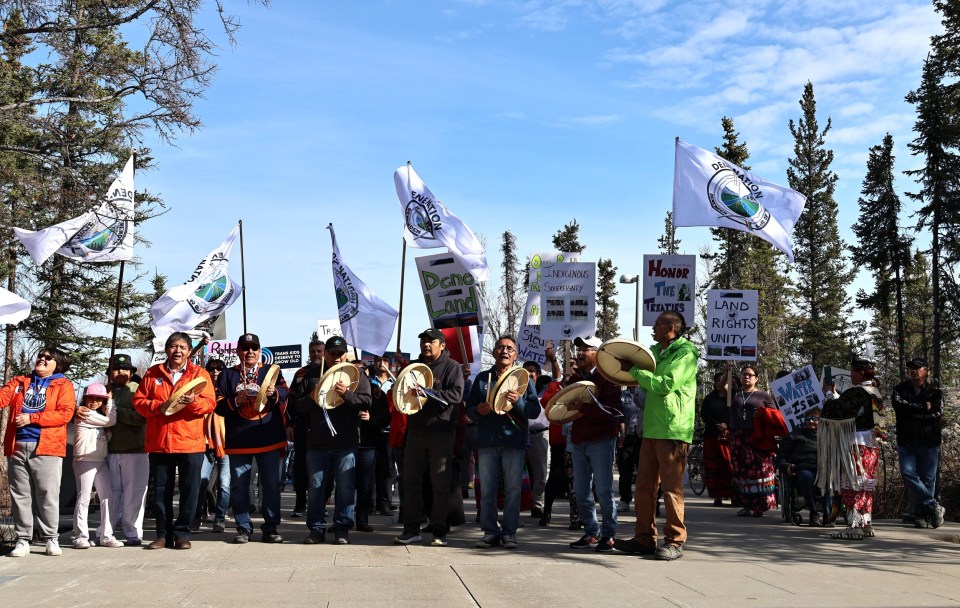
The Dene Nation organized a rally in support of treaty rights and against Alberta separation, while the Northern Mosaic Network organized a rally in support of access to gender-affirming care.
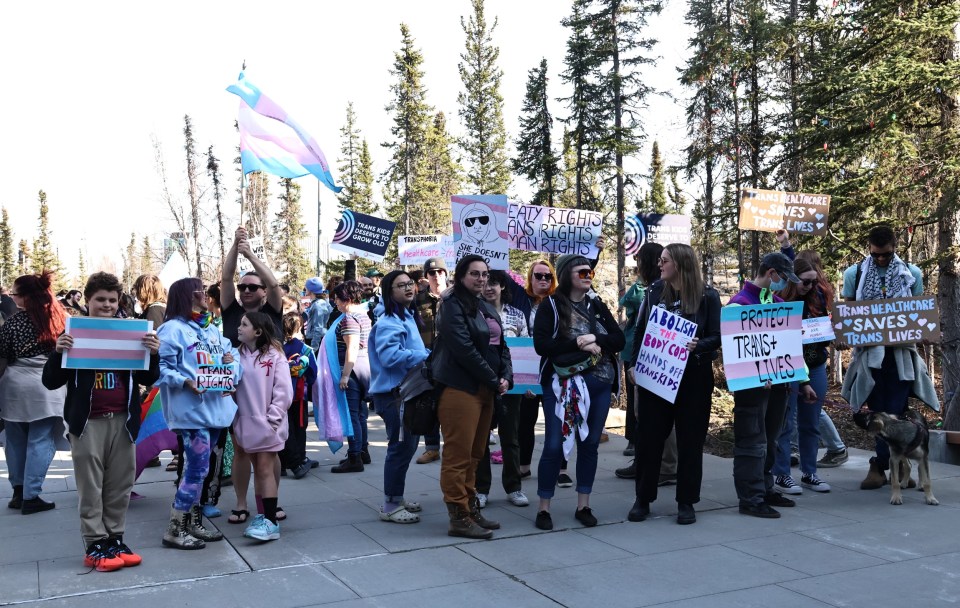
Though the protests were planned separately, the groups showed support for one another. Attendees of both rallies, carrying Dene Nation and transgender pride flags, came together for a drum dance.
Advertisement.
Advertisement.
“We stand with you, stand tall and proud,” Dene Nation representative Leanne Goose told people gathered.
“We are absolutely all about solidarity,” Chelsea Thacker, executive director of the Northern Mosaic Network, told Cabin Radio. “There’s no future without all of us free … We’re all fighting for the same thing.”
The Dene Nation organized its rally over legislation introduced by Smith’s government that could make it easier for citizens to hold a provincial referendum on seceding from Canada.
Earlier this month, Dene leaders in the NWT voiced their solidarity with Alberta chiefs that oppose the province separating. Dene National Chief George Mackenzie has since written a letter formalizing that support.
Advertisement.
Advertisement.
“The Elders have always told us if one is in trouble, you make sure you support each other, you make sure you give a hand to get them out of trouble,” he told the crowd on Wednesday.
Mackenzie said treaties have previously been challenged, as in the Paulette Case, where the Supreme Court of Canada ruled that Treaty 8 and Treaty 11 did not extinguish signatories’ Indigenous rights. The treaties include lands in both the NWT and Alberta.
“If we don’t say anything, we let the Alberta premier get her way and we stay quiet,” Mackenzie said.
“We have to say something. If we don’t, what will happen to the young generations behind us? How will the treaty be after we’re gone? It’s the advice from the Elders: protect your treaties.”
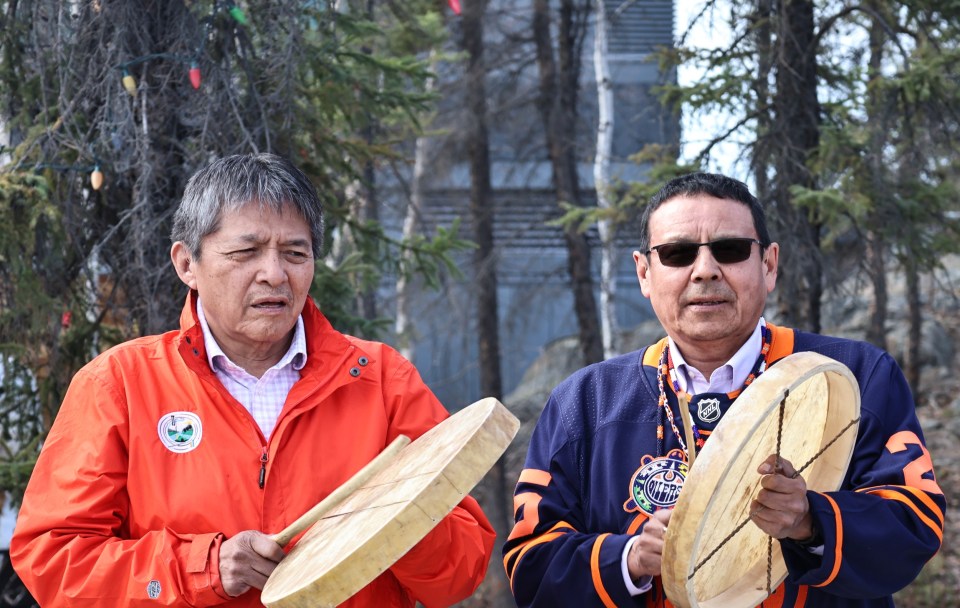
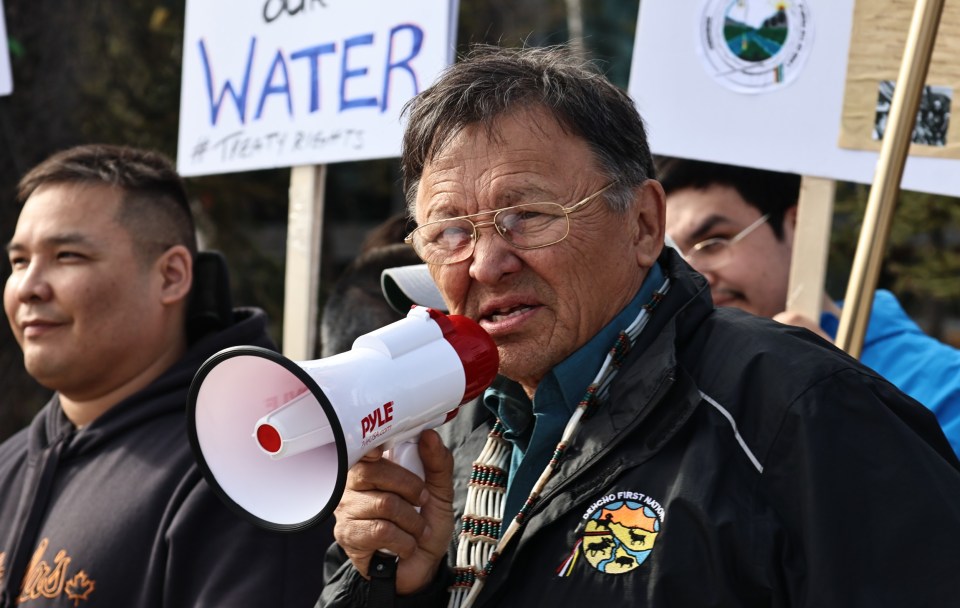
Yellowknives Dene First Nation Dettah Chief Ernest Betsina said Alberta cannot separate as treaties are with the Crown, not the province.
“Even up here in Yellowknife, even in the Northwest Territories, we are together with and we’re showing support to the Alberta chiefs,” he said.
“We are like brothers and sisters, together we are stronger.”
Dehcho Grand Chief Herb Norwegian highlighted that the NWT’s water is impacted by downstream effects from Alberta.
Advertisement.
Advertisement.
“For that reason we stand firm,” he said. “We are right behind the people of Alberta, behind the First Nations that are standing firm.”
‘Making ourselves heard’
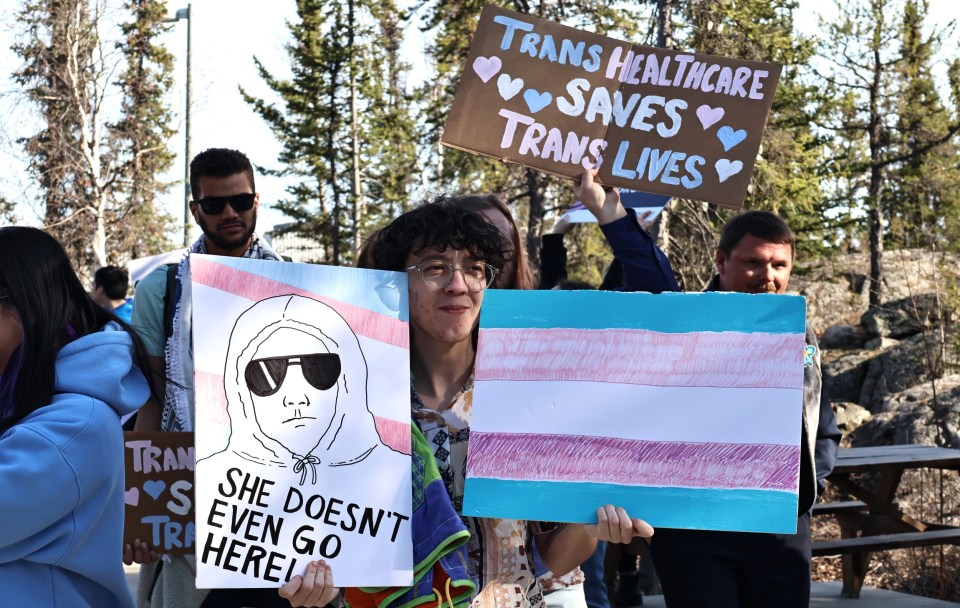
The Northern Mosaic Network’s rally was, in part, a response to Alberta’s Bill 26.
Members of the NWT’s 2SLGBTQIPA+ community have voiced concerns about the legislation – which prohibits puberty blockers and hormone therapy for youth under the age of 16 – and how it could affect people in the territory who rely on those services.
The bill has received royal assent but has not yet been proclaimed. It currently faces a court challenge.
“We wanted to make sure we let our own government know – and our visiting premiers know – we are not going to just sit idly by and let this happen without making ourselves heard,” Thacker said.
Thacker said gender-affirming care is life-saving care and long waitlists to access that care can negatively affect people’s mental health, wellbeing and safety, and cause people to leave communities.
“Every person deserves to stay in their home community, if that’s what they want, and live their lives authentically,” Thacker said.
The Northern Mosaic Network recently penned an open letter to NWT Premier RJ Simpson and health minister Lesa Semmler, highlighting concerns with Bill 26 and increasing transphobia. The letter calls on Simpson and Semmler to outline how they plan to address those issues.
Advertisement.
Advertisement.
The NWT government has promised it will ensure territorial residents continue to have access to gender-affirming care even if some services are no longer available in Alberta.
In the legislature earlier on Wednesday, Semmler – responding to questions from Great Slave MLA Kate Reid – said she wanted to “assure NWT residents that healthcare services for transgender individuals, including children and youth, will continue to be available within our health system.”
“I’ve directed my department to secure alternate out-of-territory care pathways for these individuals,” the minister said, “meaning when a service is not available to residents in the Northwest Territories or Alberta, physicians will refer patients to a jurisdiction where they may continue to receive the care they need.”
“I hope that our government takes us seriously. I expect to meet with people sooner rather than later and I really want change,” Thacker said.
“I’ve been doing this work for almost a decade and I’m having the same conversations with people.
“Nothing has changed and that’s not OK. We’re continuing to fail trans people and their access to care, and we need to raise the standards above what’s even the minimum that’s expected.”
