



At the 2025 Arctic Development Expo in Inuvik, some speakers believe the federal race to increase Arctic security and sovereignty may overlook northern communities.
Senator Margaret Dawn Anderson, the NWT’s lone senator, told expo delegates she believes developing infrastructure in the North – and establishing a stronger military presence – does not necessarily come with a plan to support existing northern communities.
Anderson criticized what she and others have characterized as a federal push to fast-track the newly proposed Bill C-5, which includes Prime Minister Mark Carney’s “nation-building act.” Conservative and Liberal MPs have largely expressed support for it.
If passed, Bill C-5 will enact two pieces of legislation.
The Free Trade and Labour Mobility in Canada Act establishes a statutory framework to remove federal barriers to interprovincial trade, while the Building Canada Act allows the designation of “national interest projects” and streamlines the processes that authorize them, with all decision-making authority transferred to one minister.
Advertisement.
Advertisement.
One part of the bill states: “It is in the interests of Canada’s economy, sovereignty and security, including its energy security, to urgently advance projects throughout Canada, including in the North, that are in the national interest.”
Anderson, in a Tuesday speech, picked up on the phrase “Canada, including the North.”
“The fact that the North is separate from Canada, within a vital bill that is titled the Building Canada Act, I think speaks to the fact that there is a disconnect between Canada and the North,” said Anderson, “and that should be concerning for everyone.”
She said insufficient scrutiny of the legislation was being applied and other contents of the bill were “highly concerning” in their approach to environmental regulations, the rights of Indigenous peoples and rules “that can be overridden in favour of national interests.”
Advertisement.
Advertisement.
With interest increasing in Arctic security and defence – alongside funding for those objectives – Anderson said a difference exists between the two concepts.
“Arctic security encompasses the safety and well-being of our communities, including access to essential services such as housing, food, clean water, healthcare, connectivity and the necessary infrastructure to withstand the impacts of climate change,” said Anderson.
“Defence in the North includes not only military readiness, but also the protection of our ways of life, languages and lands. Sovereignty begins on the ground with the recognition and implementation of Indigenous rights, a fundamental aspect that must be recognized and respected.”
Foreign powers increase pressure
Anderson described the Arctic geopolitical environment as “increasingly unstable and unpredictable, shaped by major global conflicts, shifting power dynamics and the erosion of international rules-based order.”
Jennifer Spence, director of the Arctic Initiative at Harvard Kennedy School’s Belfer Center for Science and International Affairs, noted the impact of Russia’s invasion of Ukraine on the Arctic.
“As much as that invasion and that war is not in the Arctic, we have seen direct impacts of the geopolitical dynamics in the Arctic in a way that has significant diplomatic and security effects,” said Spence, “and we still don’t know how that’s playing out.”
Spence, pointing to US President Donald Trump’s insistence that he would like to take control of Greenland and make Canada the 51st state, said the current environment comes with “opportunities … and also risks.”
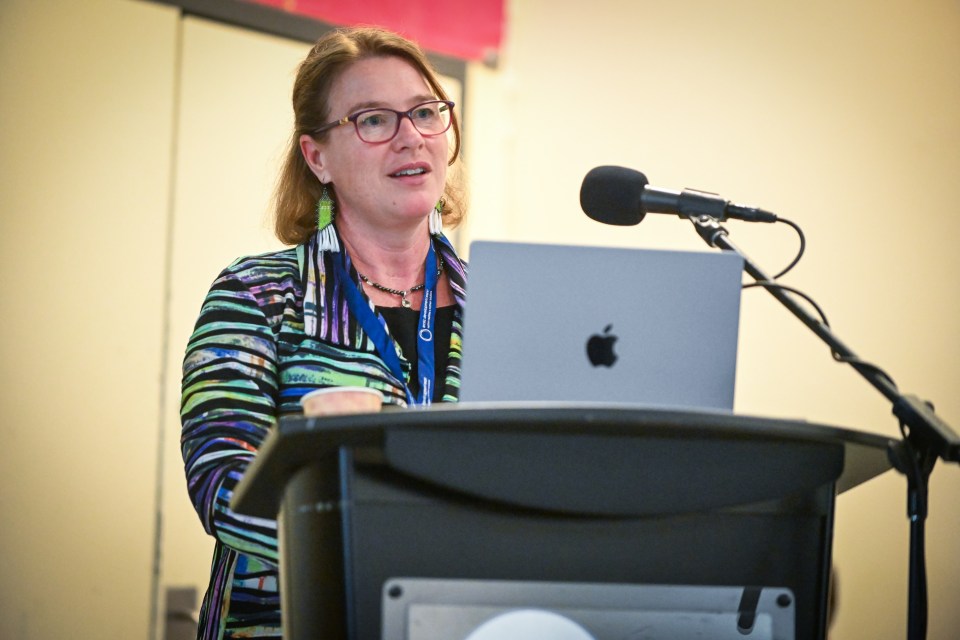
“Against this backdrop, the Arctic is rapidly becoming a critical theatre of strategic competition,” said Anderson. “State actors including China, which has declared itself a near-Arctic state, and India, through its formal Arctic policy, are expanding their influence via infrastructure projects, scientific research and governance engagement.”
Advertisement.
Advertisement.
The senator said geopolitics and climate change raise “urgent questions about environmental protection, jurisdictional authority and Canada’s capacity to govern and defend its north effectively in this contested and high-stakes environment.”
Anderson raised concerns that Canada will repeat its history of mistreating Indigenous communities during times of conflict.
“As an Inuk senator, I carry the memory of how [Inuit peoples] were displaced and relocated in the name of Arctic sovereignty to unfamiliar and often harsh environments during the Cold War, not for their safety but to serve the interests of the state,” said Anderson.
“Inuit were used to mark territory on a map while being denied the very rights, resources and recognition that sovereignty is supposed to protect.
“Sovereignty in its most valid form does not mean placing Indigenous peoples in foreign places to assert national claims. It means recognizing that we are here and that our presence, our knowledge and our governance are the foundation of any claim Canada makes to the North, that history cannot be repeated, not in today’s Arctic and not under today’s pressures.”
Anderson did not, though, oppose the principle of bolstering investment in Arctic infrastructure.
She highlighted the Senate’s 2023 report on Arctic defence, which she said emphasized that Canada was falling “dangerously behind in asserting its sovereignty, modernizing its defence capabilities, and securing infrastructure across the Arctic.”
Anderson said that report called for “urgent, evidence-based action,” and Carney’s pledge to meet the two-percent Nato spending benchmark could be seen in part as a response to it.
Advertisement.
Advertisement.
“His announcement signalled a long-awaited recognition that the Arctic is not just a regional concern but a strategic frontier, requiring serious and sustained national attention,” said Anderson.
“However, the effectiveness of the shift will depend on its execution – whether funding reaches the Arctic in fundamental, tangible ways, whether Indigenous governments are truly empowered, not just consulted.”
Alty says Indigenous consent will guide projects
NWT Liberal MP Rebecca Alty, who is also Carney’s minister of Crown-Indigenous relations, testified in front of senators regarding Bill C-5 this week.
Alty described the bill as laying “the foundation for one Canadian economy,” and emphasized the need for “meaningful consultation and accommodation with Indigenous peoples.”
“As we undertake this nation-building effort, the principle of free, prior, and informed consent must and will guide every project,” said Alty.
“This legislation is about supporting projects that are not only shovel-ready, but shovel-worthy – projects that respect Indigenous knowledge and uphold Aboriginal and treaty rights.”
“We still need northern leaders to be defining needs, setting priorities and taking action,” said Spence at the Inuvik expo.
“We shouldn’t be complacent because of the political environment [but] recognize that the better decisions will be made through your leadership.”
“The success of Canada’s Arctic policy will be measured not only by military metrics or GDP targets,” said Anderson, “but also by whether our communities are safer, stronger and more self-determining in the years to come.”
