


Safety officials say an NWT airline whose aircraft was forced to land on Highway 1 last year has made changes to ensure flights leave with enough fuel.
On August 29, 2024, a Simpson Air flight from Fort Simpson’s water aerodrome to Rabbitkettle Lake and back ran out of fuel on the return trip.
The pilot managed to guide the Beaver floatplane onto Highway 1 west of Fort Simpson. Nobody was hurt and the plane was only lightly damaged.
On Tuesday, the Transportation Safety Board of Canada released a review of what took place. The TSB said it had undertaken a limited investigation “for the purpose of advancing transportation safety.”
According to the TSB, the Simpson Air pilot used a fuel pump that had no fuel meter to fill up the floatplane, relying on visual cues from the plane’s various tanks to estimate that they were full.
Advertisement.
Advertisement.
However, the Mackenzie River’s swell that day may have given “the appearance of the fuel tank being full” in at least one instance without that actually being the case, the report stated.
While the outbound flight proceeded normally, the pilot gradually became aware on the return trip – having picked up two passengers and their gear – that the fuel tanks were reaching empty at a faster rate than usual.
The TSB’s report suggests the plane left with less fuel than the pilot had imagined, but this only became apparent in the latter stages of the flight, by which time the pilot had passed up opportunities to make use of fuel caches maintained by Simpson Air along the route.
When the last of the fuel gauges began to read empty, the pilot “began considering options in the event the fuel gauge was accurate,” the report states.
Advertisement.
Advertisement.
“In the absence of other viable options, the pilot turned toward and followed the Mackenzie Highway in case an emergency landing was required.”
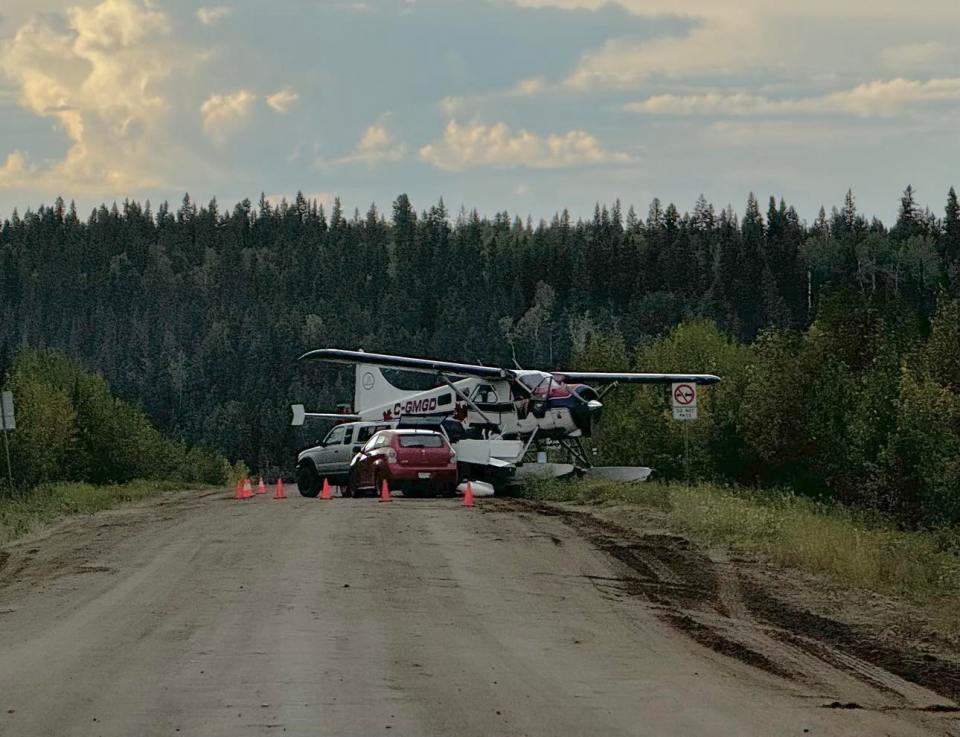
Rescue personnel reached the plane about 20 minutes after a complete loss of power forced it down onto the highway.
As a consequence of these events, the TSB said Simpson Air had changed its mandatory fuel reserve from 30 minutes to 45 minutes of flying time – and added a fuel meter to its fuel truck at the waterdrome.
The airline has created a new checklist for Beaver aircraft with additional fuel checks, the TSB stated, and installed satellite trackers with two-way text capabilities on all aircraft.
Lastly, Simpson Air has “published a memorandum reminding pilots of the importance of ensuring sufficient fuel is uploaded and that fuel burn must be closely monitored.”
“It is vital that pilots maintain a clear understanding of their actual versus required fuel amounts,” the TBS concluded.
“In a float plane, this may involve strategies such as using fuel meters, waiting for calm water conditions that allow for an accurate visual inspection, cross-checking fuel gauges throughout the flight, and uploading additional fuel during en-route stops.”
