


Advertisement.
The late Robert Redford is being remembered worldwide for his acting. He also leaves a legacy in environmentalism and advocacy that occasionally touched the North.
Redford starred in movies like Butch Cassidy And The Sundance Kid, All The President’s Men and The Sting.
He passed away on Tuesday at his home in the Utah mountains, aged 89.
Beyond Hollywood, his interests lay in areas that are meaningful to many northerners: advocacy on behalf of Indigenous peoples, work to preserve the environment and support for independent film.
Advertisement.
Advertisement.
For example, his environmental organization – the Redford Center, whose work continues – provided $20,000 toward the production of Food for the Rest of Us, a documentary made by NWT residents Caroline Cox, Tiffany Ayalik and Jerri Thrasher that travelled from Tuktoyaktuk to Hawaii in an exploration of food as community activism.
Redford’s final appearance on film is a cameo in Dark Winds, a show for which he served as an executive producer. The premise involves following the lives of three Navajo Tribal Police officers in the 1970s.
Showrunner John Wirth told The Canadian Press Dark Winds would not have existed without Redford. The show, he said, is intended to give audiences a look into the Navajo community through the work of Indigenous actors and writers.
Redford’s work specifically touched on the North at least a couple of times, decades apart.
Advertisement.
Advertisement.
In the 1970s, he narrated a documentary titled Following the Tundra Wolf (you can follow that link to watch the 45-minute film).
Peace River Films, the production company behind the documentary, described it as “the first film ever made about the wolf entirely in the wild … made in the Canadian Northwest Territories along the Arctic circle.”
In 2008, Redford’s passion for the environment and Indigenous peoples combined in a foreword to a book titled Caribou and the North: A Shared Future.
The book, by Canadian conservation specialists Monte Hummel and Justina C Ray, set out to document the decline of northern caribou herds and explore what could be done about the issue.
Redford and former NWT premier Stephen Kakfwi each contributed forewords.
“The power of nature has inspired me in a profound fashion throughout my life. It is the essence of beautiful wild lands, teeming with extraordinary wildlife, which has always been natural perfection for me; I can never imagine why anyone would do anything to alter it, to endanger it. Sadly, that is not the case with caribou,” Redford wrote.
“In the Arctic National Wildlife Refuge in Alaska, the coastal calving grounds of the Porcupine caribou herd are at extremely high risk from industrial development.
A diligent coalition of organizations and individuals has so far prevailed in its protection, but it is only a temporary victory, as these important calving grounds are still not permanently safeguarded. Until we make oil and gas drilling impossible, this most sensitive of wildlife habitats, and thus the caribou, will remain profoundly vulnerable.”
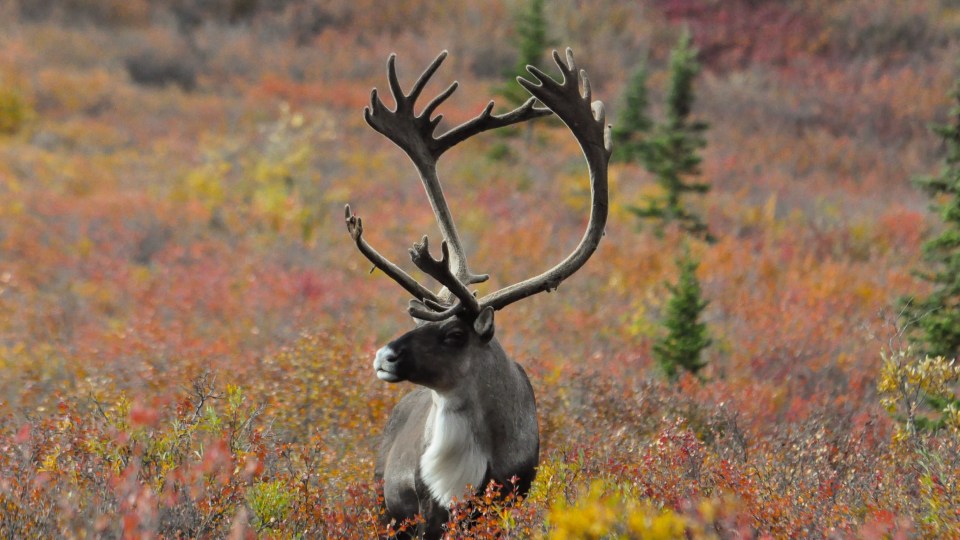
Redford described caribou as so integral to northern living that “it would be hard to find a wildlife species more central to northern ecosystems and human cultures.” Humans elsewhere in North America, he said, were making decisions regarding places they may never live in or visit, but which thrive only “in a natural state.”
Advertisement.
Advertisement.
“And not to be overlooked are those folks who still do live in caribou country,” Redford wrote.
“Time and again, they have spoken up, and never more eloquently than when they feel the caribou are threatened. Consequently, caribou have helped modern conservationists find common cause with local residents, supporting a concern that is championed and led by the people who live there.
“It is my sincere hope that this book will serve to raise awareness of the importance of caribou wherever they are found; to fairly present the past and present threats to these crucial animals; and to inspire new actions to ensure that their shared future with the northern land is one we can all be proud of.”
