



Ekati mine owner Burgundy Diamond Mines is receiving a loan worth $115 million from the federal government under a new tariff relief program.
The money is designed to ensure Ekati – one of three operating NWT diamond mines – stays open. The struggling mine has laid off hundreds of people this year and is behind by millions of dollars on payments to some contractors.
Burgundy and the NWT government had been lobbying Ottawa for help. After weeks of negotiation, the loan was approved on Tuesday by the board of the Canada Enterprise Emergency Funding Corporation, a Crown corporation that controls this kind of loan.
“We’re very grateful,” said Burgundy chief executive officer Jeremy King, who announced the finalized deal on Thursday.
“We’re looking forward to utilizing it as a platform to continue operating. We face challenges still within the market, but this gives us an opportunity.”
Advertisement.
Advertisement.
Despite the loan, King said Ekati cannot return to the size it once was.
“We’re doing everything possible to get the business back on a sustainable footing. It will be a smaller business moving forward,” he told Cabin Radio. “Hopefully more nimble and hopefully living within our means.”
The federal government said the loan would stabilize the mine and “help to maintain
good, high-value jobs” – but added it would also work with the GNWT and Indigenous governments to diversify the territory’s economy.
“It is a big intervention. This is a big deal for the North,” said Brendan Hanley, the Liberal Yukon MP, who holds a northern brief in Mark Carney’s government as parliamentary secretary to Arctic affairs minister Rebecca Chartrand.
Advertisement.
Advertisement.
Hanley – speaking in Calgary this week, where Burgundy has its Canadian headquarters – said Ottawa had been presented with “a fork in the road” in deciding whether the company merited a huge taxpayer-backed loan.
“We could do nothing and just let market forces determine the future,” he told Cabin Radio. “But we could say: we are confident enough in the future viability of the North.”
Where did this loan come from?
The Large Enterprise Tariff Loan program, or LETL, was set up in March as a response to the United States’ imposition of wide-ranging tariffs affecting Canadian businesses.
Loans through the program are designed to address a “liquidity shortfall after exhausting all other sources of capital” at big companies.
Tariffs have played a role in Burgundy’s recent financial problems.
For example, US 50-percent tariffs on India – through which most diamonds flow for polishing before onward sale – have had a significant effect. NWT Premier RJ Simpson discussed the issue with US ambassador to Canada Pete Hoekstra in September.
However, the broader market for natural diamonds has been depressed for some time, driven by factors like the emergence of rival lab-grown products. King said demand from China had also dropped sharply.
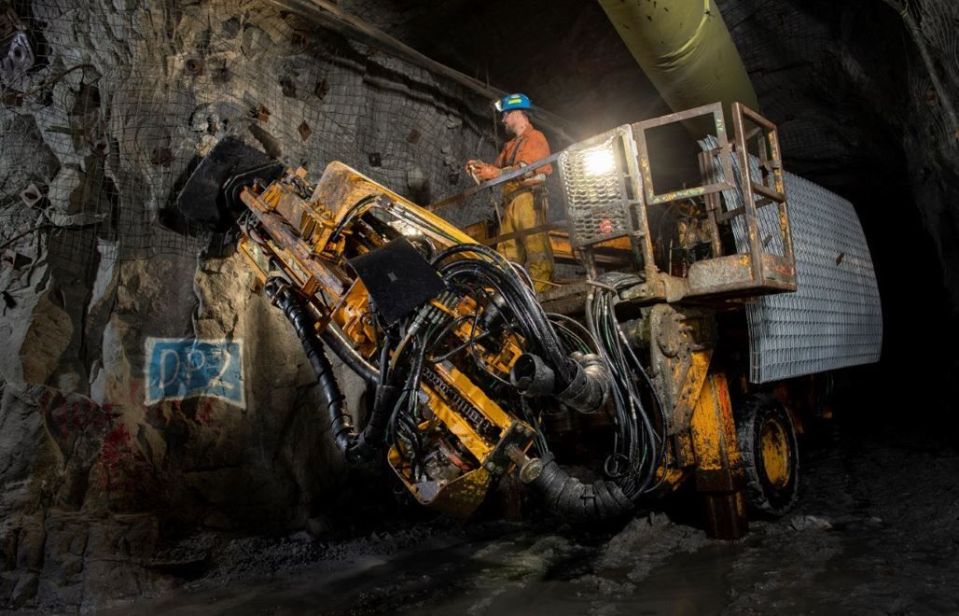
Burgundy suspended the development of new open-pit mining at Ekati earlier this year. King said the company has noticed a “flight to quality” in the diamond market and will now focus on “our higher-value products at Ekati,” meaning several months of production at the Sable open pit and processing of its Fox stockpile, mined between 2004 and 2014.
Advertisement.
Advertisement.
“At the same time, we’re looking at how we mine our existing underground operation,” he said, “and ways we can optimize how we use energy, fuel, all of those things.” In a separate statement on Thursday, Burgundy said underground mining could support at least 12 more years of work.
Burgundy has creditors to pay, severance payments on which to catch up and environmental contractors who need payment to continue regulatory work. King said agreements had been reached on those fronts as a condition of receiving the loan.
The exact guarantees Burgundy made about its mining operations to secure the loan were not clear. The federal government directed Cabin Radio to the standard terms and conditions for LETLs, which include a seven-year repayment term, restrictions on the pay of company leaders and a ban on dividends.
“There are strong conditions attached to this loan, including job guarantees and strong loan repayment provisions,” a federal spokesperson stated.
Read full interview transcripts
Burgundy boss: Ekati will return smaller, denies it’s a bailout
Federal government: Ekati ‘would have been a closure’ without loan
The funding must form “part of a plan to return to financial stability,” implying Burgundy has shown Ottawa a plan that the federal government considers workable.
“We needed to get concessions from our senior debt holders. We needed to get concessions from our surety or environmental bond providers, and we had to get concessions from our trade creditors as well,” said King.
“All of those groups have been supportive of Burgundy and getting Ekati back to a position where it has an opportunity to become sustainable.”
Advertisement.
Advertisement.
At its peak, Ekati has had a workforce of more than 1,000 people. The federal government said the mine employed around 200 northern Indigenous workers in 2024.
Australian non-compliance
Burgundy is listed on the Australian Securities Exchange, or ASX, where the company has endured a turbulent few months.
Burgundy said in October it had broken ASX rules by agreeing a $23-million loan from a closely connected company without shareholder approval.
For a time, that ASX issue looked to some industry insiders like it might prohibit the federal government from agreeing LETL financing for Burgundy, as ordinarily such loans require recipients to be in full compliance.
Meanwhile, trading of Burgundy’s shares has been suspended since the end of September – a lengthy pause by most measures – at the company’s request.
It said continued trading was “likely to materially prejudice its ability to complete external funding discussions,” understood to mean the LETL cash.
Federal lobbying records show the company hired Gordon Taylor Lee in September expressly to help advance its LETL application. Taylor Lee, a former senior political staffer to two Liberal ministers, now runs PR firm National.
King said the ASX problems “were not an impediment at all” as it negotiated the loan with the federal government. Ottawa did not comment when asked how those difficulties had affected the process.
Advertisement.
Advertisement.
Is this cost-effective?
Burgundy is the second company to receive LETL financing. (Technically, the LETL goes to Arctic Canadian Diamond Company Ltd, its subsidiary that operates Ekati.)
Earlier this year, steel giant Algoma was granted an LETL worth $400 million plus another $100 million from the Ontario government.
At the time, Ottawa said it was acting to protect steel jobs. But two months later, Algoma announced it was issuing 1,000 layoff notices – a plan both governments reportedly knew about when they agreed the loans.
Hanley, the Yukon MP, said the “premises are very different” between the Algoma and Burgundy LETLs but acknowledged there were “lessons learned” from how Algoma’s loan played out.
NWT MP Rebecca Alty, in a statement, said the announcement showed a federal “commitment to ensuring this moment of economic change becomes a generational opportunity for northerners.”
However, some critics doubt Burgundy’s LETL will restore the 27-year-old Ekati mine to health or, ultimately, preserve jobs.
“I am extremely skeptical that we should be putting public money into an operation that appears to most observers to be on life support,” said Shauna Morgan, the Yellowknife North MLA.
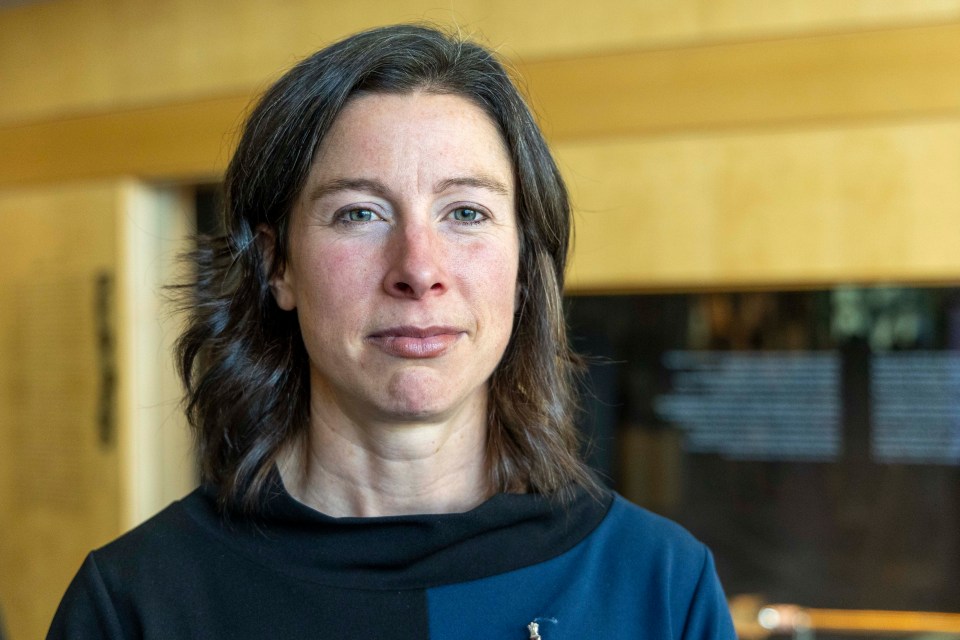
Morgan believes this kind of loan rests on an assumption that a company going through a tough period can be placed back on its feet, ramp up its operations and sustain those operations indefinitely.
Advertisement.
Advertisement.
“That clashes with the very nature of the mining industry,” she said.
“Any individual operation is going to come to an end, so there are going to be job losses in that particular place. That’s just how it works.
“So there’s a question of whether it’s ever worth subsidies of public tax dollars to sustain an operation longer than it’s profitable on its own. What is the threshold where it’s no longer cost-effective to be putting public money into an operation that would otherwise collapse?”
“This is what the LETL is designed for,” said MP Hanley of the Burgundy loan.
“It’s designed, in this time of economic threats and uncertainty, to maintain confidence in Canadian industry and Canadian workers.”
“Everyone is entitled to their opinion. It’s worth bearing in mind the contribution Ekati has made to the local economy in the last 25 years,” said Burgundy boss King.
“It’s going through a challenging period, there’s no doubt about that. Is it guaranteed to come out of that off the back of this loan? No. There is risk.
“But I guess the group that distributes the loan is taking a calculated risk. Ekati still employs a significant number of people in the North and we’re hopeful of getting it back on track.”
