




The head of Mon Mine says he expects the underground gold mine will re-enter production next year and hopes it will revive gold mining in the NWT.
Sixty North Gold Mining, which owns Mon Mine, announced earlier this month it had purchased a gold processing mill. The mill is scheduled to arrive at the mine site, located about 45 miles north of Yellowknife, via winter road in 2026.
Dave Webb, president and chief executive officer of Sixty North, said this will be the first time a new gold mill will be installed on Yellowknife’s greenstone belt in more than 80 years.
“Although gold mining, sort-of for good or bad, was the backbone that founded Yellowknife and the area around it … it’s been forgotten because the diamond mines were much sexier, bigger, more profitable. And that kind-of pushed gold aside, notwithstanding that the price sucked,” Webb said.
“There’s always been gold in Yellowknife, there’s lots of gold left, it just needs to be developed.”
Advertisement.
Advertisement.

Mon Mine, previously owned by Cominco, produced an estimated 15,000 ounces of gold between 1989 and 1997 before it closed due to falling gold prices.
Gold prices recently broke records, reaching more than US $4,300 an ounce in October.
Webb said Sixty North’s new mill will be able to process 100 tonnes per day and do everything from crushing and grinding ore to extracting gold and filtering tailings.
Webb said while 100 tonnes a day is considered small, Mon Mine will be the same scale as the Con and Discovery mines when they first started.
Advertisement.
Advertisement.
“I just took a perspective that bigger is not always better,” he said.
Once Mon Mine goes into production, it will mark the first time an NWT mine has produced gold since Giant Mine ended production in 2004.
Webb said that, unlike Giant Mine, Sixty North’s operation will not involve roasting ore and it will have a minimal impact on the environment.
He said the mill for Mon Mine will use gravity and flotation to recover gold, rather than cyanide.
He added that the sand tailings produced from the mine will have a level of arsenic that meets residential development requirements and will be about six times lower than the natural soil in the area.
Webb said Mon Mine entering production is good news as it is expected to bring local benefits including contributions to employment, the tax base and royalty revenues. He said Sixty North has invested $6 million in the Mon Mine property to date, some of which has gone to local businesses, a figure he expects will increase as the mine ramps up production.
“With one gold mine, just like with one diamond mine, others tend to follow,” he added.
Alongside gold, Webb said the area hosts tungsten, antimony, silver, copper and cobalt.
Webb said Sixty North has been consulting with relevant First Nations since 2012 and received its first permits for Mon Mine in 2014.
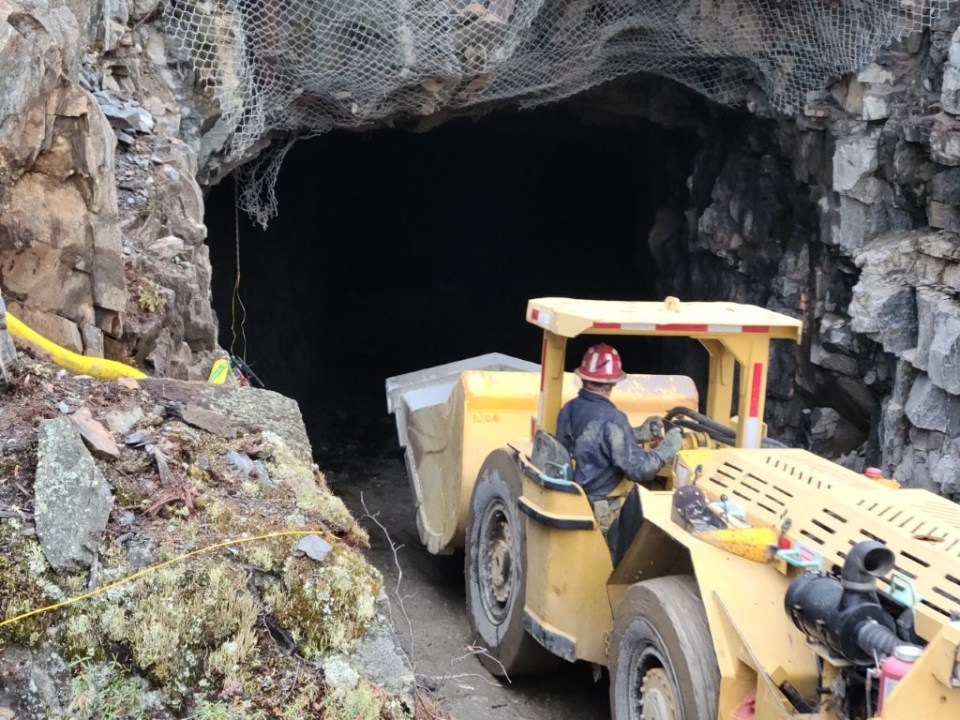
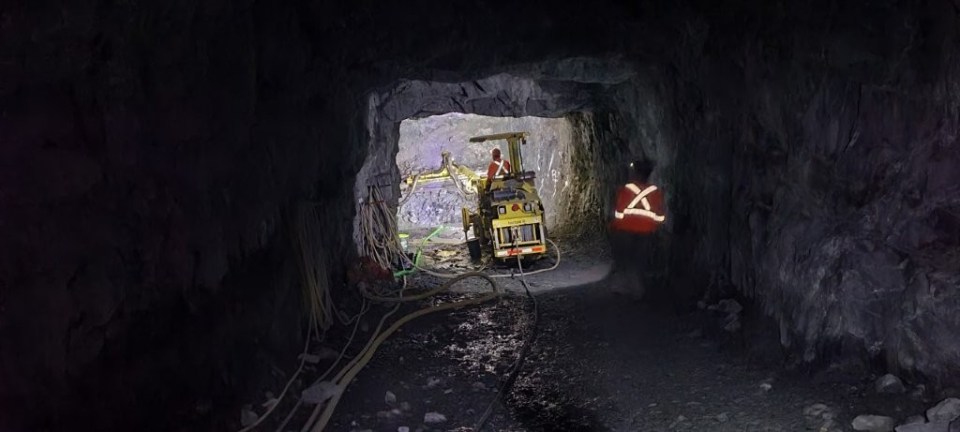
Recent work at the property has included re-opening the mine’s underground tunnels and extending the main production ramp to the second level of the mine, which is expected to continue to a third level.
