



Advertisement.
As snow blankets the ground, wildfire season may be far from many northerners’ minds, but wildfires and related evacuations can have long-lasting impacts.
During the NWT’s historic wildfire season of 2023, the majority of the territory’s population faced evacuation orders. It was unsettling for many people leaving their homes not knowing when they would return and some residents faced particularly harrowing journeys as they fled amid flames and smoke.
While away from their communities, people dealt with impacts such as weeks without income, separation from family and friends, or losing their homes due to fire.
In the ensuing years, other NWT communities have had to evacuate due to wildfires.
Advertisement.
Advertisement.
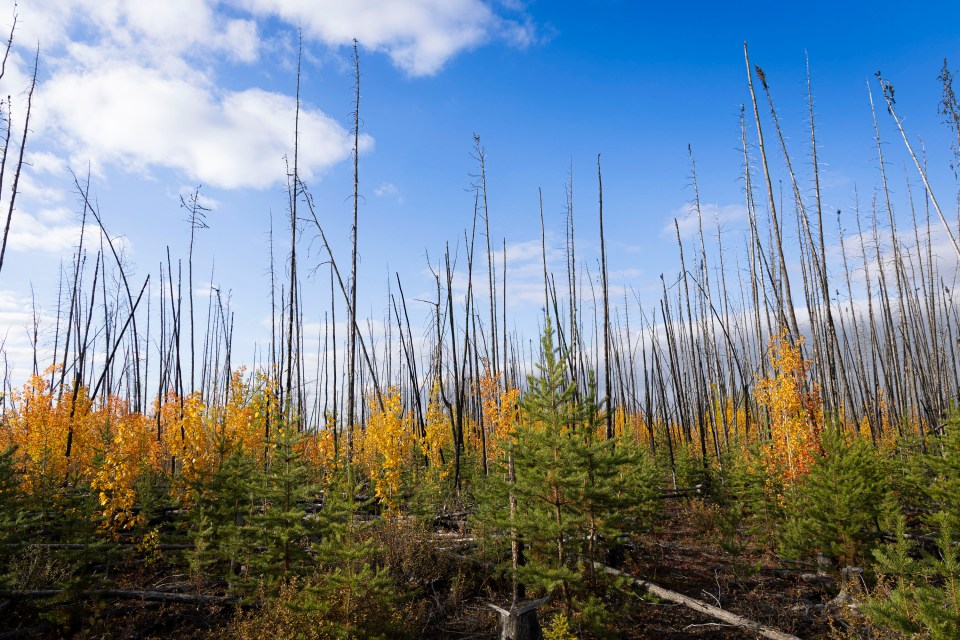
As fireweed and new growth emerge from burn areas, people are also recovering at different paces. Cabin Radio spoke to residents and leaders about how they and their communities are healing.
Many said people still experience anxiety during hot and dry weather or when they smell wildfire smoke. They said community gatherings, conversations, art, counselling and preparation have helped people during recovery.
Talking ‘huge for healing’
Few NWT communities have been affected by evacuations as much as Hay River, Kátł’odeeche First Nation and West Point First Nation, which were evacuated due to historic flooding in 2022 and then twice due to wildfires in 2023.
Hay River Mayor Kandis Jameson said since those emergencies, the town has worked to bring community members together. That includes a meet-your-neighbour program, with one of the neighbourhoods hardest hit by flooding holding a block party.
Advertisement.
Advertisement.
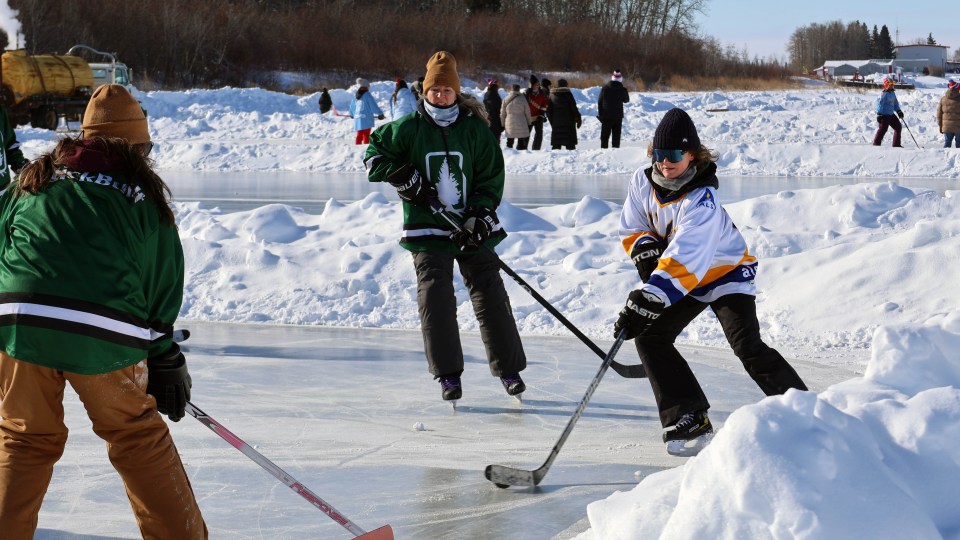
The town launched its Community Spirit Awards in 2024 to celebrate the contributions of local volunteers and businesses and brought back events such as Lobster Fest, the Hay Days festival, Polar Pond Hockey and track and field. That year, Hay River was named Canada’s most active community as part of the Participaction Community Challenge.
“Our staff worked really hard to get people out and about and doing activities,” Jameson said, adding the town has also partnered with the Métis, Kátł’odeeche and West Point First Nations and other organizations.
“It’s amazing to see how people come together in a community when you’ve been through tough times.”
When Hay River hosted wildfire evacuees from Fort Providence last summer, Jameson said residents came together to support people from the neighbouring community.
“Talking to your neighbours, talking to people about their experiences and what you experienced, that’s huge for healing right after any form of a trauma or disaster,” she said.
Jameson said other efforts to help people heal include the town’s healthy community strategy and committee, recreation programming and counselling supports.
Scott Clouthier, executive director of the youth centre in Hay River, said evacuations have “had a big impact” on everyone in the community. He said for youth particularly it has “kind-of taken the joy out of the summer season” as they are “on pins and needles” wondering if there will be another emergency.
Clouthier said the youth centre provides a safe place for youth to express their feelings, whether through casual conversations with staff or facilitated art therapy sessions.
Advertisement.
Advertisement.
“I think that’s given an outlet to youth in the community, the ones who attend our centre, to be able to process some of the feelings and anxieties around the evacuations that have happened and about feeling anxious about what could potentially happen in the future,” he said.
Clothier said he would like to see people of all ages be able to share their feelings, experiences and stories as part of a formal large-scale community conversation.
“I think it’s helpful as much in being able to process those feelings and recover and heal,” he said, “and I think we really also haven’t had an opportunity, as a community, to talk about what didn’t work so well and how we can help each other better in the future.”
Many people from Fort Smith had to evacuate twice in 2023, first from their homes and then from the evacuation centre in Hay River.
Mayor Dana Fergusson was among those who stayed behind in Fort Smith during the fire.
“It took me a year to finally get to feel normal or somewhat normal again,” she said.
“I can only assume that others might have felt the same way because you’re in such a high, intense situation and then you weren’t. Coming down from that, there was a lot of stress.”
Fergusson said some things that have helped since residents returned home include community gatherings, wellness programming and talking about shared experiences.
Advertisement.
Advertisement.
“I don’t know if it’s directly because of fires, but there’s more programming that I see in our community,” she said.
Faith and community
Enterprise was one of the communities hardest hit by wildfire in 2023, with many residents losing their homes.
Genevieve Clarke, who is currently living in Hay River, is a longtime resident of Enterprise who lost her home to fire. She said she plans to begin rebuilding in the spring.
Clarke said her Christian faith has helped her both during the evacuation and since returning to the NWT.
“If I hadn’t had my faith, it would have been a terrible, terrible impact, being that we lost our house and 60 percent of our community lost their homes,” she said, adding she has particularly found peace from the biblical story of Job.
Clarke said her faith community has provided mental support as well as raised funds for materials to rebuild her home.
Clarke expressed frustration at not being able to vote in the hamlet’s recent election and said it feels like the NWT government has “forgotten Enterprise all down the line.”
“It’s hard being displaced people,” she said.
Advertisement.
Advertisement.
“Enterprise has quite often been a divided community, but the loss that we experienced seemed to bring the community together – but now we’re being torn apart again.”
Other Enterprise residents have voiced disappointment with the NWT government over the lack of financial support for uninsured residents to rebuild or for temporary housing in the hamlet.
Recovery can be a long road
While evacuations are intended to protect people from immediate physical harm, they can result in other challenges and impacts on mental health and social wellbeing.
Much like burn scars that remain on the land, research indicates those impacts can last long after fires are done burning.
Studies conducted following the 2016 wildfire in Fort McMurray have found that, for some people, mental health impacts such as depression, anxiety and post-traumatic stress disorder persisted for years.
One study unexpectedly found that mental health symptoms had increased among youth between 2017 and 2019, which the study’s authors said highlighted the need for multi-year post-disaster supports.
Emily Pietropaolo, vice-president of recovery at the Canadian Red Cross, said people recover at different rates depending on their resiliency level and the impacts they have experienced.
She said the Red Cross is still working with residents of Enterprise, and what people need to recover may change over time.
Advertisement.
Advertisement.
Pietropaolo pointed to community gatherings, positive shared experiences and culturally appropriate mental health supports as things that can help people’s wellbeing following a wildfire.
“You can never underestimate the power of people coming together over food and over sharing a meal,” she said. “That helps bring a lot of sort-of normalcy and sense of community, and just people seeing each other if they haven’t seen each other in a little bit.”
Dr Courtney Howard, an emergency physician in Yellowknife who has researched the health impacts of wildfires, said factors that can make someone at greater risk for long-term effects include pre-existing mental health challenges and experiencing repeated evacuations.
She said things that can reduce the impacts of evacuations include being prepared and feeling part of a community.
“Community cohesion probably was what got us through the first one – the fact that we know our neighbours and know who can do what and who needs help,” she said.
“The cool part about that is that relationships are not only what build trust in our ability to work well together under stressful circumstances, but also they give us a chance to talk and to share experiences, and to support one another in both the in-between times and during wildfire season itself.”
Howard said it was healing for her to participate in @tension, a film involving interpretive dance by Fia Grogono and Tommy Jorge featuring Howard, Grogono and Tomiko Robson as dancers.
Across the territory, several people have turned to the arts to process their feelings both during and after evacuations, such as Gnarwhal’s music video for The War/Nothing More.
Advertisement.
Advertisement.
Later this month, the United Way will hold free workshops in Hay River and Inuvik, led by Yellowknife author Laurie Sarkadi, on coping with climate change through creative writing and art.
Impacts on the land
Yellowknives Dene First Nation Chief Ernest Betsina said wildfire evacuations were difficult for members who experienced “a lot of fear, stress and disruption with our lives.” He said some families were separated, including Elders and caregivers, and people experienced financial strain.
“I believe that there are still some ripple effects,” he said.
Betsina added that many hectares of land were burned by wildfire, affecting people’s traplines and cabins.
“It really does affect them in the short-term and long-term with their livelihood,” he said.
Betsina said talking with friends and family has helped people during recovery and the First Nation’s wellness department did “a tremendous job” supporting people.
If communities have to evacuate again, Betsina said he would like as much notice as possible and for First Nation members to be able to stay together in the same city rather than be separated.

Tłı̨chǫ Grand Chief Jackson Lafferty said community wellness takes everyone working together.
Advertisement.
Advertisement.
He said when communities have had to evacuate to Yellowknife, for example, the Tłı̨chǫ Government has worked with the city and NWT governments and organizations to support evacuees.
“Everybody contributes and everybody takes part,” he said.
Lafferty said being evacuated from your community can take an emotional toll. He said efforts to help people heal include community wellness programming and counselling supports.
“It’s great to be back in the community and have our people back in their community and their household,” Lafferty said. “Certainly, we don’t want to go through this process again but it’s not up to us. We just have to be mindful, we have to be prepared that anything could happen.”
The Tłı̨chǫ Government has also begun a large reforestation project in the region.
Supporting vulnerable people
Reviews of both the City of Yellowknife and NWT government responses to 2023’s wildfires highlighted the need to better support vulnerable populations.
“I think we can all agree it didn’t go well,” Tony Brushett, executive director of the Salvation Army in Yellowknife, said of the city’s evacuation.
“Collectively, we didn’t really understand the complexity of the situation back then and the effect it would have on the vulnerable population. It really did affect their emotional wellbeing.”
Advertisement.
Advertisement.
Brushett has said since then, the Salvation Army has worked to better prepare staff and clients and explained to clients how it plans to do things differently.
Brushett said, however, not enough has been done to help vulnerable people affected by the evacuation to heal.
“The general shelter population were sent out with just the normal population of Yellowknife so they left with no supports. So there was a lot of damage done back then,” he said.
The City of Yellowknife was both evacuated in 2023 and has served as an evacuation centre for many communities.
Yellowknife Mayor Ben Hendriksen, who was a councillor when the city was ordered to evacuate, said the evacuation affected many people’s sense of security.
He said people are “all in different spaces” when it comes to recovery and factors like financial means have affected people’s ability to bounce back.
“From a city perspective, I feel pretty good about where we’re at now,” he said.
Since the evacuation, Hendriksen said the city has hired a manager of emergency preparedness, signed an emergency response agreement with the Salvation Army, updated its emergency plans and is holding emergency response drills, among other improvements.
Advertisement.
Advertisement.
“All of it is just making sure we’re ready should something happen again.”
Impacts on firefighters
Beyond impacts on evacuees, a review of the NWT government’s firefighting efforts in 2023 found that firefighters faced significant mental health and physical challenges due to high demand.
Firefighters who participated in the review reported a wide range of symptoms, including mental exhaustion and trauma, and said the mental health supports provided did not meet their needs.
Other Department of Environment and Climate Change employees said responding to misinformation about wildfires and wildfire response consumed limited resources and negatively impacted their mental health.
Environment minister Jay Macdonald has said he believes mental health supports should be increased. The department has said its changes include bringing on fire crews earlier in the season, investing in Firesmart initiatives and adding more aircraft to its fleet.
Fort Smith Mayor Fergusson said the town’s protective services division has offered support to staff and volunteers, including through Wounded Warriors, which offers mental health services to first responders.
‘This is very real to all of us’
Premier RJ Simpson, who lives in Hay River, said the same people responding to emergencies in the NWT are also affected as residents of the territory.
“This is very real to all of us,” he said.
Advertisement.
Advertisement.
Simpson said one thing that helped him and others is feeling prepared and capable of handling a future evacuation.
Simpson said while “things aren’t perfect today,” the NWT government is continuously learning and improving.
“While it is chaotic during evacuation, we’re doing our best to make it less chaotic, make it more predictable and every time something happens, we learn from it,” he said.
Communities minister Vince McKay was a first responder when Hay River was evacuated and said he grew up in the West Channel, which was regularly evacuated due to spring flooding.
He said he has seen a lot of improvements since 2023, including to communication and community preparedness.
Health minister Lesa Semmler said the territory regularly provides mental health supports through the community counselling program and online. She said the NWT also offers funding for Indigenous and community governments to provide wellness programming.
Semmler said her department has an emergency response plan and can increase mental health supports in communities when needed.
“People deal with stress in different ways,” she said.
“The initial impact may be when they need support – but it might be after, when everything is kind-of calmed down.”
