


Advertisement.
The sentiment echoing around the Sahtu region after Imperial Oil announced it will wind down its operation in Norman Wells this year? “This sucks.”
The company’s oil field has been at the heart of the community’s identity and economy for more than a century.
Production will come to a stop by the end of September “as the facility comes to the end of its lifespan,” read a company statement on Friday.
In Norman Wells, residents say they’re worried about the community shrinking, services being cut and a lack of opportunities in the region, though some see an opportunity for the town to pivot.
Advertisement.
Advertisement.
Sahtu MLA Danny McNeely told Cabin Radio he feels “deeply concerned.”
“It’s shocking to the point where you have a one-industry community and that industry is shutting down,” said McNeely. “The repercussions of this announcement is going to be felt hugely by the community and other parties involved, including the region.”
He said he’s concerned about lost tax revenues for the Town of Norman Wells, the loss of royalty revenues for stakeholders in the area, and the impact on jobs – not just at Imperial Oil but at the businesses built up around it.
Imperial previously said it provides annual property taxes of about $6 million to the Town of Norman Wells, which the company said “constitutes approximately 70 percent of the town’s budget.”
Advertisement.
Advertisement.
There are many outstanding questions, McNeely said, such as the schedule for the site’s closure and remediation.
“I look forward to having a follow-up discussion and planning session,” he said, to “really discuss where are we going to go from here, what preparations we need.”
With the declining diamond sector in the NWT, this closure is part of a worrying trend, McNeely said.
“How much more resource development is on the threshold of closure,” he asked, “and what is our readiness approach to further diversify our whole territorial economy?”
Others with a connection to the closure said Friday’s news was no surprise, but still left them pondering the future.
“Imperial has been talking about shutting down the plant ever since I came to Norman Wells,” said resident Chris Chivers. “[For] 20 years there’s been a five-to-10-year lifespan, so the writing was definitely on the wall.”
Chivers is the superintendent at a contracting company that supplies heavy equipment to Imperial Oil.
He isn’t sure how the site’s closure will affect his job. It’s possible, he said, that remediation of the site could lead to even more work.
Advertisement.
Advertisement.
“That’s purely speculation on my part, and it’s going to wait on how Imperial wants to tackle the closeout,” said Chivers.
Ultimately, he said, the town faces a transition.
“Norman Wells is going to have to pivot its identity after 100-plus years of being an oil town,” said Chivers.
“The fact that Imperial Oil is leaving doesn’t take away from some of the other things that we have here, whether it’s the world-class hunting on the other side of the Mackenzie Mountains or just some of the beautiful landscape we have.”
He sees a future where Norman Wells could develop sectors like eco-tourism. What comes next, he said, is “a chapter yet to be written.”

Josh Ferguson, a Norman Wells resident, described Imperial as the “economic engine” of the area.
“There’s probably gonna be a bunch of services that end up going because there won’t be enough economic activity to support them,” said Ferguson. “In the end, for anyone who’s still here, it’ll lower quality of service.”
In discussions around the town on Friday, he said, some people described Norman Wells as a place of ups and downs – with this being a low point, but things could swing around.
Advertisement.
Advertisement.
“It’s very easy to point fingers and demonize or whatnot, but the reality of it is that has been the economic engine of this place for a very long time,” he said of Imperial’s facility, “and it’s going to be really, really different” without it.
He and his family plan to leave the community in the coming months for unrelated reasons – to be closer to family, to have better access to childcare and to make travel less expensive.
‘People are going to be leaving’
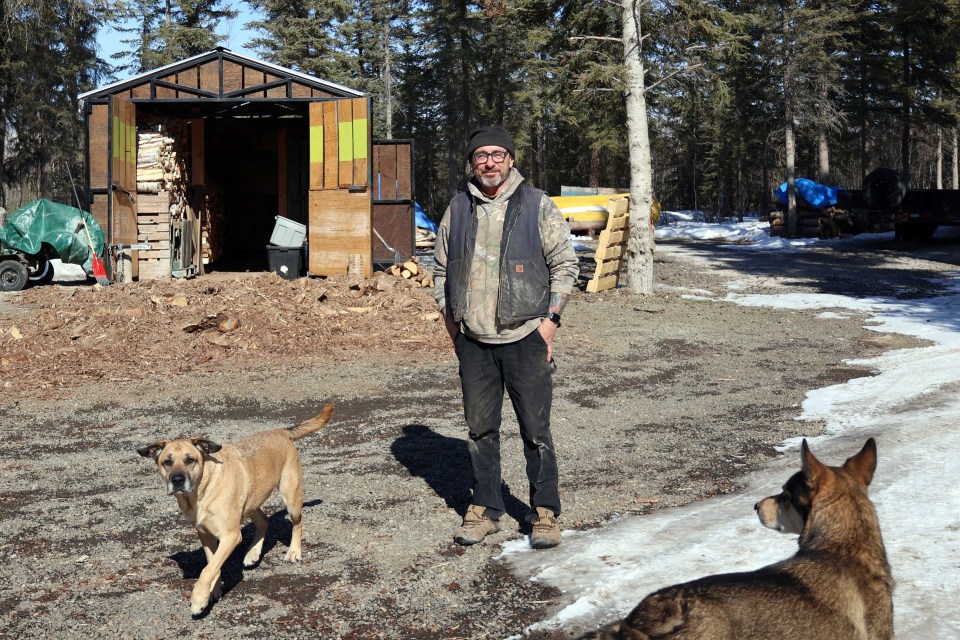
Drayton Walker owns a landscaping business in Norman Wells. He said he isn’t directly affected by Imperial Oil’s announcement, “but it does suck in the sense that we have been working with them more and more every year.”
Now, he worries that larger companies who have done work for Imperial in the past might start to pursue contracts he has previously held.
“I don’t like that. It’s not great in our friendly little town, and I don’t blame them. That’s just business, how it is,” said Walker.
“For a lot of other businesses and people too – families and stuff – they’re probably going to be having to chase that work somewhere else. They’re going to have to move, maybe follow Esso to another community that they operate,” said Walker.
He expects the community to shrink as a result of the closure though, like Chivers, Walker said there could be a boom that comes with the site’s remediation period.
“There is an opportunity for future work to come of this, which I believe is going to be mostly pointed at local people to assist with, and it should be a good opportunity for people like us who do vegetation control,” said Walker.
Advertisement.
Advertisement.
He hopes the announcement might create also more pressure to build the Mackenzie Valley Highway, a proposed all-season road to the Sahtu long discussed as a way to create better access to the community and lower the cost of goods.
“Now that we know there’s less work and it’s not going to be here at the end of this year, that might give a bigger push for the federal government to understand we need this highway built more than ever,” Walker said, “because people are going to be leaving and it’s going to be a lot harder for us to get our groceries.”
The closure of the Imperial Oil facility is only the latest development in a challenging few years for Norman Wells residents. Last winter, the town declared a state of emergency after fuel had to be flown, leading to skyrocketing prices.
“It’s scary to think that we’re going to lose yet more people in our town,” said Walker.
“We already are shrinking in size, and a lot of that is due to just the rising cost of stuff,” he said.
“We’ve had water levels being low that one one year we didn’t have a barge. We had to fly all our fuel in. That was a tough winter. Everybody was struggling from that. I still think people are trying to recover from that.”
Cody Punter contributed reporting
