

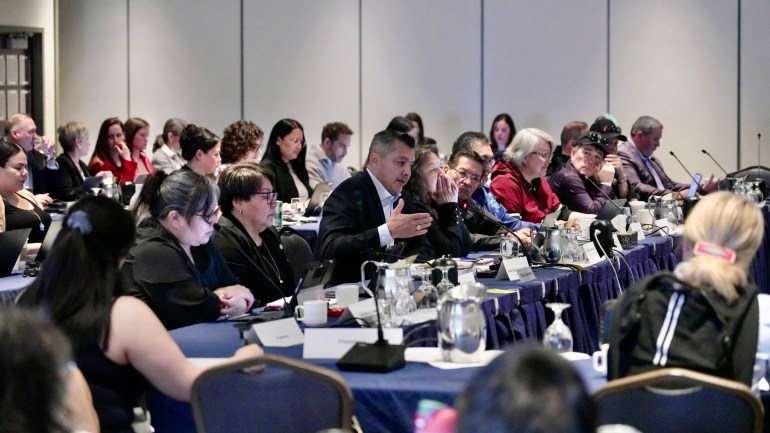
Territorial and Indigenous leaders in the NWT are calling on the federal government to support Indigenous procurement and local capacity building to help keep defence and major project spending in the North.
Members of the NWT Council of Leaders met in Yellowknife last week to discuss shared priorities and advocate for support from the federal government.
That included discussions about anticipated defence spending and major projects in the territory.
According to a press release, leaders told Mélanie Joly, Canada’s industry minister, the federal government should increase the minimum five-percent Indigenous procurement target when implementing its industrial defence strategy in the NWT to reflect the territory’s high Indigenous population.
NWT leaders also highlighted the need to invest in training and development to build workforce capacity in the North.
Advertisement.
Advertisement.
“They affirmed that Canada’s Arctic presence must be rooted in healthy, connected and prepared northern communities, and that a coordinated approach is required to ensure the North is equipped and prepared to respond to the complex challenges and opportunities emerging across the Arctic,” the release states.
While in the city, Joly also met with some members of Yellowknife’s business community to discuss Canada’s defence industrial strategy, which aims to grow the domestic defence industry.
The NWT Council of Leaders agreed to advance major infrastructure projects that “ensure all-season connectivity, improve accessibility, stabilize the cost of living, strengthen northern energy and transportation systems, and create long-term employment and economic opportunities.”
NWT leaders further said northern perspectives need to be reflected in Canada’s international relations as “global discussions and potential decisions related to trade, Arctic governance and international partnerships increasingly affect the Northwest Territories and the people who call it home.”
Advertisement.
Advertisement.
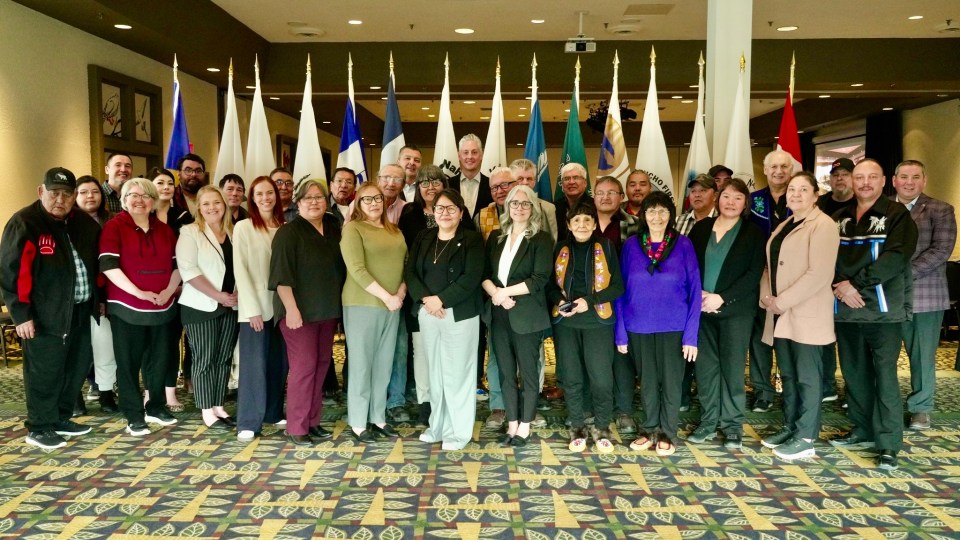
The NWT Council of Leaders, which is made up of representatives from the GNWT and several Indigenous governments and organizations in the territory, was formed in 2021 to identify and advance shared priorities.
Other federal ministers attended last week’s meeting virtually, including NWT MP and Minister of Crown-Indigenous Relations Rebecca Alty and Minister of Northern and Arctic Affairs Rebecca Chartrand. Leaders also met with representatives of the Canadian Armed Forces and NWT RCMP.
During the two-day meeting, leaders discussed healthcare, housing, infrastructure, the economy, treaty obligations, affordability, education, Jordan’s Principle and Inuit Child First Initiative, and the environment.
NWT leaders advocated for the federal government to recognize NWT Métis under the Non-Insured Health Benefits program for First Nations and Inuit or NIHB. They also pushed for sustainable long-term funding to deliver the program in the North and for representatives appointed by the NWT Council of Leaders to sit at the negotiation table for NIHB policy development.
Council members also said they want to “move beyond discussing the ongoing toxic drug crisis” in the territory and advance initiatives that emphasize harm reduction, culturally safe treatment options and community engagement.
Separately, the Tłı̨chǫ Government said it recently held an engagement session in Behchokǫ̀ as part of a study on the feasibility of running an addictions treatment centre in the Tłı̨chǫ region.
It said community members, Elders, leaders, health professionals and service providers met to discuss service gaps and explore a vision for treatment and health. Attendees highlighted the importance of land-based healing, trauma-informed care, family supports and community-driven approaches for long-term wellness.
“We have heard direction from Tłı̨chǫ Elders, citizens, and community members that healing supports must be closer to home and grounded in our values, culture, language, and way of life,” Tłı̨chǫ Grand Chief Jackson Lafferty stated.
“This work is an important step in bringing those voices together to guide a path forward for our people.”
The Tłı̨chǫ Government said its final phase of engagement will focus on youth perspectives. It said all of the information gathered will be consolidated in a final report.
