


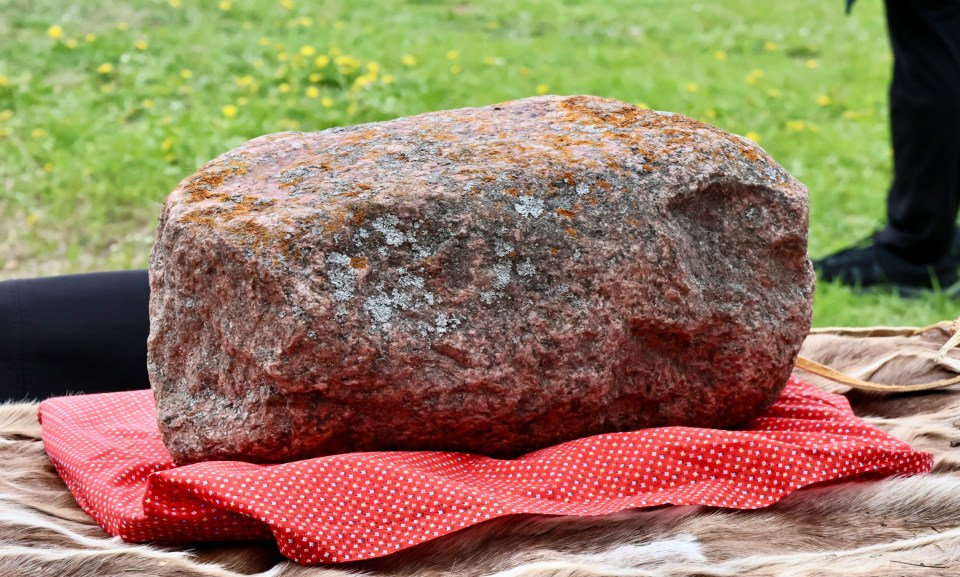
Stephen Kakfwi says he was visiting the Sacred Heart Residential School memorial in Fort Providence with Joachim Bonnetrouge when they came across a rock.
“Just beyond the site, there, as if calling out to us appeared a beautiful rock – weathered, coloured with age – and we wondered, how long had it been sitting there? What has it seen over the centuries watching from the sidelines? Had it witnessed residential school children being buried?” Kakfwi questioned.
“What was this rock saying to us? We all felt it. It seemed to be saying take me with you, let me help you remember.”
Kakfwi and Bonnetrouge are residential school survivors and members of the We Always Remember Circle for Northern Residential School Survivors, which is helping to plan an NWT residential schools monument.
The rock they found is expected to form part of the planned monument in Yellowknife, which will honour survivors, children that never returned home, and their families.
Advertisement.
Advertisement.
Kakfwi said the rock was chosen as a symbol that will endure, adding many Indigenous people refer to rocks as grandfathers because of their longevity. He said the rock will be mounted onto a larger stone base.
“Rocks are common, especially to all northern people. Despite our distinctions, we are all surrounded by rocks,” he said.
“They define our landscape and our waterways, and we have used rocks for everything from food preparations to oil lamps … from shelters to tools, from landmarks to works of art, and for sacred ceremony.”
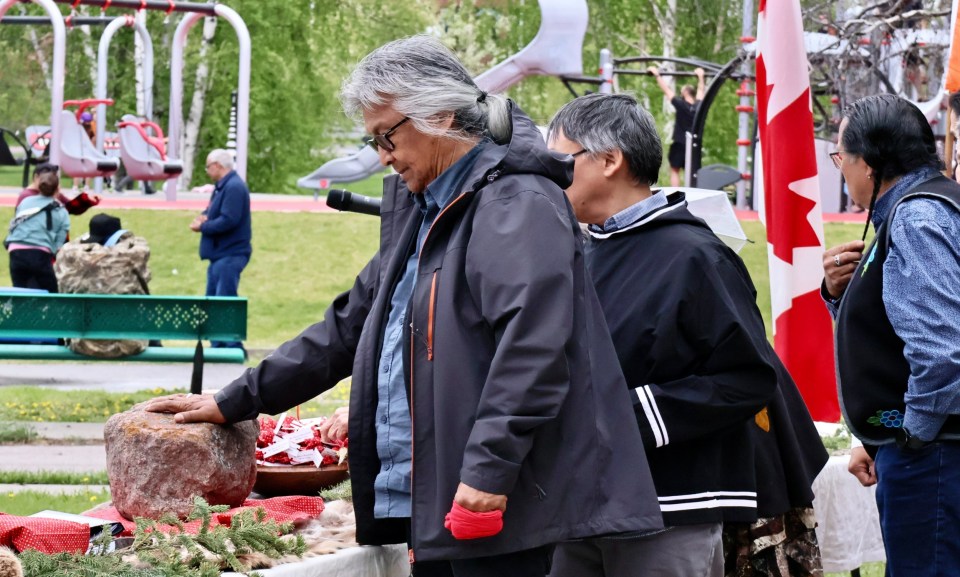
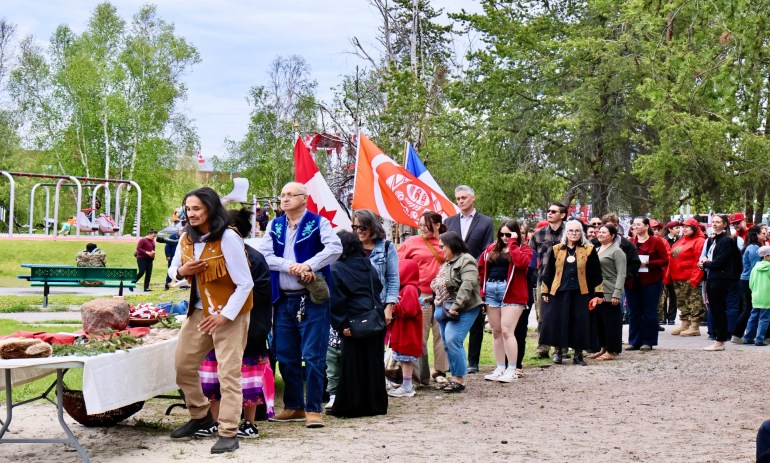
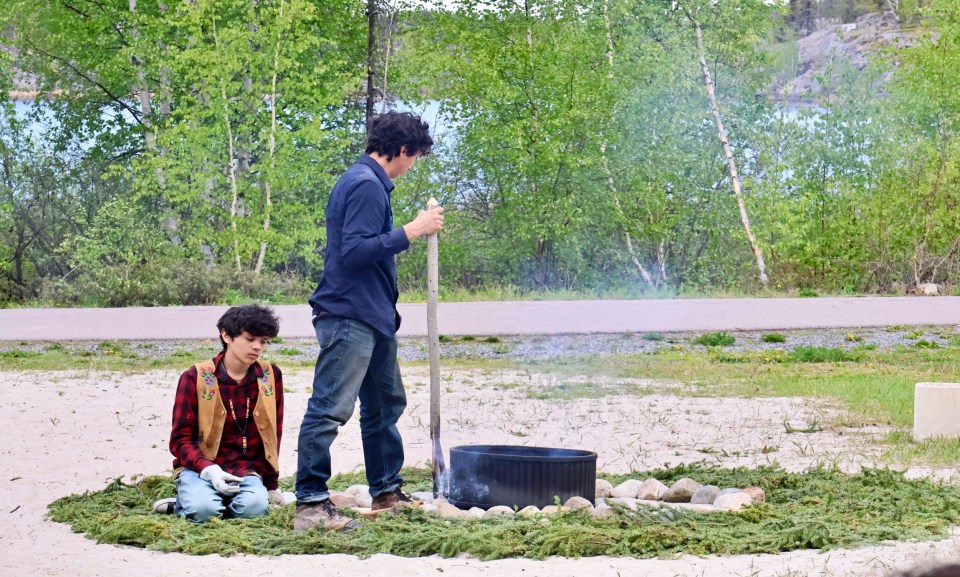
Kakfwi was among several people who spoke at a ceremony to consecrate the future site of the monument in Somba K’e Park on Monday.
Advertisement.
Advertisement.
Attendees were invited to place their hands on the rock and imbue it with positive energy, blessings and prayers. They were also given tobacco to feed to a sacred fire and joined a dance circle around the fire.
Maxine Lacorne said the site was smudged and cleansed on Monday morning in remembrance of survivors and lost children.
Work will begin later this summer, she said, to prepare the site for the monument, which is expected to be complete by next summer.
Premier RJ Simpson said once complete, the monument will “offer a lasting place for reflection, learning and remembrance, one that honours both survivors, the children who did not come home, and that helps future generations understand this history and it’s enduring impact.”
Bob Overvold, one of the co-leads of We Always Remember, said he spent up to 10 years of his childhood at residential schools in Aklavik, Fort Smith, Yellowknife and Fort Resolution.


He emphasized the “we” in We Always Remember, saying “we’re all in this together” and no one should forget about what happened at residential schools.
Overvold highlighted that he had walked into the ceremony with his great-granddaughter, who is just about to turn five – the same age his wife was when she first attended residential school. He said residential schools deprived children of nourishment and love from their parents and families, making it difficult for some of them to become good parents.
“That’s the most brutal lasting effect of the residential school experience. To put it quite simply, it was cultural genocide,” he said.
Advertisement.
Advertisement.
Several speakers noted that the Truth and Reconciliation Commission of Canada’s call to action 82 calls on provinces and territories to work with survivors to install a “publicly accessible, highly visible residential schools monument in each capital city.”
Marie Wilson, a former commissioner of the Truth and Reconciliation Commission, spoke about the work she and other commissioners undertook to document the history and impacts of the residential school system.
“Many survivors told us that they were sharing their stories for the very first time, and we know that many other survivors were not even at that time yet ready. And we still have more to learn,” she said.
“For the ones who did speak, once they had spoken they said now that they had spoken up, they wanted to make sure that Canada and the rest of the world never forgot what happened to them as children.”
Wilson said everyone is called together to honour residential school survivors and lost children.

William Greenland, an intergenerational survivor who shared a flute performance, said there are many people in the North who have been impacted by the legacy of residential schools.
“We have to think about them. We have to start changing the way we take care of ourselves, to start educating,” he said.
Premier Simpson said reconciliation is more than about just one monument or moment, saying “it’s ongoing work that calls for commitment, honesty and long-term partnership.”
He said the monument is part of the NWT government’s broader reconciliation efforts, which include public education about residential schools, cultural awareness and sensitivity in the public service, support for strengthening Indigenous languages and cultures and improving programs and services.
Mental health and emotional support is available to former residential school students and their families through the 24 Hour Residential School Crisis Line at 1-866-925-4419.
