


Advertisement.
Helicopters and ground crews returned to action against Fort Simpson’s wildfire on Tuesday as weather conditions began to comply.
The arrival of a cold front created several hours of dramatic fire weather on Monday but allowed a more settled, less smoky atmosphere on Tuesday in which aircraft could return to the fray for the first time in days.
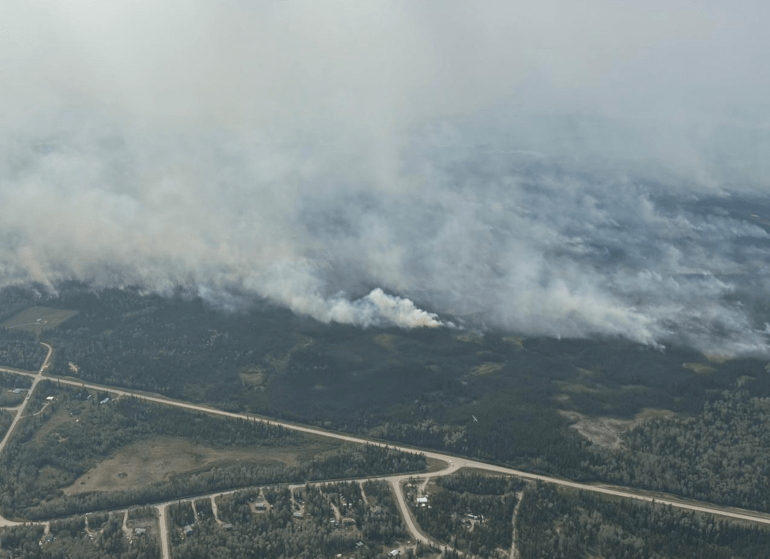
Late on Tuesday afternoon, NWT Fire said helicopters had helped manage fire FS016 as it gradually chewed away at the hillside leading to a snye west of Fort Simpson’s main island village.
The fire came within a few hundred metres of outlying residential areas on Monday. While that was a frightening experience for residents, it created an opportunity on Tuesday to pick away at the remaining fuel in the gap between the fire and homes, adding protection for the future when winds change again.
Advertisement.
Advertisement.
That could happen as soon as Wednesday, NWT Fire said, though winds on Canada Day are expected to be light to moderate.
Unlike Monday evening’s explosive growth, Tuesday was marked by a “slow rate of spread” for FS016, NWT Fire said.
Mayor Les Wright, eager for the return of water bombers to the air, said “everybody’s relieved” after the intensity of Monday evening. “Everybody who’s here working, they’re working hard. They’re performing like 110 percent,” he told Cabin Radio on Tuesday afternoon.
“I believe it’s supposed to stay like this for a day or two with this cold front, so it’s giving us an opportunity to fight the fire on the ground and in the air.”
Advertisement.
Advertisement.
More: What’s available for Fort Simpson and Wrigley evacuees so far
NWT Fire said well over 100 people are now assigned to FS016, alongside eight air tankers, nine helicopters and heavy equipment.
“The wildfire will continue to produce smoke, and open flame may be visible when winds are present,” the wildfire agency stated.
“Controlled ignitions may be used as a tactic to remove unburned fuel between the wildfire and Fort Simpson.”
Praising Tuesday’s work, the Village of Fort Simpson said on Tuesday evening that “while the pictures coming from the community may paint a picture of normalcy, just beyond the view of the camera wildfire FS016 is burning over a massive area.”
“The measures undertaken by the brave firefighters and support staff are required to keep your homes and property protected,” the village added. “Even though we all want you to come home, we must exercise caution.”
Fort Simpson and Wrigley are each evacuated of all but key personnel and a few who chose to remain.
The fire north of Wrigley, FS015, did not make a meaningful move on Tuesday. Recent rain means at least a few days will elapse before any significant growth occurs, NWT Fire said, calling this a day to assess and strategize.
Advertisement.
Advertisement.
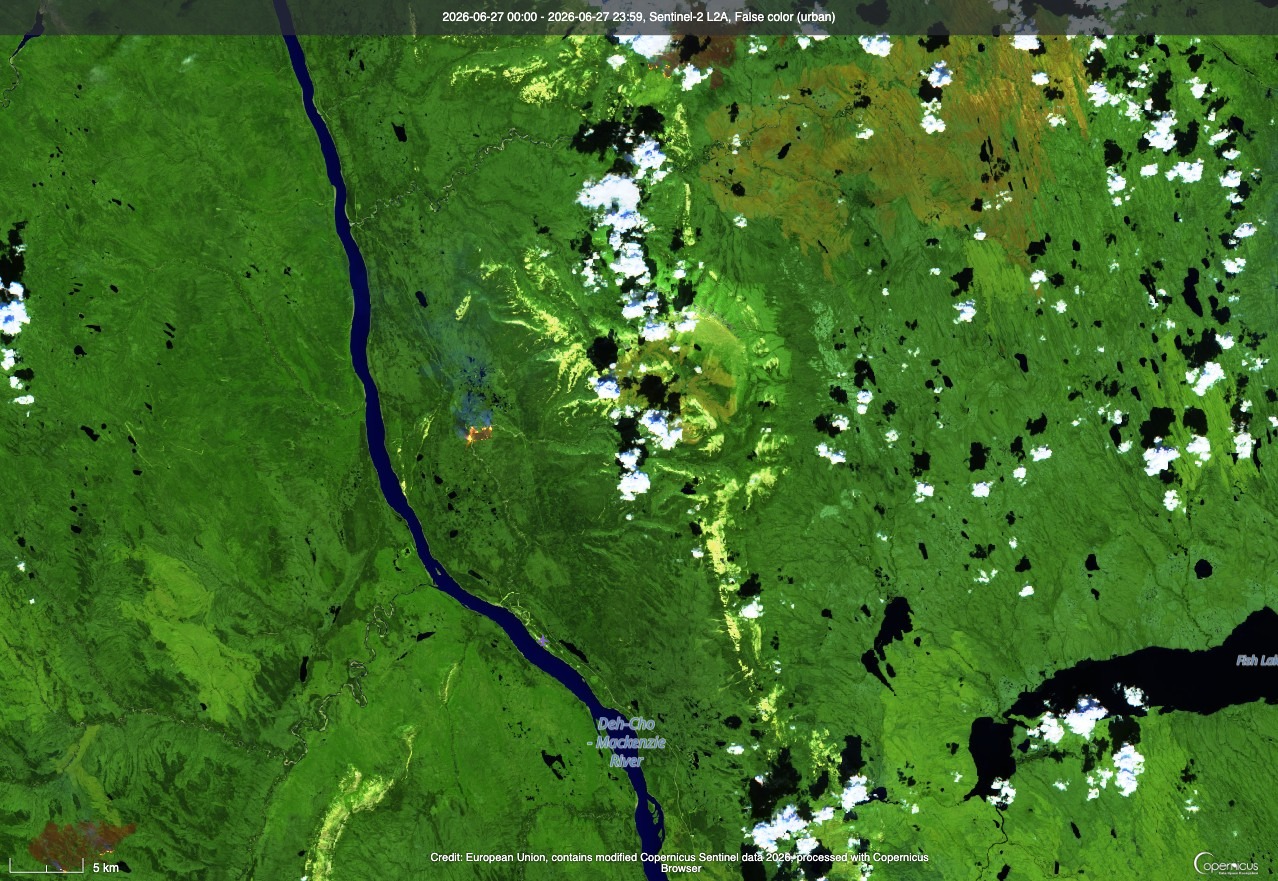
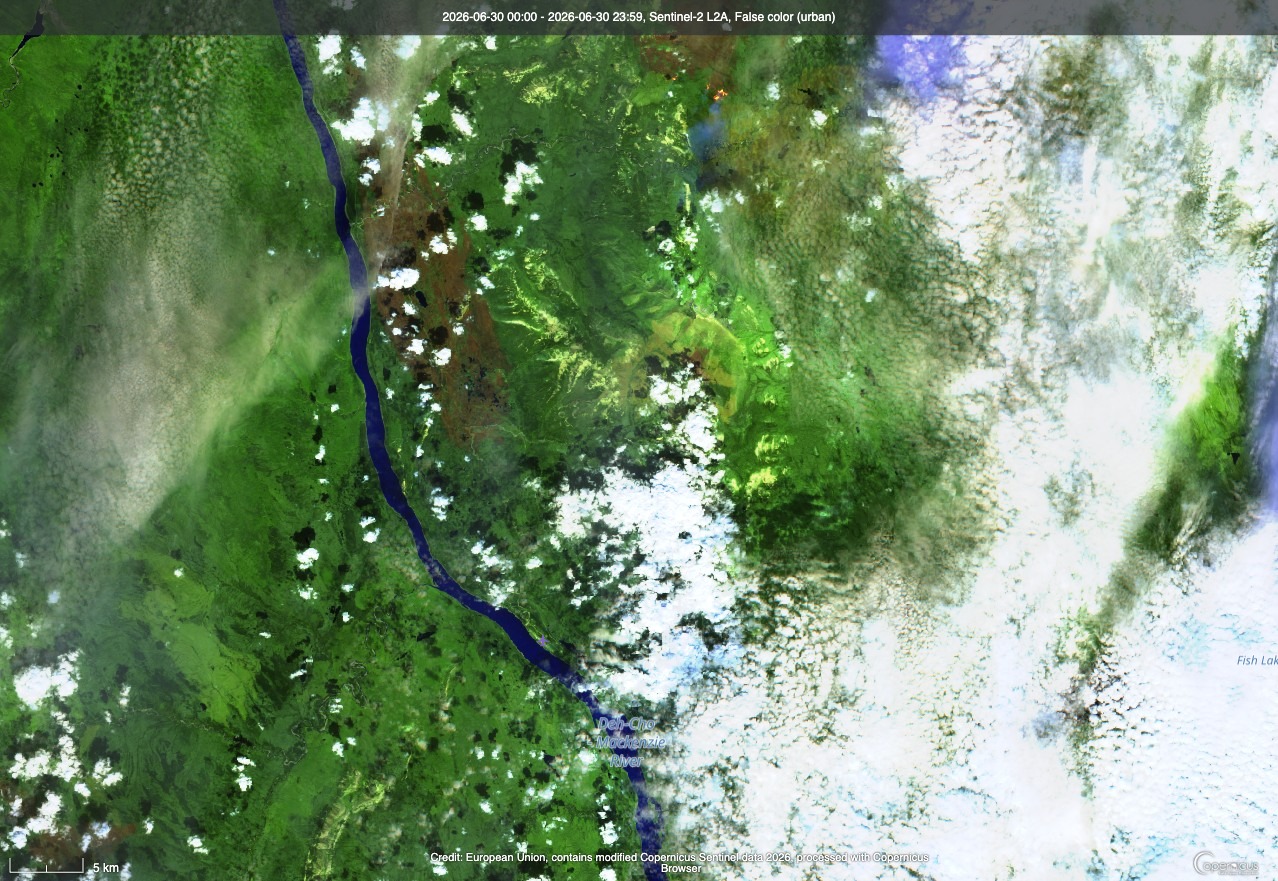
Meanwhile, new satellite images revealed the scale of the burn over the past few days as the fire grew, mostly to the north.
“An ignition specialist is assessing opportunities for ignition operations – carefully planned, intentionally set fires intended to remove vegetation in the fire’s path – to head off the fire’s growth using natural features and breaks in forest fuels,” NWT Fire stated on its website.
