


Advertisement.
Introducing a new family game for 2024: trying to find more than 100 different kinds of bee in the Northwest Territories.
That ought to keep the kids occupied. Just saying.
There’s also a powerful website, iNaturalist, and a charity with a Yellowknife-based specialist to help you learn more about the NWT’s bees and keep track of the ones you discover.
Anthony Colangelo is the northern representative of Pollinator Partnership Canada. It’s his job to protect and promote the role of pollinators (including butterflies, too) in the northern ecosystem.
Advertisement.
Advertisement.
“We actually have about 110 bee species native to the Northwest Territories. Not a lot of people think about bees when they’re travelling so far north, a lot of people don’t think they can survive. But bees are super resilient,” he said.
“There’s a really cool diversity of bees in the North and it’s incredible how they can still survive over our long winters.”
So, where to beegin?
There are 22 species of bumblebee alone, never mind the others. Maybe rookie bee spotters can start there (here’s a GNWT guide that focuses on the bumblebees).
Advertisement.
Advertisement.
Once you get a little further down the line, you might happen upon a sharptail bee – which, rudely, lays its eggs in the nests of other species – or an orange-legged furrow bee. There are even cellophane bees, which diligently apply a plastic-like material to their nest walls to keep their homes dry. Next time you need some work doing and can’t find a contractor, call a cellophane bee.
If you really get into it, there’s a whole 261-page photographic NWT-specific guide you can download.
Below, read our interview with Colangelo about the bees of the North, the charity’s work to track the bees and the flowers on which they rely, and the prospect of free workshops coming up in the next year.
Ollie Williams: How did you get involved in the world of bees, and specifically here in the North?
Anthony Colangelo: I am the outreach and education specialist at a charity called Pollinator Partnership Canada. We are the people who protect pollinators through conservation education and research, and we’re spread out all over Canada. I have colleagues out in Toronto, I have a colleague out in Vancouver Island, and I’m the kind-of lone person up here in the North in Yellowknife.
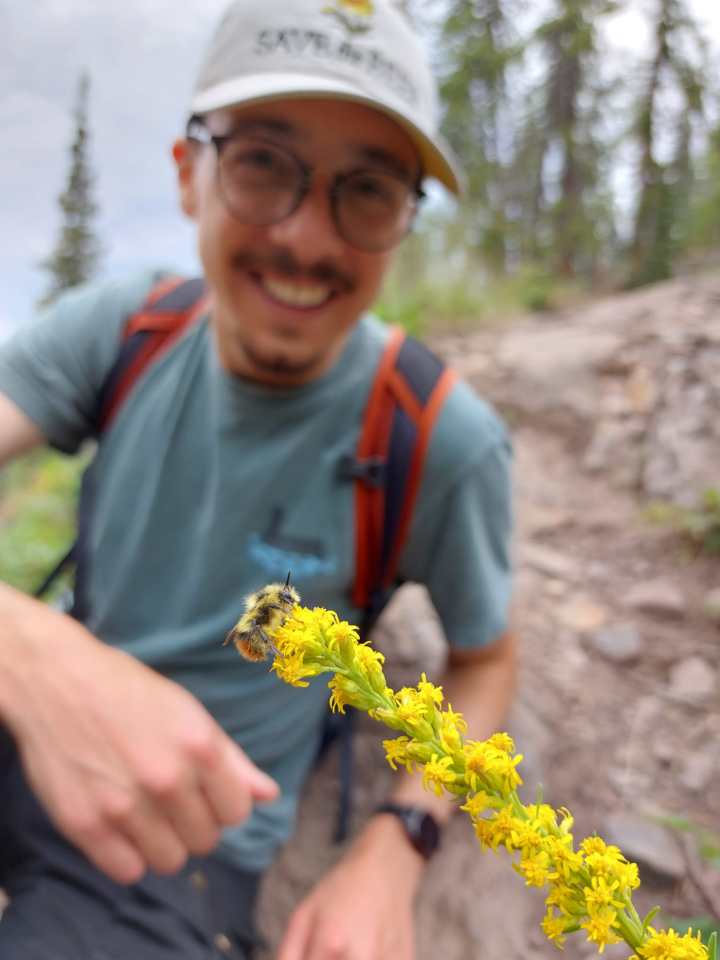
After graduating university, I studied biology. I was looking for a cool area to continue my studies and bees and pollinators always fascinated me just from their vast diversity. There are so many different types of pollinators out there but I think bees, in particular, are really cool.
With bees, you see the larger ones – we’ll see our bumblebees around town, I think everyone’s pretty familiar with bumblebees and honeybees. If you just take a second to look at some of the flowers in your garden, you’ll see those larger insects. But then if you take a real close look, you’ll see some of those smaller bees, many of our local native bees that get overlooked, that play a really important role in pollination to our ecosystems.
I am probably the worst offender imaginable in terms of overlooking local bees. Tell me a little about the kinds of bee we have in the North.
Advertisement.
Advertisement.
We actually have about 110 bee species native to the Northwest Territories. Not a lot of people think about bees when they’re travelling so far north, a lot of people don’t think they can survive. But bees are super resilient.
Some of our most common ones are bumblebees, which makes sense – they’ve got that thick fur and hair on their bodies that keeps them warm and allows them to fly on cooler days, which maybe wouldn’t permit other insects to fly around. Bumblebees are a main pollinator and bee up in the North.
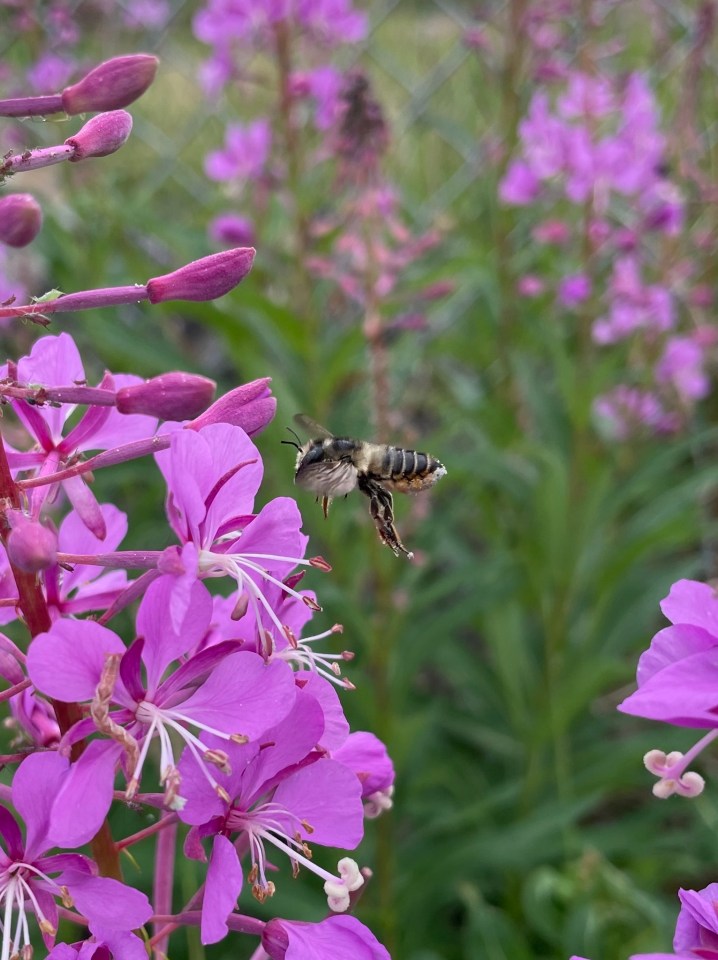
There’s also a whole bunch of different, smaller native bees like leafcutter bees, which will often make small, semi-circular incisions in leaves around town and then they’ll use those leaf bits as insulation in their nests. Then there are sweat bees, which are often really tiny and go around town finding flowers and pollinating them.
There’s a really cool diversity of bees in the North and it’s incredible how they can still survive over our long winters. A lot of them go into diapause or hibernation over the winter and emerge back in the spring, which I think is an incredible process for such small animals and insects.
You’ve got a community science project on the go called Plan Bee, which has been going for the past couple of years. What does that involve doing?
It’s a really important project but also a very simple project. We’re basically looking at what native flowers around town our bees are using the most – like fireweed, those wild roses and common yarrow. We’re just trying to see which flowers are the most important around Yellowknife for our bees.
It’s a community science project, which means anyone can participate in helping us get observations. Even just going outside into your garden or if you’re walking your dogs, take a quick photo of a bee that you see on a flower and upload it to our project page. That data is super important because it shows us the type of species, the flower it’s going to for nectar and pollen – which is a bee’s diet – and where around town those bees are located.
A simple picture of a bee on a flower uploaded to our page can go a real long way.
Advertisement.
Advertisement.
The website is pretty powerful. There are hundreds of observations broken down by type of bee, by person who observed them, there’s a map as well…
We use iNaturalist, which is a great community science tool. What’s great about iNaturalist is that when you upload an observation onto our page, we have an entire world of experts out there who can help with identification of that species and are super knowledgeable. It’s a great tool that really connects this community of bee and pollinator lovers.

You’re right, we have quite a few observations now. Before this project, there were relatively few observations in Yellowknife, but now – with just a couple of field seasons over the summer – we’ve gotten over 800 observations so far, which is great. It’s been super promising and exciting.
What is the hope for the outcome of this project? Why do we need to do this?
General knowledge is one important thing, learning more about what bees are up here, what flowers are really important to keep their populations healthy. We found a couple of species around town just in the last couple of field seasons that haven’t been recorded yet on iNaturalist for this area, which is really exciting.
But also representation of bees in the North. When you’re in more southern regions, it’s a given that there are bees there. The bees and insects of northern regions are often overlooked, but they do play such an important role in our ecosystems here, in our pollination. It’s getting that message out there: we do have bees and they’re super cool and resilient.
Want more information? Email Anthony Colangelo
I am trying to plan workshops in 2024 called Pollinator Steward Certification. Anyone around town is able to take these workshops for free. I’m hoping it’ll be one or two days where we’ll cover everything to do with pollinators with a specific focus on northern bees, and then hopefully getting folks fully certified as experts on pollinators and certified pollinator stewards. That’s something to look forward to.
