



When Trent Stokes returned to his hometown in Fort Smith, he started a garden. He’s been sober ever since.
Stokes’ passion for gardening began with one pea plant when he came back to the town nearly five years ago.
His mom had a couple of houseplants, including the pea plant. They weren’t doing well on the far side of the house, where the windows don’t bring in much light.
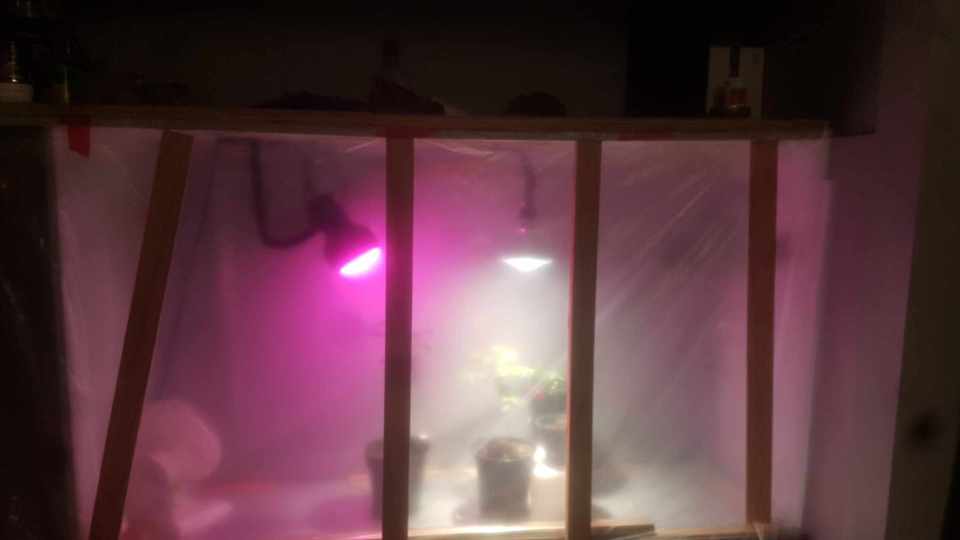
When he saw the plants struggling, Stokes brought them into his bedroom and set up a makeshift “growth tent” inside a closet, using plastic and a desk light.
Today, the room Stokes once called his bedroom is now a grow space.
Advertisement.
Advertisement.
“Now, it’s my plants’ bedroom — I sleep outside,” he laughed.

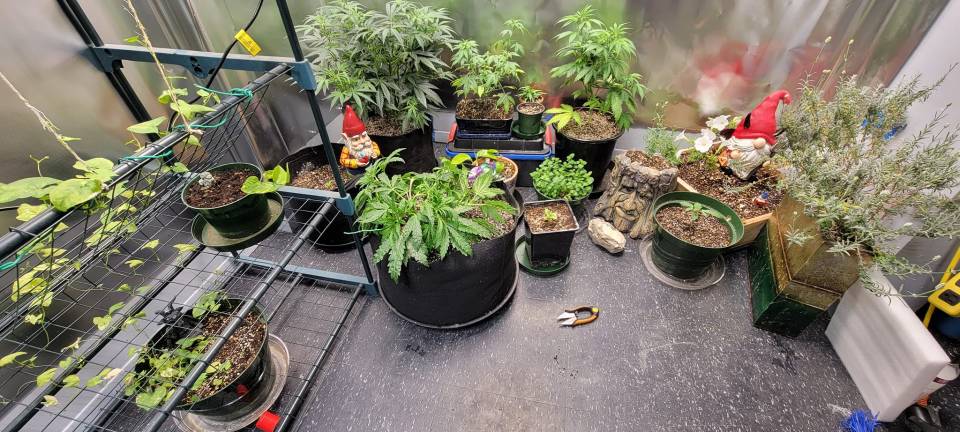
“It kind-of trips me out, freaks me out, how instinctually I went for soil and earth, and wanting to know how to grow my own food,” he said.
“All these things that I enjoy doing, they’re basically filling the void. When I got better, I realized that I just had nothing between the ears. There wasn’t anything there to take up the time, take up the energy.”
Foundations and first steps
Five years ago, when Stokes left his life in British Columbia, he was changing his environment and trying to change his path.
Advertisement.
Advertisement.
Stokes says his recovery from substance use lined up with a series of new passions related to gardening.
It’s a bit of a chicken-and-egg conundrum – which came first? Stokes says while actively working toward sobriety, he needed an activity that would get him outside, doing something physical and occupying his mind.
“After sobriety and getting myself all cleaned up, I was coming off of about 15 years,” said Stokes.
“I really had no pace or absolutely no idea of a path. That little burst of encouragement I got out of plants and nature, there was an intense energy drive that I got from it.
“Something that really helped focus me in was actually seeing life that I was able to bring up out of the soil. The fact that it was thriving, that was ridiculously satisfying.”
On returning to Fort Smith, the back yard that would later become his garden was just a fenced-in plot of concrete, rocks, dust, and dirt.
“It was very discouraging,” said Stokes, “just like how people can feel in life, with anxiety and feeling lost and alone.”
He absorbed himself in digging down and turning over the dirt to form topsoil, planting seeds and young plants, and planning a garden layout.
Advertisement.
Advertisement.
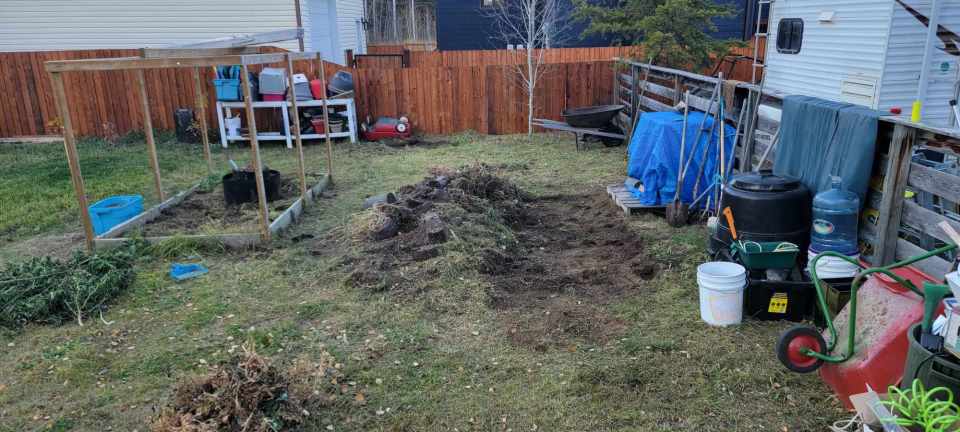
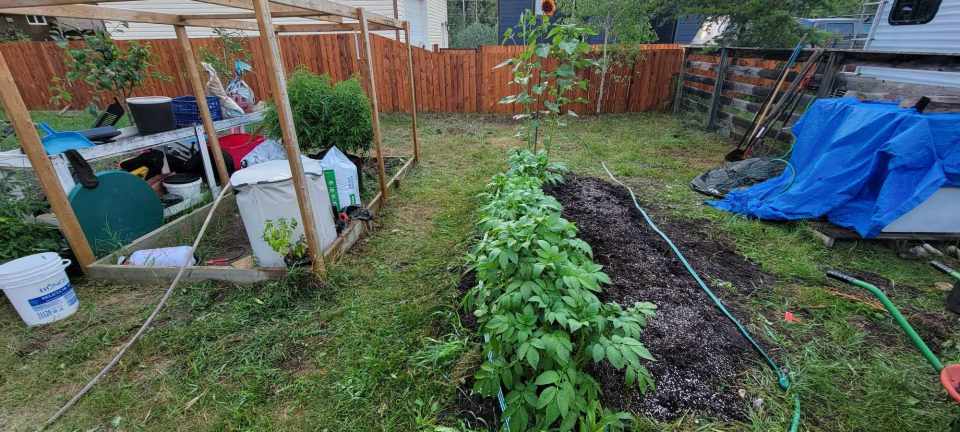
As he worked, he felt his passion for gardening replacing his old habits.
“I realized that there is no such thing as getting rid of addiction. I will never, ever be a recovered addict,” he said.
“I will just be an addict of new things. Somehow you just refocus, redirect that drive, and plants are some of the best things that you can do that to, because if you really give that all, then they’re gonna give you all back.
“That was the big turning point — holy man, they really brighten the life that I was headed into.”

Routines and passion
Meaningful change was still a difficult task.
Stokes said he pictured himself as a child, and would speak to that child, to try to understand how he should take care of himself and how his environment affects his mental state.
“I noticed that my environment played a big role in the way that I felt,” Stokes explained.
“If it was in a messy room, or a dirty town, or a back yard with no life, I felt things needed to change.
Advertisement.
Advertisement.
“Seeing the change happen in my room, and seeing it happen inside my head at the same time, was more than enough evidence that I should get up and do something outside.”
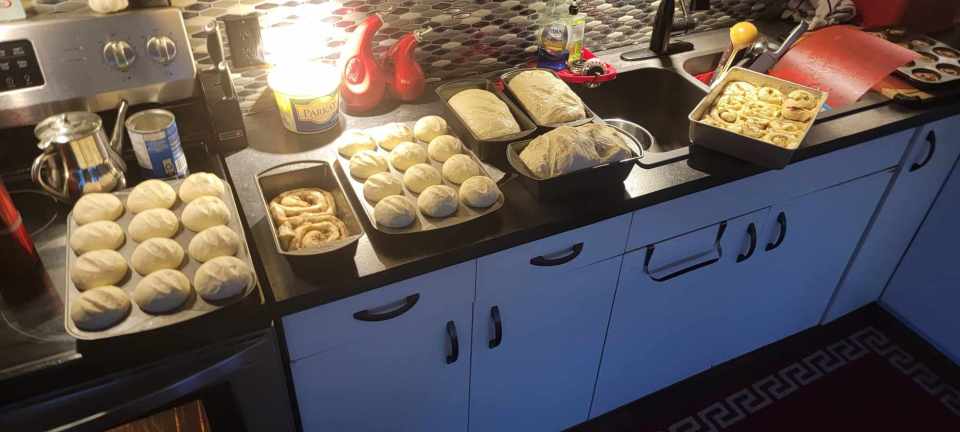
With that clarity, Stokes found other interests to occupy his time. Away from the garden, he spends time cultivating aromatics from plants like lavender and sage, studying biochemistry, collecting and polishing rocks, fermenting food, baking bread and pastries, and playing guitar.
Aromatics hold a particular interest because they unlock something he had previously lost.
“I like the smell of things. That was spun off of science, because the terpene chemicals that are inside aromatics can influence our emotion a lot,” said Stokes.
“I started playing around with that because I ended up getting my sense of smell back. I didn’t really have a strong sense of smell my whole life, because of the things I’ve done.
“Getting my sense of smell back was incredible. I wanted to smell everything, even the bad stuff. Like, that smells disgusting! I smell it again.”

An openness to learning new things doesn’t come without mistakes.
Stokes says mistakes were integral to growing his garden, and they inspired him to learn more about soil and water composition, the relationships between plants, and harvesting techniques.
Advertisement.
Advertisement.
“With creativity, there is no failure. Even if you think you messed up, you can grow upon that mess-up,” said Stokes.
“You can destroy it and mess up again, and get something out of it.”
Lessons from plants
Having integrated plant care into his daily routine, Stokes says he is learning lessons from the plants.
Every day, Stokes begins with a physical breathing technique. Then, he will pick from his lavender plant – and sometimes sage – for a smudge, describing the aromatic properties as “ridiculously calming.”
“The days I don’t start my day like that are very noticeable in my mood,” he added.
Stokes also grows cannabis plants, a harm reduction alternative to other medications administered to support addiction recovery.
Stokes says he has taken steps to establish self-control and frequently tests himself to make sure he is of a good mind when taking cannabis. He says he reached complete sobriety before he began taking cannabis and drinking coffee again.
“The rules that I set in play at the beginning are basically the foundation of my routine and how I feel each and every day now,” said Stokes.
Advertisement.
Advertisement.
“These are the things that I do to make myself feel comfortable, and I really hope that people can take something from it and feel comfortable in their own world, because it’s hard.”



In this light, Stokes looks to his plants to see how they behave in adverse conditions, like shade or drought.
Around three years ago, Stokes planted a haskap bush by the fence in his back yard. He didn’t realize it at the time, but the area doesn’t get much sun. Still, the bush produces tons of berries every year, and has grown so tall it towers over the fence.
“For some reason it still produces amazing berries,” said Stokes. “Seeing that thing and its sheer size, watching it grow, was really interesting.”
Rhubarb is another plant Stokes enjoys to watch. He recommends it if you’re looking for something easy to grow.
“It will double in size almost overnight,” said Stokes. “Some people consider them a weed, and honestly it’s the best tasting weed I’ve ever had.”
Last summer, Stokes’ garden was put under stress when Fort Smith was evacuated over wildfire risk.
Some plants did not survive the evacuation. Others adapted in curious ways.
Advertisement.
Advertisement.
A devil’s ivy plant left outside survived in a clay pot, which had better moisture retention than alternatives. When Stokes returned home, he noticed a ground cover called wood sorrel growing in the pot with the devil’s ivy.
“It grew its own cover crop, which is very interesting. It helped retain its moisture, which helped feed it,” he said. “To this day, it’s in my bedroom.”
Another staple of his garden are sunflowers. Recently, Stokes has been working toward growing purple sunflowers by hand-selecting seeds from plants with a darker tint.
The sunflowers attract squirrels and birds. They, in turn, attract neighbourhood cats, who help to keep mice at bay. Stokes says that’s a perfect example of a food web.
At the end of every season, Stokes measures his sunflowers and his nephew, Victor, to compare their growth. Victor is 10 years old, and has been gardening with Stokes since he was six.
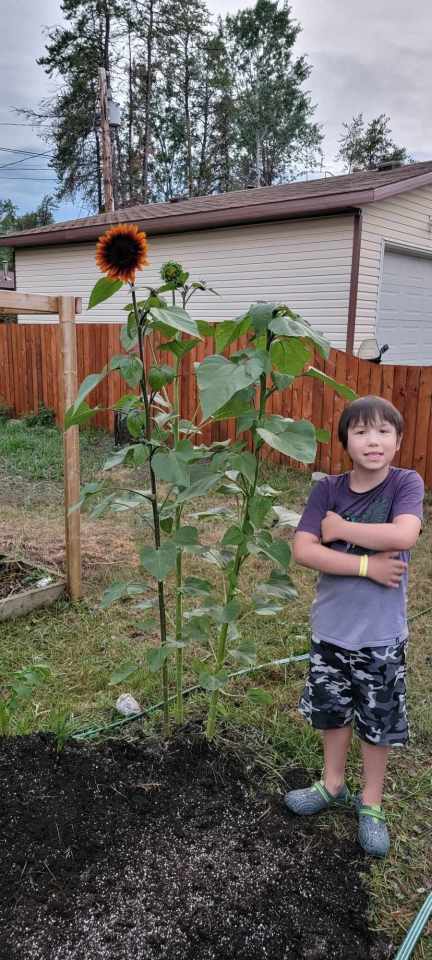
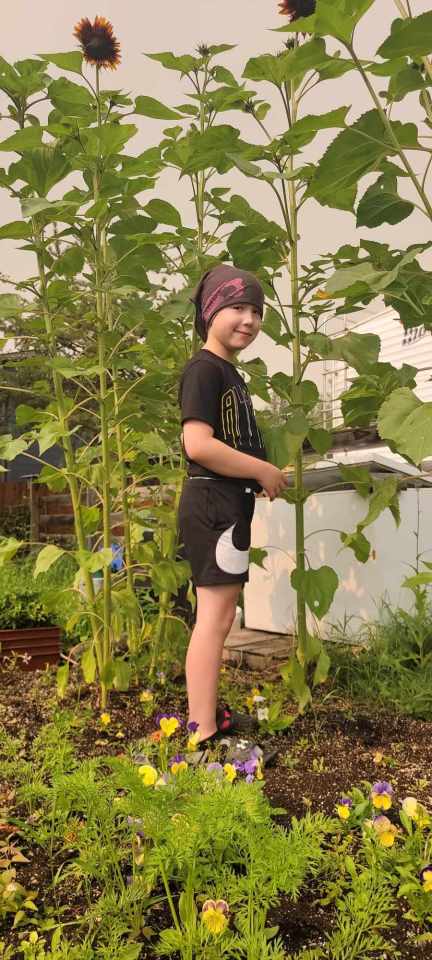
Since the two began gardening together, Stokes has seen important growth in Victor, who has overcome his fear of “squirmy worms,” dirty hands and insects.
He says there’s now an “instant shift” when the two go outside together.
“Physical exertion, outdoor stuff, whenever we do that kind of stuff, I can just see how much better it reflects in his nervous system,” Stokes said.
Advertisement.
Advertisement.
Now, Victor looks forward to the harvest every year, and appreciates the worms for eating food scraps from the garden and making compost.
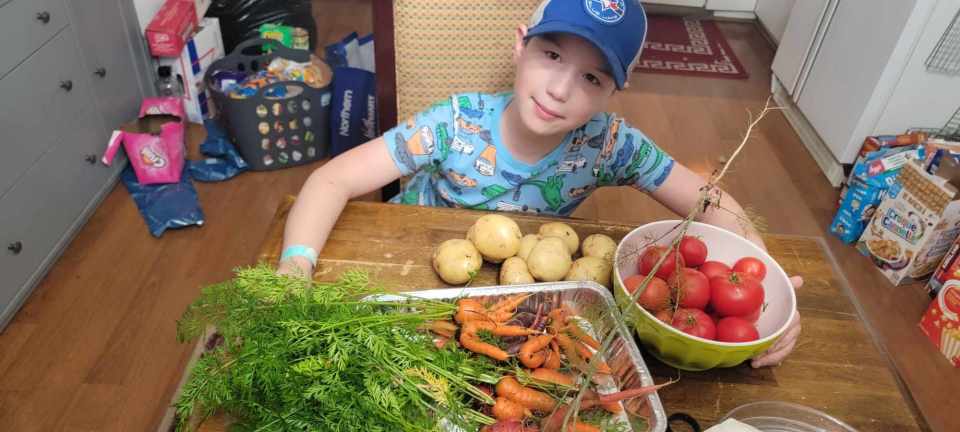
One year, the two pulled their carrots mid-summer. Carrots are typically pulled later in the season, to give them time to grow as large as possible. That summer, the carrots were still small and tasted a little bitter, but Victor was undeterred.
“He lost it. He was like: they’re so amazing,” said Stokes. “He was so proud.”
“Each year, he’s growing with my sunflowers, and each year they’re getting bigger and he’s getting bigger,” said Stokes.
“Just watching the growth of everything is setting the foundation of our direction.
“I’m tired of concrete cities and towns, where there’s dust everywhere and it’s not as green as I want it to be. I want to build a better future for me to see and for my nephew to grow up in.”
