


Advertisement.
A diamond mine is starting work on a plan years in the making to aerate a dead downtown Yellowknife lake, providing oxygen so it can one day support fish again.
On Tuesday, June 4, the Diavik mine says it will install a deep-water aerator in Frame Lake “to increase oxygen levels during the winter months.”
The lake normally undergoes a die-off each winter. The aerator will attempt to provide enough oxygen to avoid that outcome.
“The results will be monitored for a period of two years before Diavik will be able to determine whether to reintroduce fish into the lake,” a press release stated.
Advertisement.
Advertisement.
Diavik owner Rio Tinto has long planned the work but has previously said parts were delayed, pushing back the project.
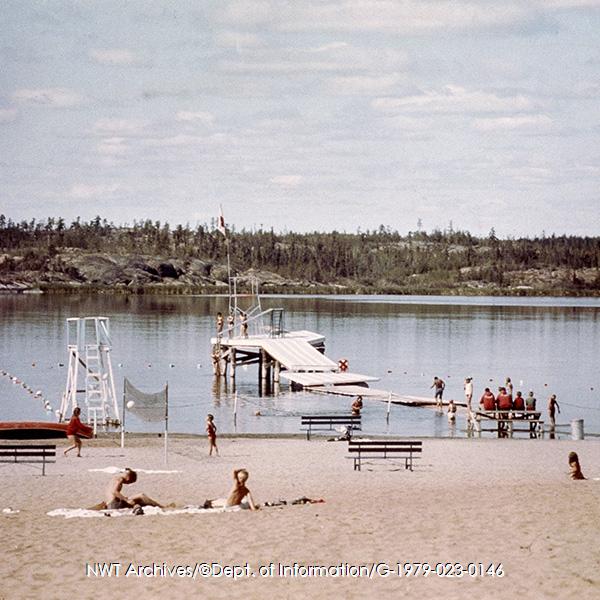
Frame Lake, at the heart of Yellowknife, was once a swimming destination and home of McNiven beach, where families would hold picnics with a lifeguard on duty.
For decades, though, there have been no fish and it hasn’t been safe to swim or harvest nearby edible plants. Signs around the lake warn of high arsenic levels.
Researchers say the lake became rich in nutrients as a result of urban runoff, use of the lake as a winter snow dump and, potentially, dumping.
Advertisement.
Advertisement.
Urbanization around Frame Lake, particularly the building of a causeway in 1975, slowed the flow of the lake, causing more nutrient build-up with nowhere to go. That led to an increased growth of plants.
Those plants released carbon dioxide and consumed oxygen when they died and rotted in winter. Oxygen levels became so low that even by the 1970s, the lake could no longer support fish.
Rio Tinto is required to remediate fish habitat as a regulatory condition of operating its mine, but that fish habitat doesn’t have to be at the mine site.
This project has previously been characterized by staff as an “opportunity to rehabilitate Frame Lake as opposed to rehabilitating random fish habitat in Lac de Gras that nobody will use,” referring to the lake on which Diavik sits.
Rio Tinto says the equipment that will circulate oxygen back into the lake “has been selected for its ability to perform in northern climates.”
Diavik’s chief operating officer, Matt Breen, said working on Frame Lake provides an “opportunity to help restore such an iconic spot in Yellowknife, where many of our employees and families live, work and play.”
Yellowknife’s mayor, Rebecca Alty, said the prospect of fish in Frame Lake was “exciting.”
“This is a great lake in the heart of our community, and we appreciate Diavik’s work to enhance the area,” Alty was quoted as saying.
Advertisement.
Advertisement.
Rio Tinto has previously said an aerator won’t affect ice thickness, so people will still be able to skate, ski and snowmobile over the lake in the winter.
The project will involve the territorial and federal governments, Wilfrid Laurier University and the University of Waterloo. Aerator installation and maintenance will be performed by Det’on Cho Nahanni Construction.
“Residents of Matonabee Street and users of the Frame Lake Trail are advised that there may be slight disruptions on the morning of Tuesday, 4 June for a few hours while the aerator is placed into the lake,” Rio Tinto advised.
