



Genevieve Clarke lost her home in the 2023 Enterprise wildfire. A year to the day after that disaster, she gives her account of what took place and her family’s journey since.
Genevieve is a mother of six and a grandmother of nine who lives with her husband in the Northwest Territories. The couple first met in a Lloydminster, Alberta bar, where Genevieve was celebrating a friend’s birthday. “He hit on my girlfriend,” she remembers. “That’s how we ended up talking. Then we came to Hay River to visit his mom and dad for Christmas.”
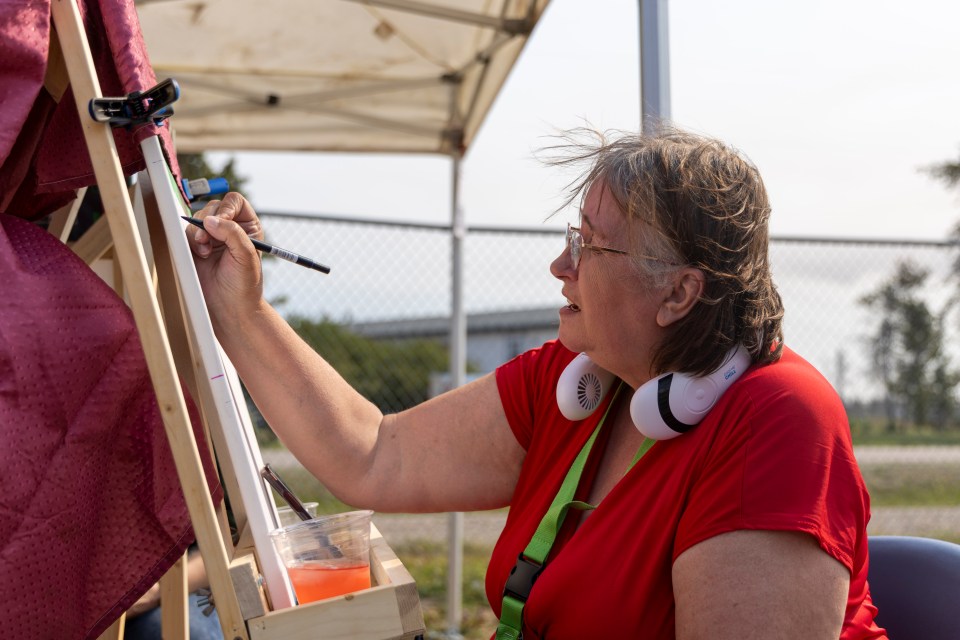
She serves on Enterprise’s hamlet council and works for a non-profit that runs parent-tot programs. The classes include teaching mothers about mental health issues while they learn traditional crafts and teaching play-based cognitive skills to children. In her spare time, Genevieve likes to relax by creating acrylic and beadwork on denim art.
Her faith is also an important part of her life. She became a Christian in her teens, left it for a while, and then returned as a parent. Genevieve attends her local church, St Andrews Anglican. When forest fires engulfed her community in 2023, her faith helped to see her through.
Here is Genevieve Clarke’s account, as told to Jon Miller and Sean Holman. The Clarke family’s loss and their efforts to rebuild were also the subject of separate reporting in November 2023.
Advertisement.
Advertisement.
We were driving back to Yellowknife, our car broke down, and the bus driver from Hay River picked us up and left us at his place in Enterprise. That was our introduction to the community. I love the scenery. I love smaller communities.
There’s only three streets and three businesses in Enterprise: two gas stations and one furniture production business. I used to joke that if you forgot what you were doing, don’t worry, your neighbour knows. That’s how small we are.
We applied for a lot there and moved our three-bedroom trailer in. It was very boggy when we moved in: a lot of spruce trees, a few deciduous trees, and some rabbits running through the yard. It was so quiet you could hear the crickets at night.
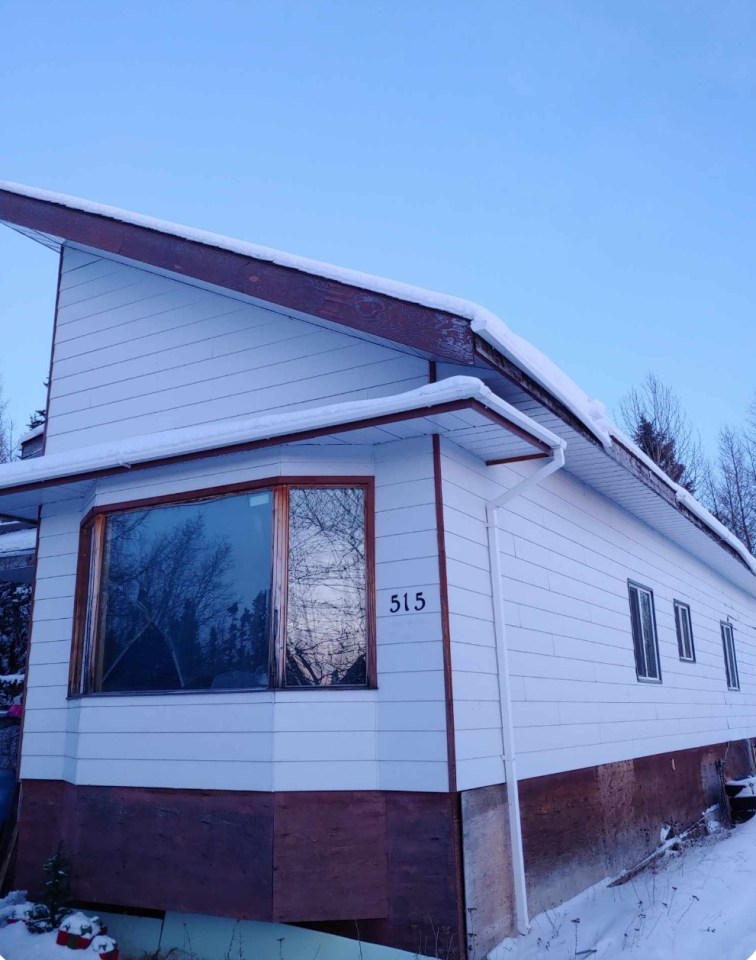
As our family expanded, our trailer ended up being a seven-bedroom house. My husband built an addition to it. He could build you a house from the ground up, but he was always worried about taking the trade certificates test because he wouldn’t know the right name for something.
We had a master bedroom that had a big bay window and a six-foot reclining bath in it. As the children grew up and left our home, we changed one bedroom into a studio. I was able to go upstairs, paint, and turn on the gospel music.
Advertisement.
Advertisement.
I’m quite involved with the church. We do a lot to help others. We have a thrift shop that we get donations for and give away about $10,000 every year. The day of the fire, we had a free breakfast and service up at the jamboree site. We were having our annual music festival the day before. The streets would have been filled with cars. Musicians and people from the surrounding communities were there.
I was making pancakes, bacon, and sausages. The awning on the stage was tied down to an ATV. The winds picked up so much that the ATV was jumping up and being pulled back down. I was thinking, It’s an angel. They’re pulling it down because you’re not wrecking this service. I had just got home and was telling my husband about the high winds when that fire alert went off on our phones.
We knew about the fire near Kakisa, which is about an hour from us. But we were not advised this might come your way. It was, “Get out. Get out now.” Hay River and Enterprise were to evacuate immediately and head to Alberta.
I told my husband I was going to get Andrea, my third-oldest daughter, who lives in Hay River. My car had broke down recently, so I jumped in our wood truck, Old Rusty. I met a very long snake of vehicles coming our way. The only other car going towards Hay River was a policeman that passed me. It was terrifying.
Andrea doesn’t drive and lives quite a ways from any evacuation centre. She would be running down the street with her suitcase. Is she going to have time to evacuate? Is she going to be stuck there? She’s going to be gone. I was praying all the way. I couldn’t help but remember the Hay River flood the year before: the first thing they did was shut the road so nobody could get in.
I got there, and the road was open. I ran into the house. She had already packed because she got the alarm. She was just grabbing a few extra things. I was panicked by then. “Come on. We got to go now.” We threw her stuff in the truck and headed out.
There’s only two gas stations in Hay River, both on the highway. A lot of people needed to gas up, which caused a bottleneck. It was miles of bumper-to-bumper traffic. People were driving in the ditch to go around them. They were panicking.
I stopped in Enterprise to see my husband. He’s a carpenter/electrician/plumber. He had stayed to load up his truck with tools. I ran into the house and grabbed a suitcase. I looked at my heirloom jewellery. “It’ll be safe,” I thought, so I left it. I grabbed a couple of my paintings, and me and Andrea headed back out.
Advertisement.
Advertisement.
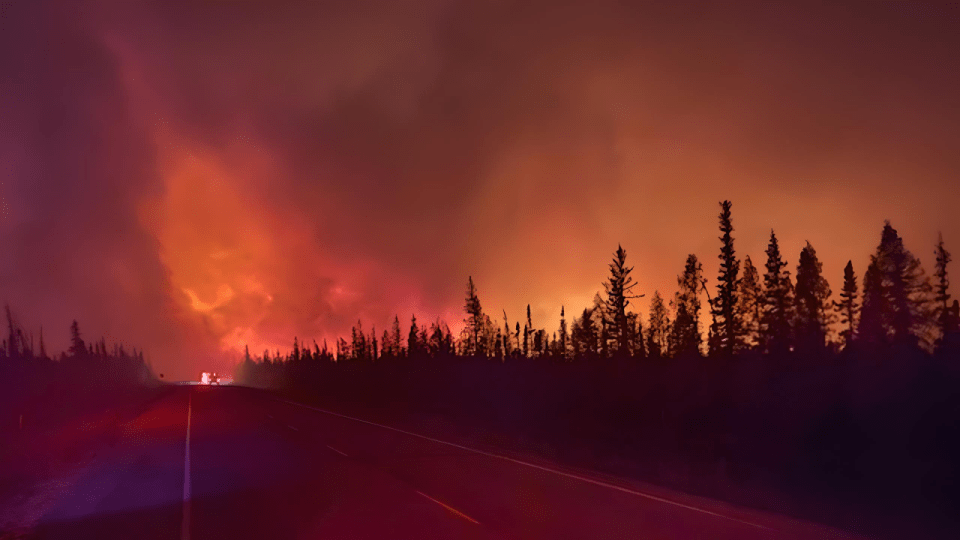
My husband said he’d follow us in about twenty minutes. By that time the sky was getting dark. Halfway to the border the sky was pitch black because of the extreme smoke. You couldn’t see anything. It was very slow going. I was worried my husband wouldn’t make it – he’s a procrastinator.
I tried to get my daughter to phone and make sure he was on the road, but we were in a dead spot. There was no service. We passed a vehicle that had a flat tire. There was a couple of people helping, so we didn’t stop.
I was worried all the way down about our tires blowing because they were pretty bald and we didn’t have a spare. I was trying to stay calm because my daughter’s got PTSD from when Hay River flooded.
By the time we got to the Alberta border I could see daylight again. There’s a campground, a bit of a museum, and a facility there. I rushed in to use their landline. It was down. This woman comes rushing up, looking for a sledgehammer. It’s her car that had the flat tire. They can’t get the wheel nuts loose. I happened to have one in my truck from setting up the jamboree.
After about half an hour of prayers, my husband showed up. I was so happy. He said you could see flames on each side of the road when he came through. He’d turned his air conditioning on, and it was still hot in the truck.
It was starting to get black at the border. We took off together so we knew where each other was. I was worried about my co-worker because she lived in Hay River and has a young family. We stopped in Manning for gas. I went in to use the washrooms, and I saw my co-worker there, which was great.
On the other hand, she was telling all the ladies in the lineup about her experience seeing all of Enterprise burning: embers were hitting their truck, people’s tires were popping, and somebody looked like their clothes were on fire. I was mumbling to myself, “Oh, I’m glad she’s OK, but I really did not need to hear that.” We got back in the truck and checked into our room.
That night, I looked up online, “If worse did happen would there be help from the government?” We were in a community that only had trucked water and didn’t have a full-time fire department. Our house was heated by wood stove because we couldn’t afford propane. So we could not get insurance.
Advertisement.
Advertisement.
There was a statement from Municipal and Community Affairs. It said the disaster fund was for primary residents whose insurance wasn’t available or, if available, was unaffordable. “Oh, good,” I thought. “I’m covered.”
We went to Grande Prairie, where my sister-in-law lives, and stayed with her. The morning after, my mayor called to tell me everything was gone. I said, “The house?” He said, “Yes.” It was difficult. We got to the registration office, and there’s a reporter outside wanting to interview evacuated people. I’m going, “No, I just got this news. I’m not interested.”
We went on to Edmonton, where my youngest daughter lives. She gave up her bedroom for me and my husband and made a small bedroom in the basement for my daughter. With family, we were able to relax. We could take the grandkids out. We practically did something every day just to be distracted.
There’s a lot of frustration – “When can we go home?” – and not knowing. Our council, though, was really good. They provided funds for every community member to live while they were evacuated. We could listen in on weekly meetings and know what’s going on.
We got the call that we could come back to Enterprise. It was so quiet. We drove around where our lot was. Nothing was left. Just rubble. There were glass puddles next to the burnt vehicle shells. Our house was gone. Even the foundation didn’t look intact. The cars were burnt shells. My husband’s motorbike managed to survive, but his snowblower exploded.
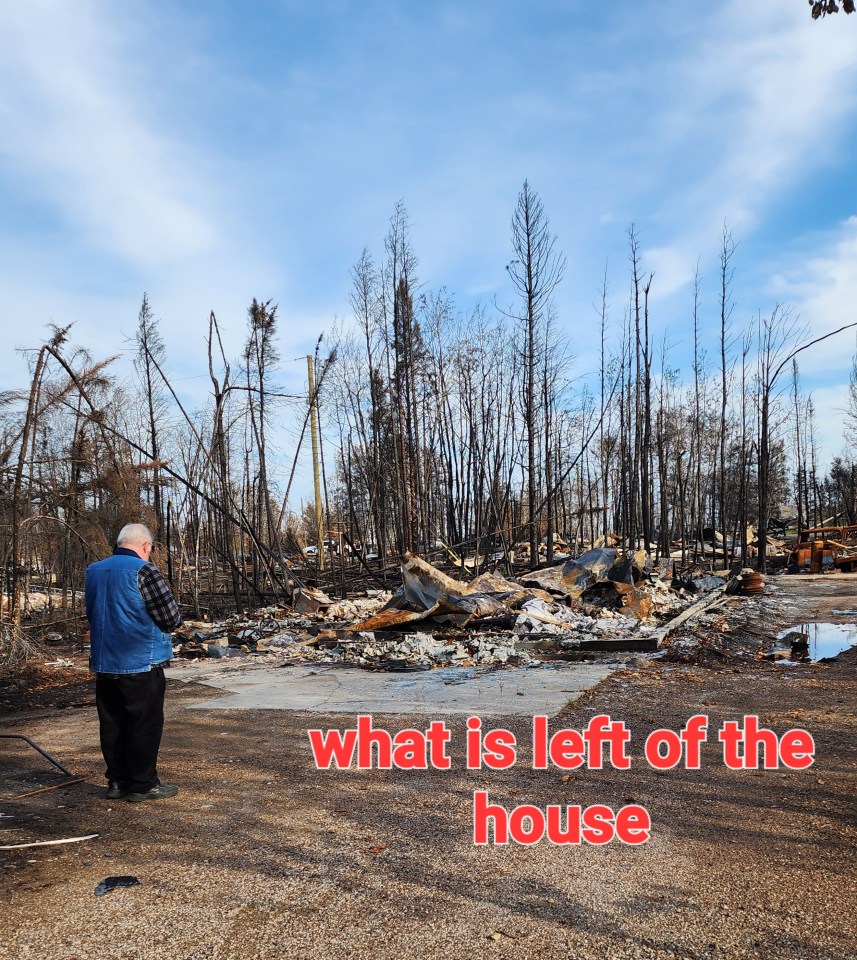
The big loss is the little things, like the book that had recipes from his mom. She had her own bakery in Hay River. I’m the only one that had her bread recipe, and I hadn’t made it for years. I don’t remember it. Even today, we’ll be thinking, “Oh, I can do that because I’ve got… No. I used to have that.”
Climate change is hurting real people in real time. The only thing we can do is change policies. If you’re having a high drought year change your policy as to when you advise people. Change your policy as to how you attack fires. We need to do more and not just talk about it. We’re having the effects of climate change, so do something to make it less of an effect on people.
We moved into Hay River and had Andrea’s place to stay. It’s lovely staying with my daughter, but I miss having our own home. It’s just a lot smaller place than what we had. I haven’t done much artwork since the fire because I don’t have that space to crank up the tunes and have that inspiration. It’s been difficult for my husband because there’s no room to put the tools he did save. I feel guilty about the fire because I’ve prayed many times that I could get rid of that stuff my husband filled the old front room with. And it did.
Advertisement.
Advertisement.
I felt assured that the disaster policy would cover us. I would be able to rebuild. I wouldn’t have a problem. It didn’t work out that way. The GNWT are only clearing our lots: lots leased from the GNWT, their property. Friends, family, and my church helped raise about $15,000. I have the down payment, but who’s going to loan money to a senior? I would be 86 when the 20-year mortgage is done.
If this was to happen again it would be nice to have copies of the disaster assistance policies at the evacuation centres. Or somebody you can go to for help if your province won’t help you. About 60 percent of our community burned, and 40 percent were uninsured. A lot of the people that don’t have insurance, that were denied, are seniors, and I don’t know what they’re going to do.
This year, they allowed displaced people to vote in our elections. Next year, they’re not. Even though you have your lot and you hope to rebuild, you can’t be involved in your community any more because you couldn’t get funding. Even if we were able to rebuild starting May, we probably wouldn’t be in our homes by winter. We would still be off the voters’ list. We’d feel excommunicated from our community.
The Bible tells us that we may not like the path He sets our feet on, but just walk it and keep the faith. In the same instance I lost my house, I heard a voice saying, “Remember Job.” Job was a very firm Christian that followed the rules. He lost his house. He lost his family. He lost his health. All through it, he remained strong and ended up with more. There’s still times I wail against the loss. But then I remember Job. One way or another, trust in God, you know?
This testimony was co-created by members of the Climate Disaster Project. The project is an international teaching newsroom that works with disaster-affected communities to document and investigate their stories. For more information, please visit www.climatedisasterproject.com.
