



Gail Cyr had just hit 30 when she struck out into Yellowknife politics in the early 1980s.
On the campaign trail, she recalled in a 2018 radio broadcast, she was told by many residents disillusioned with local politics: “You’re all bought off. You’re all paid off.”
Having been subsequently elected, she turned up at the opening meeting – a training session for council led by then-deputy mayor Pat McMahon – and waited until McMahon asked if anyone had questions.
“I put up my hand,” Gail recalled, “and I told them: ‘All the time I was canvassing, I heard people were being paid off and there was money in their back pockets. And so I want to know… like, I never got any. Was I being discriminated against?’
“You could hear a pin drop.”
There would be no paying off Gail, who served for a decade on Yellowknife City Council as one of its few Indigenous, female members in the 20th century.
“She was always an advocate for the underdog. She was very vocal. She would not just take what was told to her by administration,” said Marie Coe, who served alongside her at the time and said she shared Gail’s northern Cree background.
Gail, who passed away on Tuesday at the age of 71, lived a series of remarkable lives, almost all of them in service of the people of the North. No matter how well you knew her, there is probably a version of her you never met – always vocal, always an advocate.
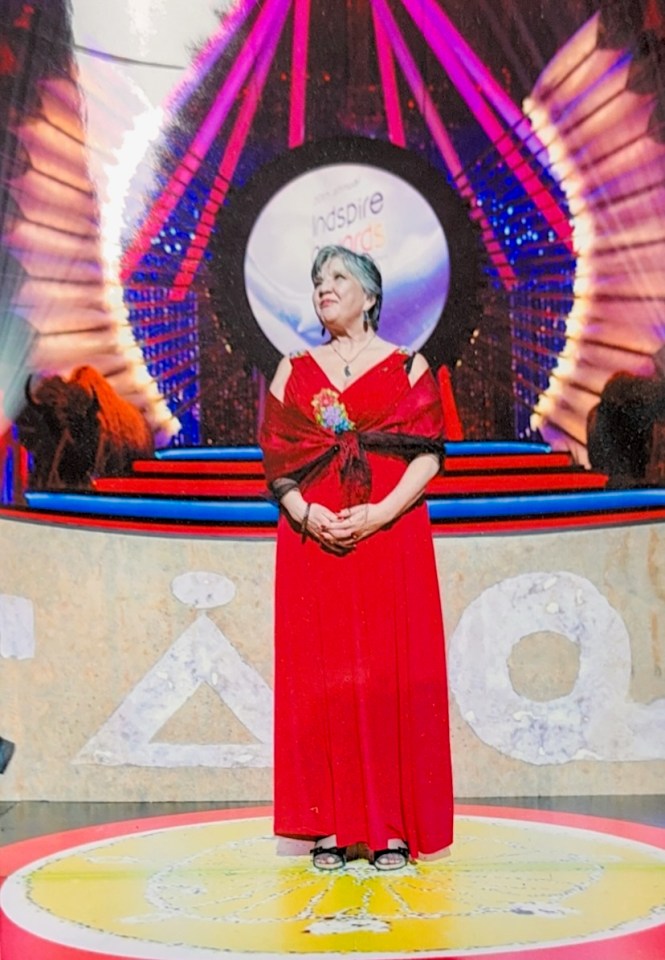
Her ceaseless volunteerism earned her investiture into the Order of Canada. She gave decades of service to politics, the rights of Indigenous people, and the theatre and broader arts community.
A celebration of life will be held at Yellowknife’s Northern Arts and Cultural Centre from 2pm on Sunday, December 15. Video of the event will be streamed live via the Cabin Radio website for people unable to attend.
Donations to the Native Women’s Association of the NWT can be made in lieu of flowers.
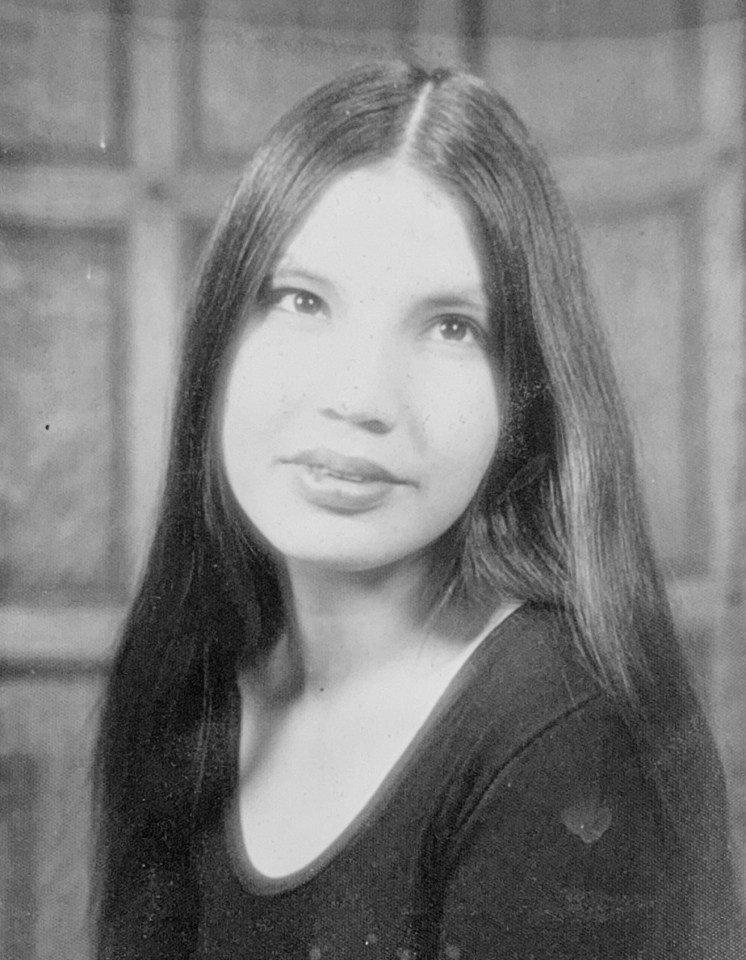
Patricia Rose Cyr, later known as Gail, was born on Christmas Eve 1952 to John and Jane Spence at the nursing station of what was then named the Nelson House Reserve, north of Lake Winnipeg in Manitoba.
Her parents had little to their name and struggled to feed and care for their young family. Records given to Gail by the federal government state that she required multiple periods in hospital as a toddler. Gail had entered the care of the Children’s Aid Society of Winnipeg by 1954 and was soon placed with a foster family in Teulon, a community not far north of the city.
“They were strict but kind,” her son, Jesse Wheeler, remembers Gail saying of her foster family. “They were very nice people. She was incredibly lucky that she got placed with the people that she did.”
By her late teens, Gail had started spending more time in Winnipeg but couldn’t find jobs in the city that she wanted to do.
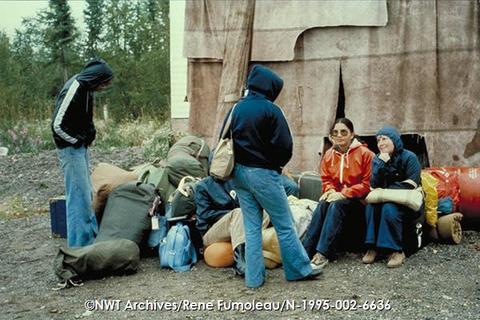
In the hope of discovering “something more challenging and more authentic for myself,” she said in 2019, she moved north to Yellowknife in 1974 – taking a job as a server at the downtown Gold Range bar.
“That was my first job, and that place is where everybody used to go. It was packed. I was on my feet from 4:30pm until 2am,” she recalled, describing weddings at the Range where guests would fight to hold down tables wanted by the usual after-work crowd. “It was the great equalizer of the day, because everybody from the commissioner down was there.”
Gail began leaving a political mark on the city as a councillor – then termed an alderman – in the 1980s. Megan Holsapple, who would share lunchtime walks with her in later years, recalled her pride at having been a voice in favour of the Frame Lake Trail, which was established during her time on council.
“It may seem strange now, but at the time some people hadn’t wanted a trail through their backyards,” Holsapple said this week of the trail that wraps around a central Yellowknife lake.
“Gail knew it was the right thing for Yellowknife: it would keep us all connected to one another and to our beautiful landscape. I still walk that trail every day and think of Gail.”
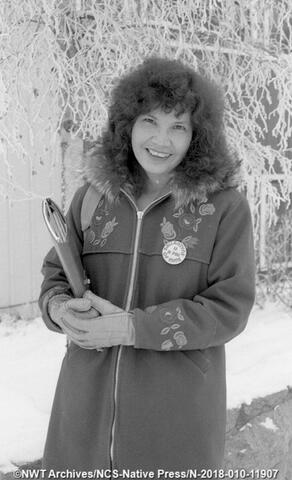
Beyond council chambers, Gail’s influence on the city was already being felt in many other ways.
Christopher Foreman, who spent many years as an artistic director in Yellowknife and particularly at NACC, remembers meeting Gail at a play reading in the mid-1970s.
“And I thought who is this now, with the winning, loud laugh?” Foreman said.
The two would go on to form integral parts of theatre productions like the long-running Land of the Midnight Sin, essentially an improvised on-stage soap opera that poked fun at Yellowknife news and characters of the day. Gail created the character Mae North for the show, a parody of Mae West and one that Foreman described as “all tits, teeth and innuendo.”
“The mayor of Yellowknife [by that point, Pat McMahon] agreed to come on one of the episodes and I put together with her and Gail a lovely storyline that week,” he remembered, “about why the City of Yellowknife should open a brothel.”
Coe, the fellow councillor and longtime friend, remembers being coerced by Gail into taking part in The Rez Sisters, a 2001 production of a Tomson Highway play about women on a fictitious reserve.
“I was absolutely not interested in becoming an actor,” said Coe, but then Gail got to work. “A few days later, I had a leading role in the play.”
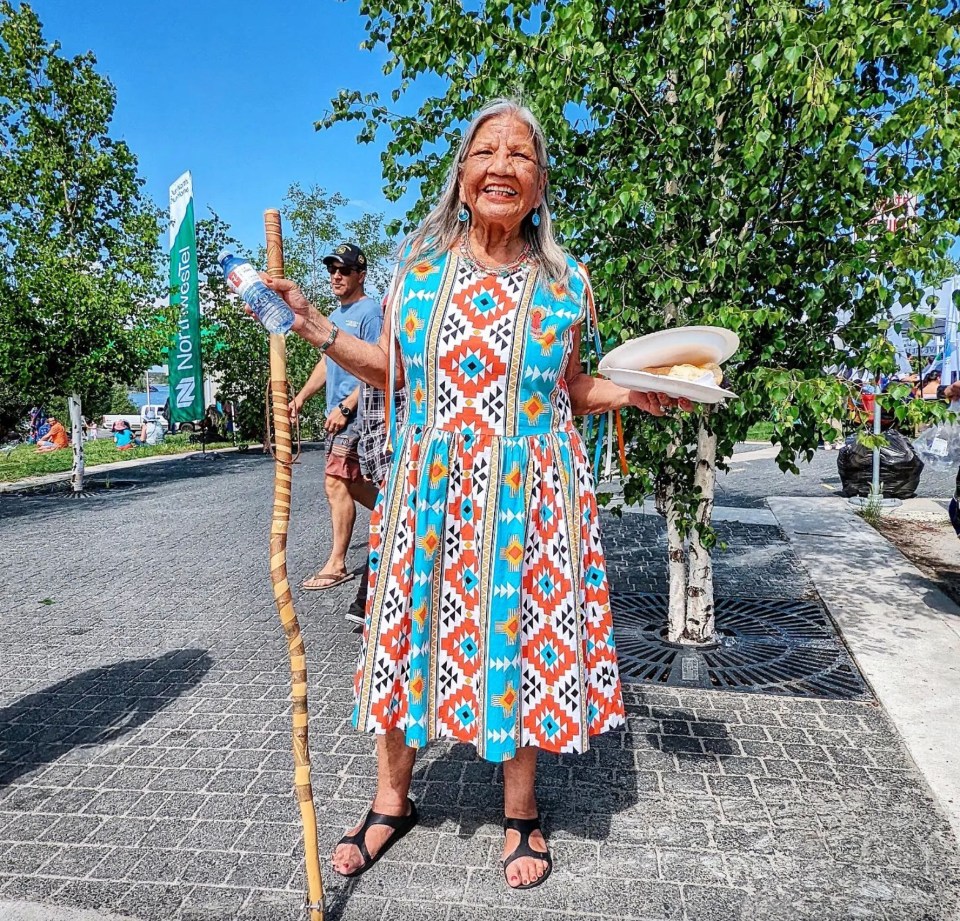
Gail, meanwhile, had joined a sewing circle known informally as the Stitch ’n’ Bitch Club, which produced astonishing costumes for theatre productions and all manner of other occasions. Her son, Jesse, said he would be guaranteed each year to have “the best Halloween costumes.” (One, a Spiderman outfit, was designed to fit outside a winter parka.)
Marilyn Robak, a close friend for decades, remembered that Gail “would work her day job and then she would sew until two or three o’clock in the morning to make costumes for the theatre. She had so much energy, it was unbelievable.”
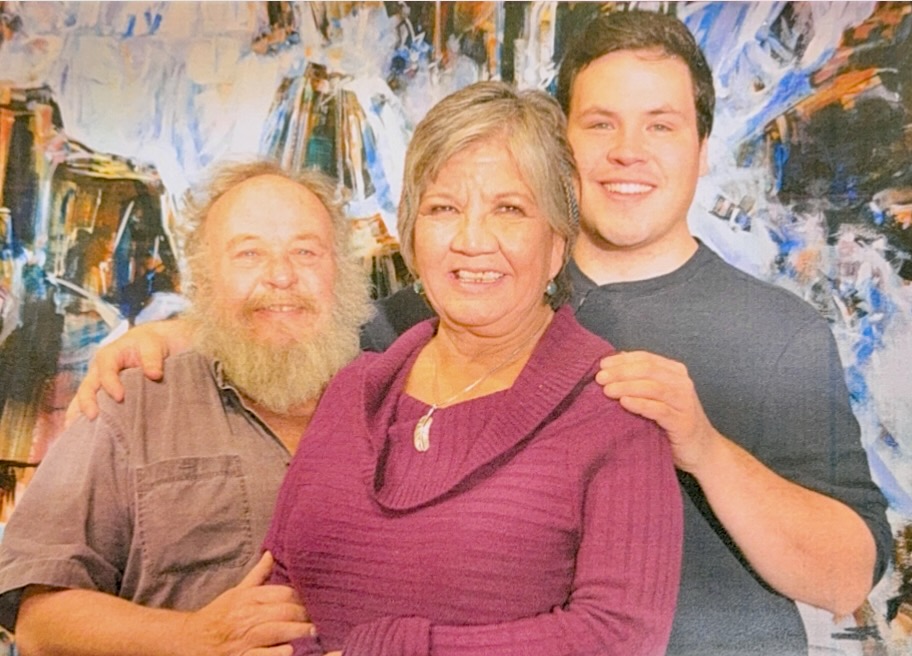
By the early 1980s, Gail had married Yellowknife doctor Ross Wheeler – who passed away in 2012 – and Jesse had been born.
“So much of what I am comes from her,” Jesse said.
“There’s a lot of good things that come from my dad but when it came to sports, my mother taught me how to throw a baseball. My mother got me into piano and saxophone and trumpets. It was all supported by both parents, but it was my mother who spearheaded these things.
“On Saturday mornings, she would clean the house and she would play the Cats soundtrack on repeat – for weeks. I’ve never seen Cats but if that stuff comes on, I know the words because she would play it at the loudest possible level, trying to get me up.”
Gail not only taught her son how to throw a baseball, she also enjoyed hockey. As a councillor, she played in games against the media and would proudly tell the story of the day she scored the winning goal.
Professionally, she had also begun to defend Indigenous people’s rights in the North through the founding of the NWT Native Court Workers’ Association, a group formed to help people navigate a system of laws that the territorial government, then relatively new, was still churning out.
“There were a lot of laws being passed and a lot of people were really taken aback by, suddenly, all the charges that they were going to be facing,” Cyr recalled in a 2021 interview.
“Even the sitting judges really wanted this program to get started. I was working with the Indian Brotherhood at the time and I decided this was what I wanted to do. Forty years later, I still have people come to me with issues that they have.
“When I was growing up, things were pretty tough on us. We were held back, underestimated, not given chances to do things, overlooked – sometimes violently. That’s the reason why I became an advocate, because of my personal experience and seeing what was happening to other people.”
“I think she helped a lot of people seek justice,” recalled Robak, her friend, “and what’s more important than that, really?”
Her work soon caught the attention of Bob McLeod, then the deputy minister of the Department of Municipal and Community Affairs, who remembers her as “quite a go-getter” when they first met.
“She always got dressed up for all the occasions like Halloween, Christmas and Easter, and she made sure everybody knew if there were events going on for women – she made sure that people attended and contributed,” McLeod said this week.
McLeod would go on to become the NWT’s premier from 2011 to 2019, facing at one point the awkward task of having to select a minister responsible for the status of women from an all-male cabinet.
He appointed himself – “that always raised a few eyebrows,” he said – and asked Gail to be his advisor.
“I’d worked with her, I knew her and I knew her personality. She had the right approach and the right personality to be successful in that role,” said McLeod.
“We didn’t miss any meetings across Canada about women. I was one of the few guys that would attend.
“She knew everybody that was involved and had her own ideas of where the government should be going. She was very outgoing, easily approachable and had no problem meeting people, and that way she was very successful.”
Even when she eventually retired, McLeod said, Gail was still Gail.
“We had a retirement party for her at the department, but she wanted to have an even bigger one, so she organized her own at The Explorer,” he admitted.
“She loved the North and Yellowknife was her home,” McLeod added, noting that her recognition through the Order of Canada in late 2021 “showed that people recognized all the work she did and how much she contributed in support of women and women’s causes.”
“I am going to miss her,” he said. “She was a good friend.”
Foreman said he was “stunned” to hear of Gail’s passing after a short period at Yellowknife’s Stanton Territorial Hospital.
“I think of her with her head thrown back and that wonderful laugh. We did nothing but laugh, even through adversity,” he said.
“She was a force of nature. You never knew where she would turn up next.”
Throughout tributes this week from municipal, territorial and federal institutions ran a thread of relentless public service.
The NWT Human Rights Commission said Gail had represented it as a “fearless advocate for equality and human rights.” Having been appointed to the commission in 2018, she was still working for it in the weeks leading up to her passing. “Her honesty, humour, and respectful approach made Gail a valued member of the commission,” a statement read.
Lucy Kuptana, the NWT’s housing minister, said Gail’s “unwavering passion for justice and her advocacy for all women, particularly Indigenous women, was a cornerstone of her work.”
“I am thankful for the time spent with Gail and her service to humanity,” Kuptana wrote. “Her strong voice will be deeply missed.”
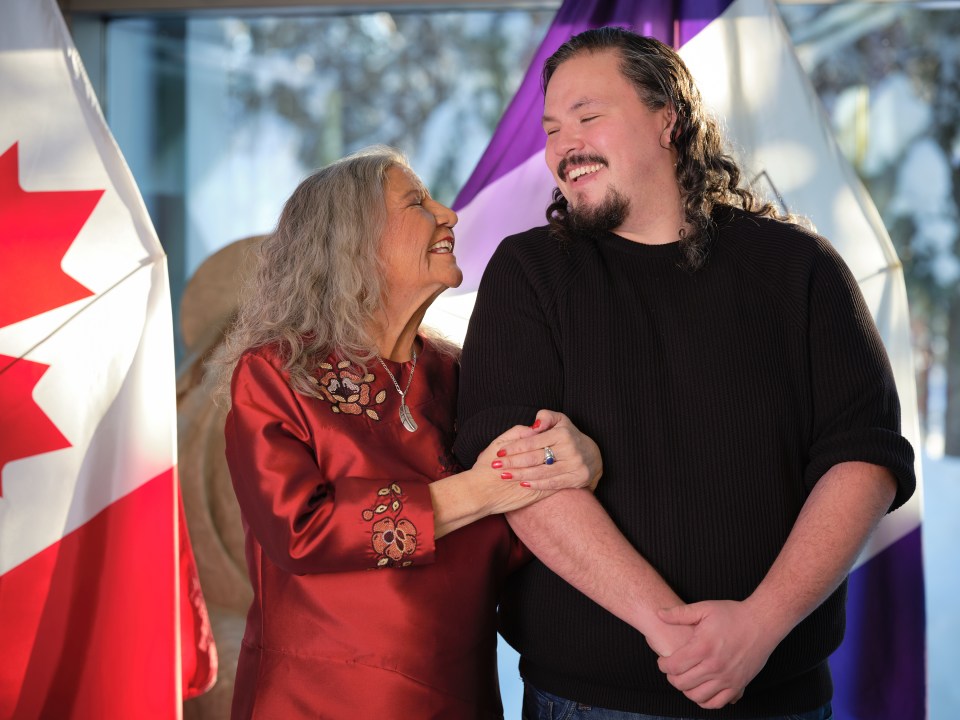
Her son, Jesse, said it was only in adulthood that he realized quite the impact both his mother and father, pillars of the community, had left on the city of Yellowknife. Gail also volunteered for Rotary and the St John Ambulance and held the presidency of the Yellowknife Seniors’ Society.
“They helped a lot of people, but they were always there for their son, too,” he said.
“She was constantly on the move, constantly wanting to help people and giving gifts. Right now, her car is parked in front of the house, filled with things that she wanted to give to people.”
“It hasn’t been all work, all the time,” Gail insisted in an interview recognizing her admission to the Order of Canada three years ago.
“I’ve enjoyed everything,” she said, “and I’ve been very lucky finding jobs the way I have – or making them.”
