



The NWT government says it is working to assign civic addresses to residents living in small communities whose homes don’t currently have one.
However, that process becomes complicated for people who live in unincorporated areas, such as along the Ingraham Trail outside Yellowknife.
In the Legislative Assembly on Tuesday, Yellowknife North MLA Shauna Morgan – who represents the trail’s residents – asked what the territory’s plan is for the hundreds of residents who live in unincorporated areas.
Vince McKay, the minister of municipal and community affairs, said it’s difficult to apply civic addresses to those areas, adding that using kilometre markings on highways is a common address system used throughout the territory.
“Currently, we don’t have anything set for the area that the member is speaking of. But there is discussion that is going on in the background to try to figure out something that could be used amongst all the agencies,” McKay said, highlighting emergency services as an example.
Advertisement.
Advertisement.
Morgan said not having a home address is a problem when ordering fuel and other deliveries, as residents can’t specify where drivers are supposed to go.
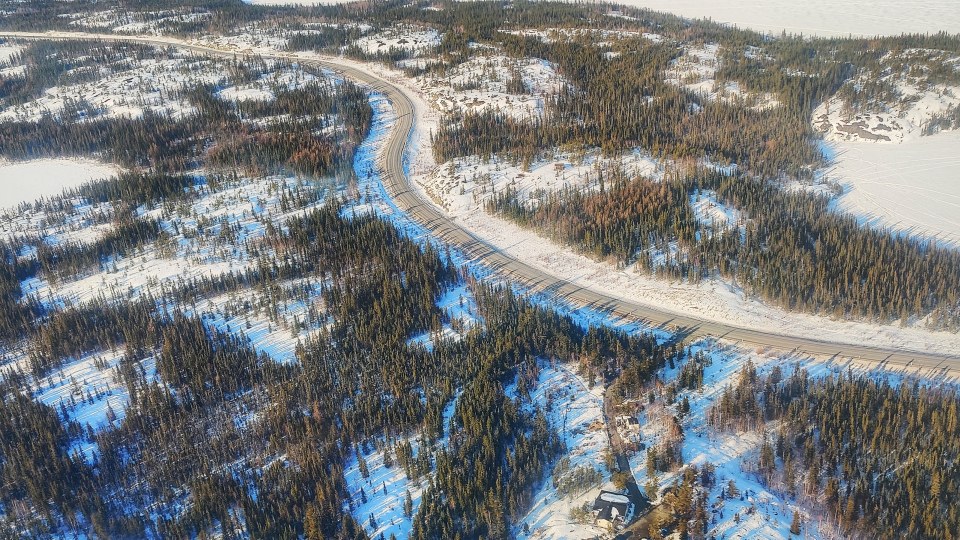
She said there have been previous attempts to implement standardized addresses to properties on the Ingraham Trail.
“There’s been different systems that are now obsolete,” she said. “It’s almost worse than not having anything at all.”
McKay committed to meet with Morgan and her Ingraham Trail constituents and work to address the issue.
Advertisement.
Advertisement.
Plane crash cleanup near Łútsël K’é
Also on Tuesday, Tu Nedhé-Wiilideh MLA Richard Edjericon queried who is responsible for the cleanup of a Wardair freighter that crashed in 1970 on Great Slave Lake near Łútsël K’é.
Wardair was sold to Canadian Airlines in 1989, which was then acquired by Air Canada in 2001.
Environment minister Jay Macdonald said the territory has to work with its counterparts, including the federal government, to address environmental cleanups in the North.
“There are many instances where these types of things have happened in the past that haven’t been addressed,” he said.
Macdonald said responsibility depends on the circumstances. In this case, he said it would likely be the federal government, which is responsible for cleanups in waterways.
The minister said the NWT government was willing to discuss resources to address the issue with the Łútsël K’é Dene First Nation and Canada.
Arctic security
Finally, Inuvik Boot Lake MLA Denny Rodgers recommended on Tuesday that the NWT government launch an Arctic security council, similar to the Yukon government.
He said he was “discouraged to hear” federal opposition leader Pierre Poilievre announce he plans to build a military base in Iqaluit if his party forms government following the next election.
Advertisement.
Advertisement.
“Not to disparage our friends in Nunavut but … Inuvik has an FOL [forward operating location] base with an airstrip that has been extended, as we know, to accept the latest USA fighter jets. And the strip will continue to be upgraded,” Rodgers said, adding an existing Norad base in Inuvik can house 250 military personnel.
“I’ll be urging the premier to reach out to whoever the next prime minister will be,” he said, “to certainly let them know that we expect the government to commit to not only fully funding the Mackenzie Valley Highway up to Tsiigehtchic to join the Dempster Highway, but certainly to make sure they do their homework and to realize that the practical reality is that Inuvik is best suited for this type of infrastructure.”
Deputy premier Caroline Wawzonek said while there is not a full-time position within the NWT’s executive department dedicated to Arctic security, the premier’s office does engage with the federal government on national defence.
She said sovereignty is one of the topics currently being discussed between Canada’s premiers and US officials in Washington DC.
