



Advertisement.
“This looks like a pretty big chunk.”
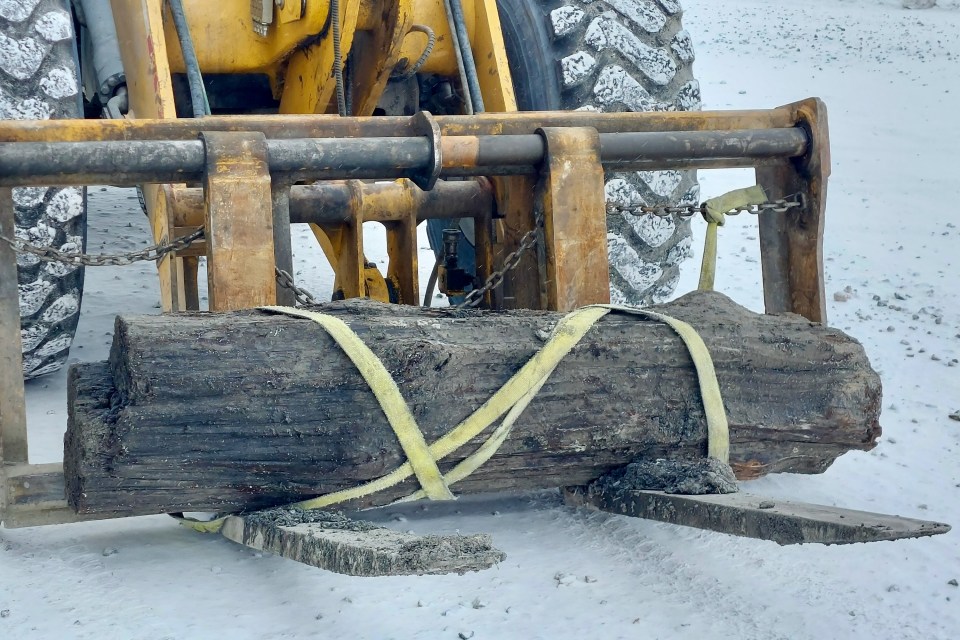
Just the size impresses Ryan Silke, never mind the age: a 300-lb, 50-million-year-old log carried up from the depths of the NWT’s Diavik diamond mine to the surface.
The mine reported the find last week in a Facebook post shared more than a thousand times. The log had been discovered a month earlier.
Silke, a museum collections officer at the Prince of Wales Northern Heritage Centre in Yellowknife, says the Diavik log is a “big specimen” but not the first he has seen.
Advertisement.
Advertisement.
The museum has one of its own.
“We have something very similar that was pulled out of the Ekati diamond mine well over 25 years ago now,” Silke said. (Ekati is Diavik’s neighbour, northeast of Yellowknife near the Nunavut border.)
“The one we have is a metasequoia, which is basically this really ancient deciduous conifer. The contemporary example would be a redwood tree that you might find growing in more temperate parts of California.
“This metasequoia was a pretty common swamp tree that was alive millions of years ago in the Arctic – or what is now the Arctic.”
Advertisement.
Advertisement.
Why are swamp trees from tens of millions of years ago something you might find far underground in modern-day Arctic diamond mines? And why haven’t they long ago ground into dust?
Here are some answers.
What do we know about Diavik’s log?
Rio Tinto, which owns the Diavik mine, said workers at the A21 site – where underground mining began last year – found the piece of ancient wood “while scooping kimberlite ore” on February 20.
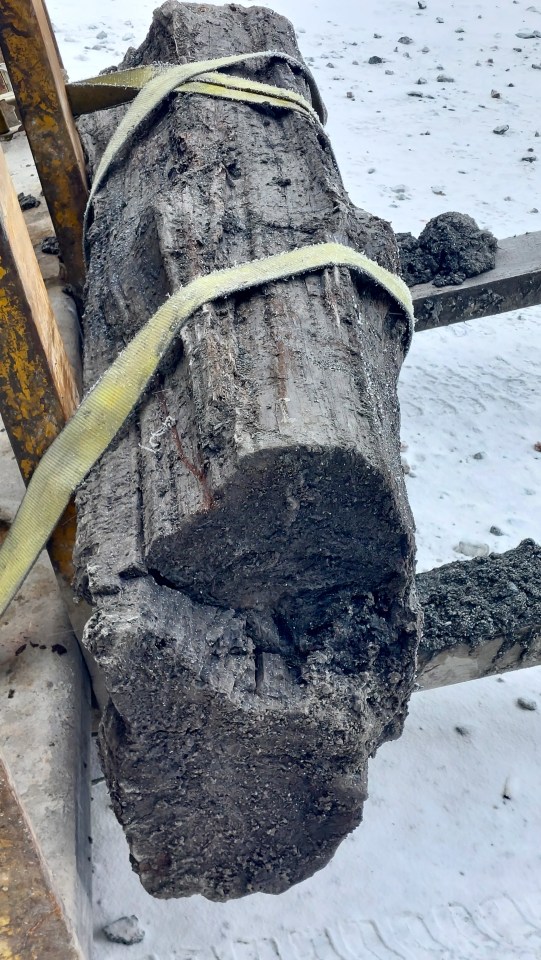
“The kimberlite rock from which the wood was recovered has been dated to approximately 50 million years old using accepted age-dating techniques,” the mine said in a statement issued to reporters.
“Consequently, the materials encapsulated within the kimberlite rock, including this wood, are understood to be of the same age.”
Is the Ekati log any different?
The Ekati metasequoia at the museum sounds quite similar based on Diavik’s description of the new find.
Diamond mines in the NWT are built to exploit kimberlite pipes – volcanic pipes created through the rapid and violent eruption of magma from deep within the Earth. Those pipes contain diamonds but they’re also the means by which these logs were preserved.
Silke said the kimberlite pipes at both Diavik and Ekati “are about 52 million years old,” meaning the two logs likely date from very similar periods in the Earth’s past.
Advertisement.
Advertisement.
By contrast, Silke said you’d be far less likely to find a comparable tree emerging from the NWT’s other active diamond mine, Gahcho Kué.
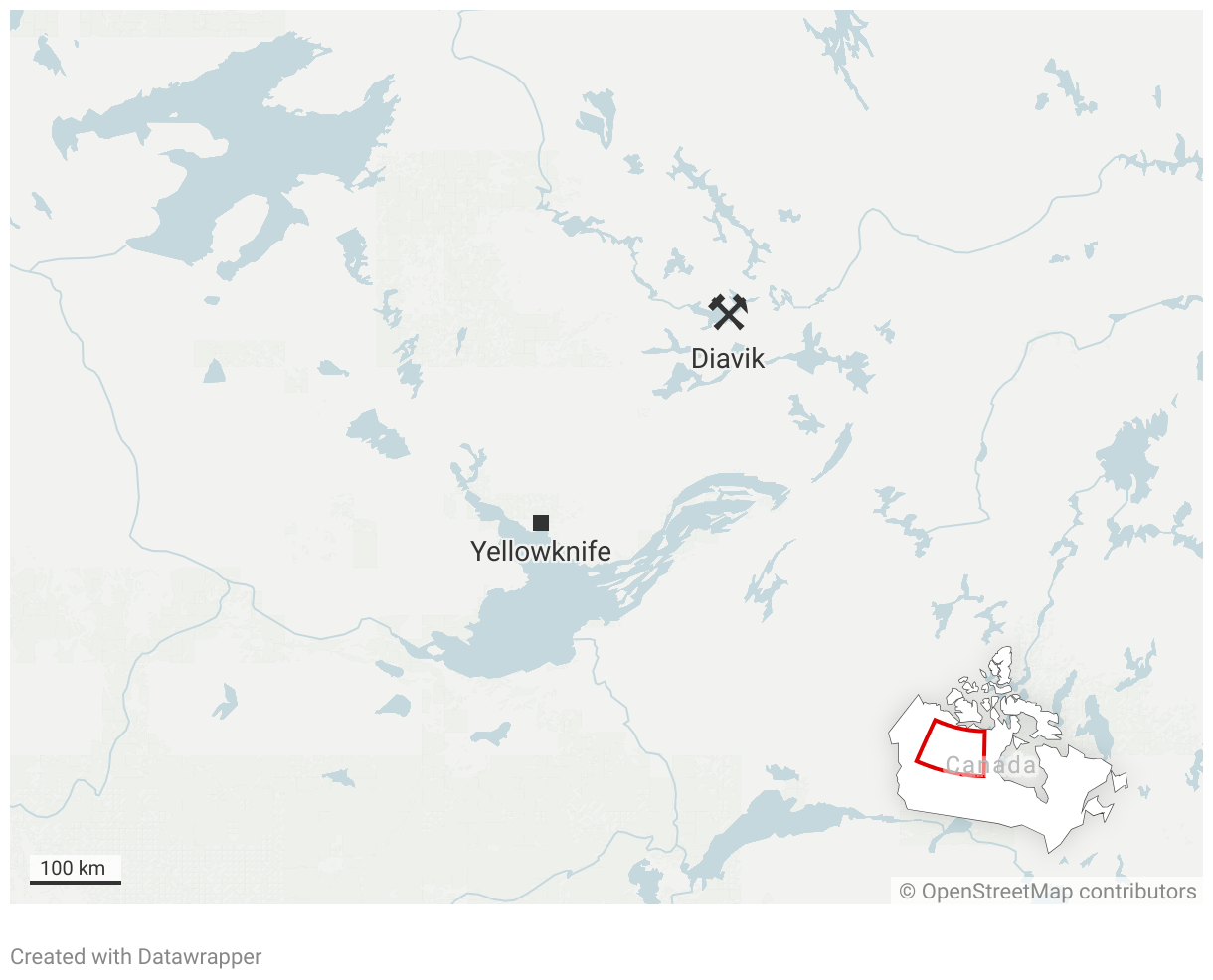
“The pipes at Gahcho Kué are much, much older,” he said. “They’re more like 500 million years old, so they’re not finding any examples of trees in those pipes because those kinds of trees didn’t exist 500 million years ago.
“Ekati and Diavik are kind-of unique in that sense.”
So why does kimberlite matter?
“If you can imagine a volcanic explosion happening, that’s how these kimberlite pipes were formed – this molten mass of pyroclastic stuff coming up really quick to the surface and exploding like a volcano onto landscapes,” said Silke.
“Anything that was on the surface, whether it’s underlying rock, animals or trees, they get impacted by this volcanic eruption.
“A lot of the material from the eruption will fall back into the ‘crater’ of the explosion and ultimately get preserved in the volcanic material and become kind-of mummified in this sterile environment.”
Once it had fallen back inside the hole left by the eruption, the tree was probably buried by other material and entirely surrounded by an environment in which nothing could break it down.
“It would have become really well-preserved in a low-oxygen environment,” said Silke.
Advertisement.
Advertisement.
“There wasn’t a chance for any microbe to start rotting away the wood or anything. These samples can be found at depths of 1,000 feet in the kimberlite pipe. That’s pretty deep.”
Why were there redwood trees in the ancient Arctic?
The Arctic climate didn’t always do the things it does now.
Fifty million years ago was a period known as the Eocene geological epoch. It was one of the hottest periods in the Earth’s history.
These days, the average annual temperature on Earth is about 15C. Go back 50 million years and the average global temperature is believed to have been more like 27C.
(Before you start getting into some sort of climate change argument here, humans have been around in a form we’d recognize for about 300,000 years. There were no humans making an average global temperature of 27C work in the Eocene.)
The consequence of such incredibly warm temperatures was that the land we now consider to be subarctic tundra appears to have been a lush forest populated with giant trees. It also wasn’t quite in the spot it is now, as the Earth’s tectonic plates have shifted over time.
“The whole ecosystem would have been totally different than today’s more tundra, vegetative kind of state where you don’t have trees like that any more, or really any trees at all aside from shrubs,” said Silke.
Past study of the Ekati log has suggested subarctic conditions at the time of its demise were 12C to 17C warmer and four times wetter than today.
Advertisement.
Advertisement.
Does anything else get preserved in kimberlite pipes?
Diamonds, of course. Scientists believe many of the North’s diamonds to be billions of years old.
Other than that, it’s not clear.
“Since the early 2000s, wood has been recovered from all of Diavik’s kimberlite pipes,” Rio Tinto said. Its statement appeared to suggest nothing beyond diamonds and wood has turned up.
Silke said Ekati, decades ago, had suggested “fossils of leaves and marine animals like fish and turtles” might also be turning up, but the museum has never seen any examples of those to be sure.
Are there thousands of well-preserved old trees beneath our feet?
The North has lots of kimberlite pipes, not just the ones at the diamond mines. Those pipes are simply ones that proved commercially viable to mine. There are many others.
Do all of those pipes contain similar specimens of super-old wood? That’s hard to say without having a sense of how old those kimberlite pipes are.
“I don’t know how common wood is in all these hundreds and hundreds of kimberlite pipes across the North and just how well preserved that stuff would be,” said Silke.
Rio Tinto said that despite pieces of wood showing up regularly at the site, the one discovered last month “is notable for its size.”
Advertisement.
Advertisement.
Can I go see the one the museum has?
The Ekati log isn’t on open display at the Prince of Wales Northern Heritage Centre but it is in there.
To see it, you’ll have to find your way onto a tour that heads into the climate-controlled storage area of the museum.
“It’s a very large, sensitive object. When we received the tree stump back in the early 2000s, there wasn’t really a lot of science on how to conserve and preserve something like that, because it came to us very wet,” said Silke.
“For the sample that we received, they didn’t want to really mess around with it too much. So what they did was dry it out very, very slowly over the course of three or four years, under a sort of tarp, and that did the job without the whole thing just turning into dust.”
That has helped keep the log intact for now, but it’s gradually degrading.
“It has slowly started to be delaminate, where the layers of wood growing on top of each other have started to split over time,” said Silke.
“It’s not something we can easily move around a lot or put on display without it just shaking apart, so we have a smaller sample on exhibit and this piece is in our environmentally controlled storage space.”
