



The date is Tuesday, January 26, 1971. The temperature outside is -37C. That’s when a Yellowknife hydro plant caught fire.
It takes a lot to outdo Saturday’s hours-long power outage across the NWT capital, but January 1971 beats it in the minds of residents old enough to recall.
Five residents contacted Cabin Radio about this specific incident in response to an article in which we asked about the worst outage Yellowknifers could remember.
Though recollections of dates were a little fuzzy, all five pointed to the same event: the Bluefish hydro plant catching fire.
Bluefish – which still exists, having been rebuilt later that year – had already been a Yellowknife power source for decades when disaster struck. A fire began at about 2pm on January 26, 1971, leaving the community of 6,000 or so people extremely cold and bereft of working alternatives.
Advertisement.
Advertisement.
Brian Sundberg, writing in on Sunday, selected the Bluefish incident as the worst outage of all time. The wintry setting and the cold stuck in Sundberg’s mind, as did Bluefish being the cause.
Marilyn Jordan remembered a fire somewhere being to blame.
“We lived in a trailer in a temporary park in Forrest Park,” she wrote.
“We had a propane kitchen stove that kept us warm. The town was preparing to evacuate the hospital when they finally got the power back on.”
Advertisement.
Advertisement.
Jordan isn’t the only one who remembers talk of an evacuation.
“Mom cooked dinner in a Coleman stove. After a couple of hours it was getting pretty cold, so we all got into sleeping bags zipped together on the living room floor to stay warm,” recalled Bob Wilson.
“The authorities went door to door to check on people and let us know they were working on evacuating us to Hay River. It didn’t come to that, but the plumbers were crazy busy when it came back on – so many frozen pipes!”
At the time, Wilson and his brother, Marshall, had an Edmonton Journal paper route in Yellowknife. They delivered newspapers that day by flashlight.
Meanwhile, Art Sorensen – a reporter for the same newspaper who, later that year, would join the territorial government as its chief of public affairs – was based in Yellowknife and frantically attempting to file copy down to Edmonton.
Sorensen’s story made page one of Wednesday’s Edmonton Journal.
“A power blackout Tuesday robbed the territorial capital of heat for four hours in temperatures 40 degrees below zero,” Sorensen’s report began. (Bonnie Findlay Fournier put it at eight hours. Others put it at four to six.)
Advertisement.
Advertisement.
“Residents shivered through the ordeal which began at 2pm without encountering any serious problems. Most businesses closed early. Bars and cocktail lounges were shut down,” Sorensen continued, in language practically identical to Cabin Radio’s Saturday report, though the Yellowknife of 2025 has fewer cocktail lounges.
“Most buildings in Yellowknife are heated by oil,” the report added. “Mayor Fred Henne said the situation could have been disastrous and it was ‘one of the most pressing matters’ he’s seen since arriving in the North 24 years ago.”
Sorensen’s version of the story carries no mention of Yellowknife preparing for evacuation, but three residents supplying their recollections this past weekend each independently brought that up.
According to Sorensen, a diesel standby unit restored power to some buildings after three hours of the blackout.
“The Canadian Broadcasting Corporation was unable to broadcast instructions from its radio station here because its transmitter is not equipped with an auxiliary power source,” he reported. (On Saturday, Cabin Radio fell offline after hour three when the outage sapped its battery backups.)
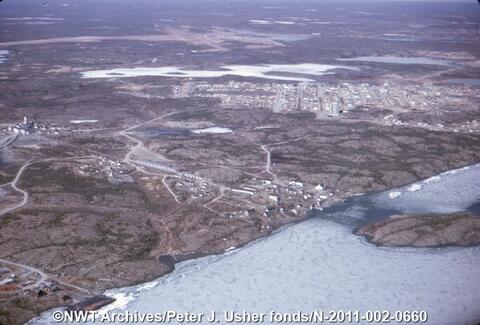
Sorensen insisted there were “few reports” of frozen pipes. David Radcliffe, however, remembers plenty of concern for homes – particularly at the city’s Con Mine, one of two operating gold mines in Yellowknife at the time.
“Con Mine site was hit really hard. They were on pipe boxes and all the housing was built in the 50s. The homes even had tar paper exterior walls and the old single-pane windows. People out there were freezing,” Radcliffe wrote. He thinks the outage lasted for about six hours, all told.
But it wasn’t just Con Mine homes that were suffering. The mine itself was in trouble.
Advertisement.
Advertisement.
Con was already leaning on the Emergency Gold Mining Assistance Act, federal legislation that lasted for decades from the late 1940s and subsidized “marginal” mines thought to be in danger of slipping out of business.
Bluefish had been built by Con at the very start of its life, in the early 1940s. The fire forced Con to take power from the Snare system, which meant extra expense.
Three days after the fire, on Friday, January 29, Sorensen filed a new report for the Edmonton Journal – this time only gracing page 35 – that warned the Bluefish fire “may spell doom” for Con.
“Company officials will obviously be taking a hard look at the practicality of prolonging the mine’s life,” the reporter wrote.
“Fire at its Bluefish Lake hydro complex 19 miles northwest of Yellowknife caused some $50,000 in damages, robbed the company of its own primary power source and forced it to draw electricity from Northern Canada Power Commission.
“Quite obviously, any question of prolonging the Con operation is now pegged to negotiating equitable power rates with the Crown-owned corporation.”
The Northern Canada Power Commission was a forerunner of the NWT Power Corporation, among others.
If Con couldn’t get a good rate from NCPC or rebuild at Bluefish, Sorensen wrote, “it might prove more expedient to begin gradual shutdown and salvage procedures now.”
Advertisement.
Advertisement.
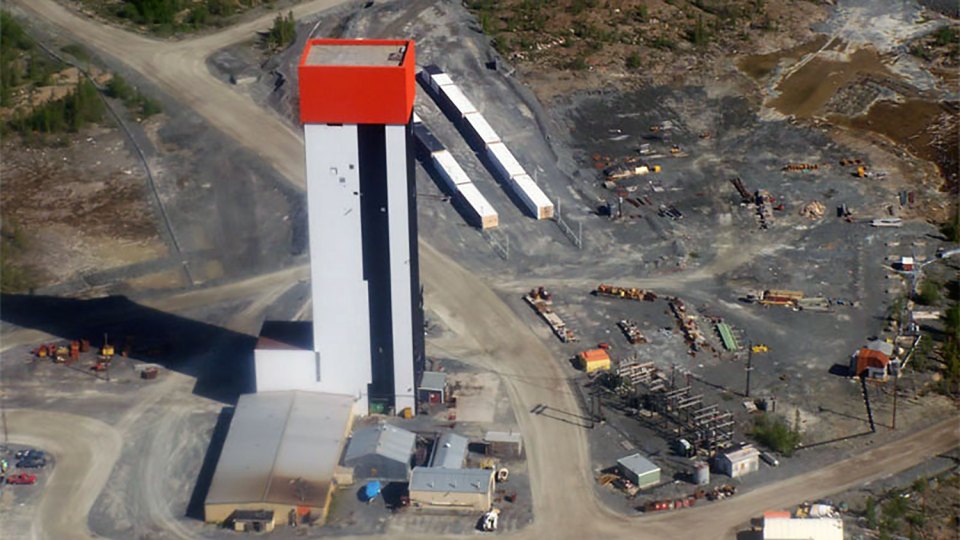
Ultimately, Con lasted until 2003. Gold prices picked up as the 1970s wore on and the Robertson shaft, an ultra-deep shaft whose headframe was a Yellowknife icon until it came down in 2016, was created in 1977.
Some of Con’s employees had more pressing concerns when the blackout began.
“A number of miners were caught underground when the power went off shortly before the shift changed,” Sorensen reported.
The Bluefish fire had an impact on Yellowknife’s other gold mine of the time, Giant, as well.
“The destruction by fire of Con Mine’s Bluefish hydro power plant in January 1971 resulted in large stresses placed on the Snare River hydro power plant, causing extensive blackouts at Giant Mine and increasing costs,” historian Ryan Silke notes in his account of NWT mines’ operations.

