



Most adults in the Northwest Territories have a view on the drug crisis affecting northern communities. What would the territory’s youth do?
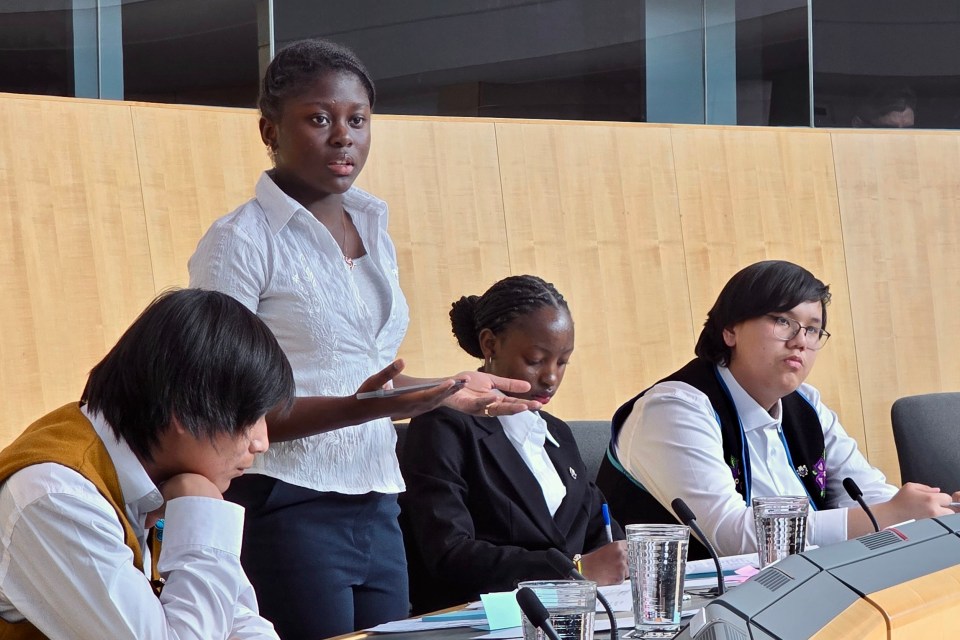
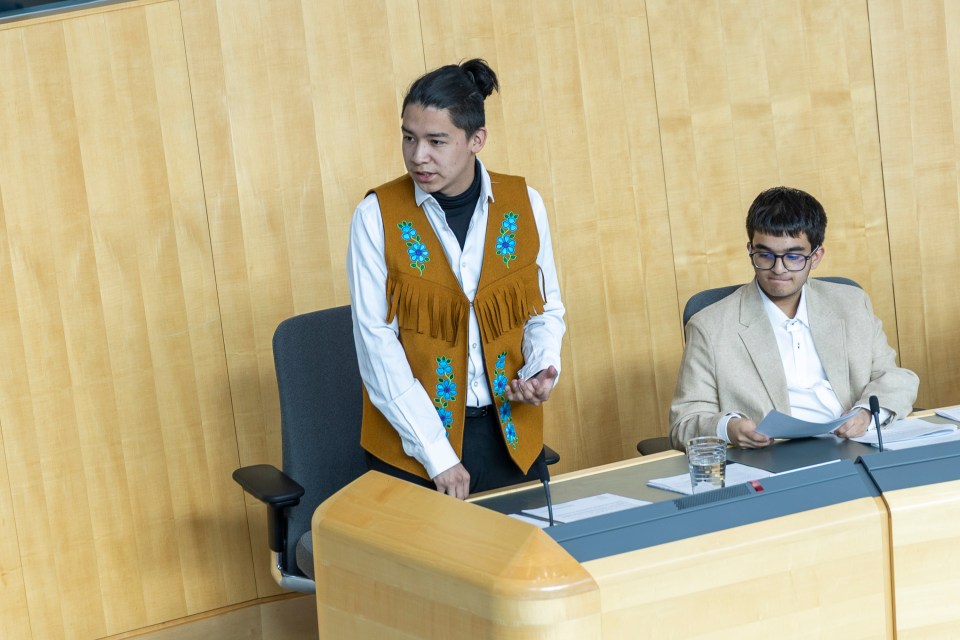
On Thursday, 19 high school students from across the NWT took part in a sitting of Youth Parliament.
For an afternoon, they acted like real MLAs in the legislature: they made statements and debated motions, all with Speaker of the House Shane Thompson presiding.
Thursday’s opening motion – introduced by Hay River North’s Emma Wilgosh, standing in for Premier RJ Simpson – called on youth MLAs to urge that the NWT government and Canadian government “amend the criminal code to lengthen incarceration periods for those convicted of trafficking harmful drugs.”
In the recent federal election, both the Liberals and Conservatives promised tougher approaches to crime. Premier Simpson and colleagues have made improving public safety a key priority for his government.
Advertisement.
Advertisement.
But critics say lengthening sentences for people at the bottom end of the trafficking spectrum – the lowest-level dealers, who may well otherwise be ordinary residents of small NWT communities – doesn’t do much to change things on its own.
The people actually running drug-dealing operations don’t get caught, they argue, and nobody who’s addicted to drugs gets any help.
So where would the NWT’s 19 youth MLAs stand?
‘Induce fear’
Wilgosh, who is from Hay River, started the debate by describing “stabbings and shootings close to my home.”
Advertisement.
Advertisement.
“This will continue to be a big problem throughout all of Canada and especially the NWT if there are not stricter laws,” Wilgosh said, receiving immediate support from Tu Nedhé-Wiilideh youth MLA Anderson Lennie (actually from the Sahtu), who added: “There’s just a bunch of problems in my community that involve drugs.”
But Hay River South’s Kailee Wentland – a Yellowknife student – opposed the motion.
“Stronger sentencing may seem like a tough-on-crime approach but in reality it often fails to address the root cause … and contributes to overcrowded prisons, broken communities,” Wentland told the legislature.
Wentland said the measure “largely hits low-level offenders” and leaves the key traffickers and systemic issues untouched.
“Drug addiction is primarily a public health issue, not a criminal one,” Wentland said.
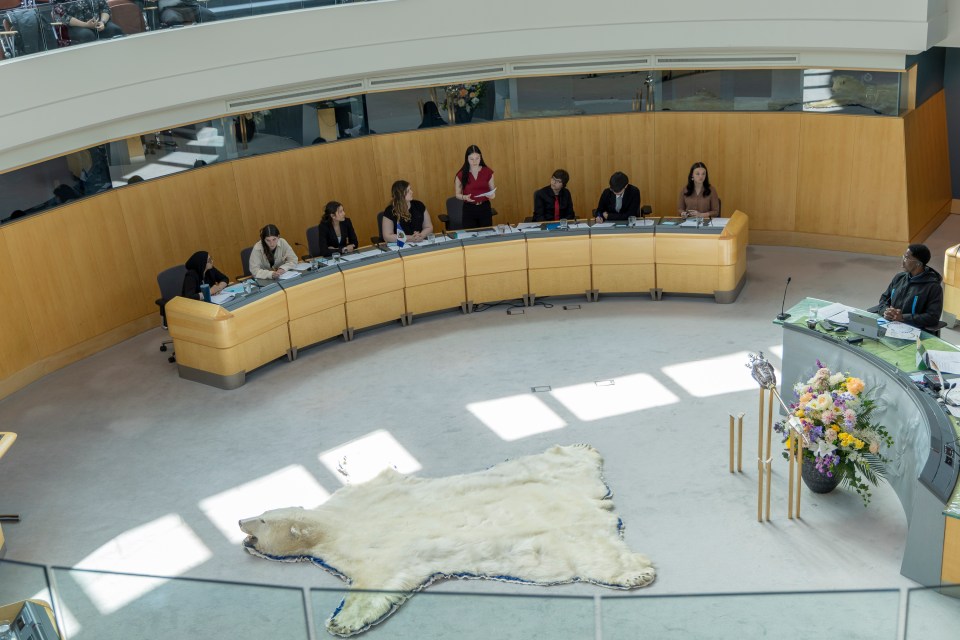
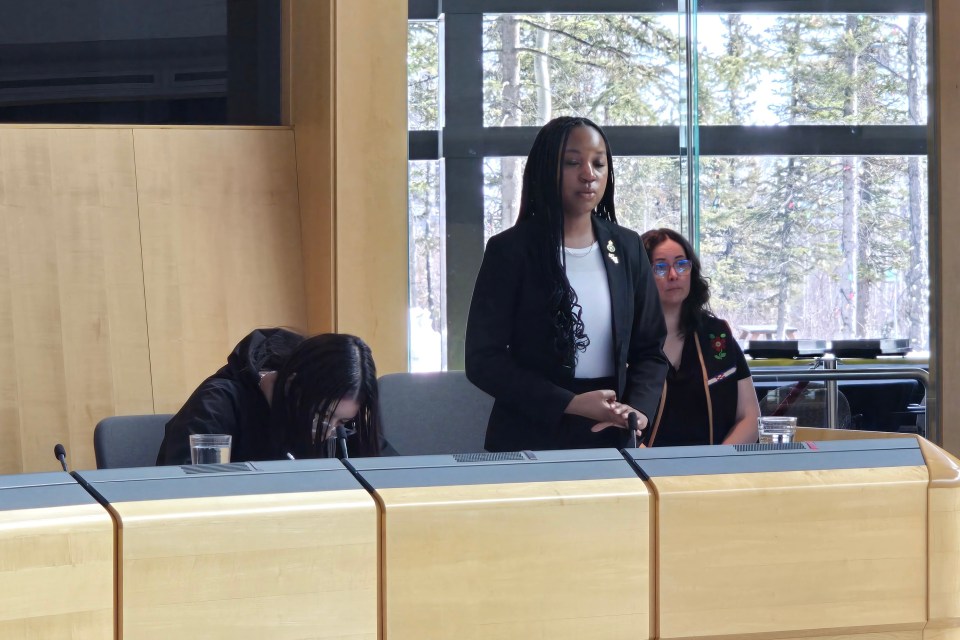
Those remarks triggered a debate about whether giving longer sentences to lower-level offenders is worth it to send a larger message.
“If we are letting people that get involved with illegal drugs go back to the communities, it may not be safe for people, especially the youth,” said Yellowknife North’s Leanne Karembera.
“It may be not the best to give them harsher sentences, but it is important to understand that if we do send them back to the communities after a crime on bail, then it may not be safe for people.”
Advertisement.
Advertisement.
Thebacha youth MLA Areeba Amir, also from Yellowknife, said: “Putting people into jail and making harsher punishments won’t really get rid of people causing the bigger problems like the big gangs.”
Even so, Amir argued, longer sentences “could bring down the amount of drugs given out in the Northwest Territories because it induces fear into people.”
“A harsher punishment for the drug dealers on the lower level … could induce fear which would help prevent them from continuing what they’re doing,” Amir said. “And if they do end up going to jail, once they come out, I feel like they would reflect on what they have done and choose not go down this path of life.”
Frame Lake’s Peter Mahon said longer sentences are “one part” of a multi-faceted solution that requires work to “address the root causes.”
Ultimately, 15 of the 18 youth MLAs present for the vote backed the motion, meaning they supported the call for longer sentences.
Three – Wentland, Sahtu youth MLA Clement Gully and Mackenzie Delta representative Rylan Lennie – were opposed.
School attendance motion
The debate on trafficking sentences was only the first of three that youth MLAs held on Thursday.
Some of the participants found the other debates to be more important to them on a personal level.
Advertisement.
Advertisement.
“I think the second debate is sticking the most in my mind because it was a very touchy subject,” Thebacha’s Amir told Cabin Radio, referring to a motion that would have triggered development of a bill mandating school attendance until youth reach the age of 18.
That motion failed by 16 votes to three as most youth MLAs declared it to be government overreach, arguing that some teenagers might be their family’s sole breadwinner or caregiver, or may have other reasons for not attending school.
Yellowknife Centre youth MLA Divine Lobe Manga forcefully defended the motion in the face of concern from many others, saying students should have government support if they are caregivers or earning money for their families, rather than having to drop out of school.
“I understand that some youth have to take care of their families, but that is not a reason to not go to school. We shouldn’t prioritize child labour over education,” she said.
Only Frame Lake’s Mahon and Inuvik Boot Lake’s Aiden Baldwin supported their Yellowknife Centre colleague.
“For me, it was really important to talk about because of the people of this land, the Indigenous people, and how this could impact them,” Amir said afterward.
“Their culture and tradition is a really big part of who they are. That debate was the most interesting and the most I had to say about.”
“It was really difficult at times,” said Great Slave youth MLA Jack Penney, “because my neighbour from Frame Lake had some really strong arguments that I had trouble fighting.”
Advertisement.
Advertisement.
Penney found the debates inspiring and wants to go to Ottawa to be a page in Parliament.
“You could see the wheels turning in their head,” he said of Thursday’s sitting.
“Their first argument would be something and then as soon as they heard somebody else, they’d be like, ‘Wait, maybe I should add that.'”
MLAs to look up to
The third motion, proposed by Yellowknife North’s Karembera, called for more government funding to go to people studying for degrees in education and medicine. It passed with 16 votes to three.
Asked about the youth MLAs’ real-life counterparts, Karembera said the 19 real MLAs “all have their different sides and I do enjoy hearing from all of them.”
“I do agree with a lot of the stuff she says, especially considering healthcare,” Karembera said of adult Yellowknife North MLA Shauna Morgan. “And I definitely look up to her. This week, she was a good person to look up to.”
Penney said the same of his Great Slave adult counterpart Kate Reid, while Amir selected Frame Lake’s Julian Morse as a territorial politician who stood out.
“What’s good about what he says is he takes in the broader aspect of problems,” Amir said.
“He’ll take an idea, he’ll add on to it and look at all the potential things, the bad things that could happen and good things that could happen. That’s a really good skill.”
