



The City of Yellowknife’s 10-year strategy to cut emissions and deal with a changing climate has now been published. Here are some important details.
The Climate Action Plan for 2026 to 2036 is a 91-page document setting out how the city intends to reduce greenhouse gas emissions and prepare for a future of more wildfire, permafrost thaw, extreme heat and intense storms.
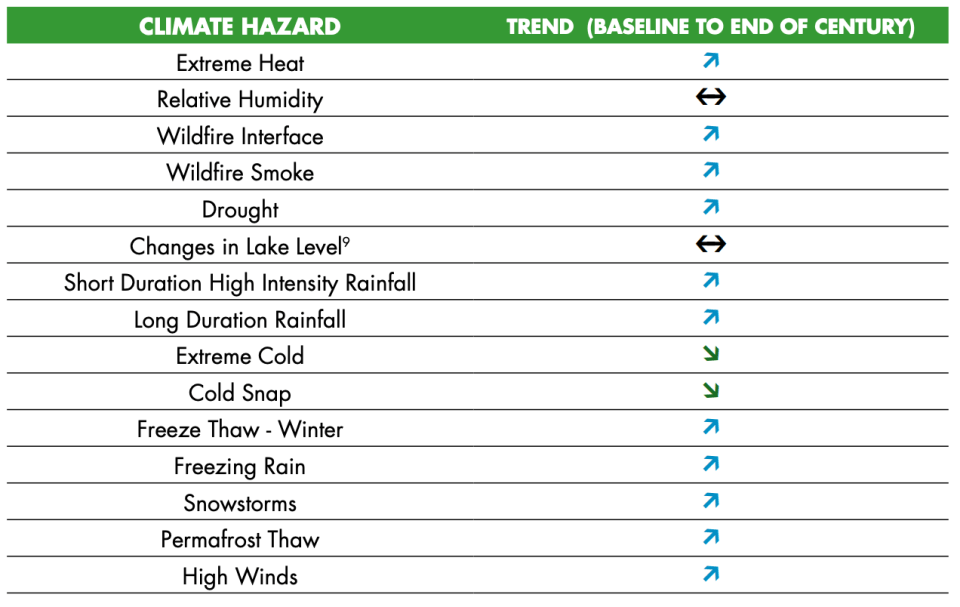
Council approved the plan in February, updating a draft we reported on last summer.
It covers six themes: sustainable transportation, waste management, buildings and infrastructure, land-use planning, governance and accountability, and community preparedness.
Here are seven things we’ve picked out from the broader document that help explain where the city’s at right now and what the future could look like.
Advertisement.
Advertisement.
One important note at the start: the municipality’s emissions and the whole city’s emissions are not the same thing. We’ve tried to make clear below each time we are talking about municipal emissions (from city facilities, city vehicles and so on) or community emissions (once residents and businesses are included, too).
1. The city’s dump is its biggest emissions problem
So-called “fugitive methane” from the city’s solid waste facility accounts for 73 percent of all municipal greenhouse gas emissions. That share is forecast to grow to 80 percent by 2050 if nothing changes.
Now, we’ve all had fugitive methane problems in our time, but the city’s are significant. The landfill, in operation since 1974, has never had gas capture infrastructure.
The city’s plan to address this is limited so far. The action plan states the municipality will “incorporate solid waste fugitive emissions data into decision-making rationale for implementing emissions-capturing technology in future landfill cells.”
Advertisement.
Advertisement.
The plan does not include a timeline or cost estimate for actually installing a capture system.
2. The city missed its last set of targets
The plan acknowledges the city’s previous emissions strategy, covering 2015 to 2025, did not hit its goals.
That plan aimed for a 50-percent reduction in municipal emissions and a 30-percent reduction in broader community emissions from 2009 levels. The new plan states: “These emissions reduction targets were missed.”
The 2015–25 plan did produce smaller-scale results, the city said. A biomass boiler was installed at the multiplex, building upgrades were completed at the baling facility, the city entered into an agreement with the YK Car Share Co-op, and a hybrid vehicle was added to the municipal fleet.
The new plan does not set community-wide emissions reduction targets. Instead, it commits to “establish corporate energy and emissions targets for 2036” by 2028, two years in.
3. Aviation dominates community emissions
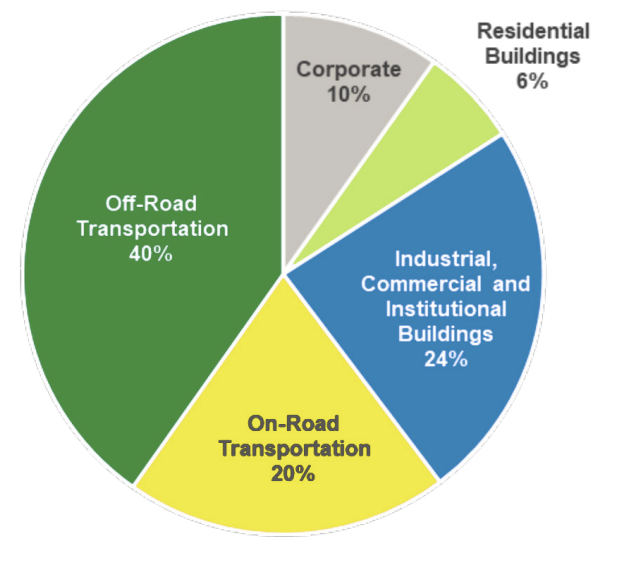
The single largest source of community-wide emissions in Yellowknife is what the plan calls “off-road transportation,” which it clarifies is mainly aviation turbojet fuel. That category accounts for 40 percent of community emissions.
(The dump, by contrast, is tucked inside the 10-percent “corporate” figure in the chart below. While it accounts for three-quarters of municipal emissions, it’s a much smaller slice of the community-wide pie.)
The plan projects no reduction in jet fuel emissions through 2050 and the city has no regulatory lever to pull on aviation.
Advertisement.
Advertisement.
But the scale matters: Yellowknife’s emissions profile is dominated by a category the plan cannot meaningfully address, meaning the 60 percent of emissions from everything else – buildings, vehicles, waste – would need to fall further to compensate.
4. Emissions went down overall but have risen recently
The plan’s headline figure is a 20-percent decrease in community emissions between 2009 and 2023, but the picture is more complicated than that suggests.
From 2021 to 2023, community emissions rose by 16 percent, from approximately 231,800 to 269,000 tonnes of carbon dioxide equivalent. The plan attributes the recent increase to a rebound in activity after the Covid-19 pandemic.
Emissions from commercial, industrial and institutional buildings rose approximately 40 percent from the 2009 baseline, driven by a 55-percent increase in floor area across those buildings.
Overall, the 20-percent decline from 2009 was driven largely by lower flight counts from Yellowknife Airport and a switch from heating oil to biomass in some residential buildings.
5. Some actions will directly affect residents
Several items in the plan would have an impact on residents’ daily lives if and when they are implemented.
The city plans to update its solid waste management bylaw to require all apartment buildings and businesses generating organic waste to provide compost collection. Initial research is slated for 2027 with a bylaw update to follow.
The plan proposes expanding the city’s policy of allowing free access to the fieldhouse – potentially adding locations – when the Air Quality Health Index reaches seven or higher. That would mean publishing temperature thresholds under which facilities open for free during extreme heat or cold events, too.
Advertisement.
Advertisement.
The city plans to partner with local organizations to create a year-round greenhouse initiative, with partners to be identified by 2027 and a greenhouse in operation by 2031.
Zoning changes will also expand areas with no off-street parking minimums and increase minimum requirements for bicycle parking, with initial research under way this year.
6. Many actions depend on the territorial government
In no fewer than 12 of its listed actions, the city says it will “advocate for the GNWT” to do things.
For example, the city says it will advocate for the territorial government to support development of a regional material recovery facility, implement extended producer responsibility policies, increase funding for energy audits, expand the workforce of energy advisors and contractors, support development of a plastic processing facility, review regulatory barriers to clean energy technology, and increase funding and support for Yellowknife to host regional evacuees.
The plan is candid about why: the city has “limited financial and human resources,” while the territory has more legislative and budgetary options.
“Implementing comprehensive climate change strategies requires substantial investment in infrastructure, technology, and human capital, which the City alone cannot afford,” the plan states.
7. The plan’s early-year budgets are thin
The first year appears to be funded almost entirely through existing staff time.
The 2026 implementation schedule lists $25,000 for emissions tracking, $5,000 for a communications plan, $3,500 for work on agricultural land use related to the community plan update, and $1,000 to establish a community working group. Most other items list “wages and benefits” as the budget line.
Advertisement.
Advertisement.
The 2027 schedule is split between items marked “TBD” and others with a budget of $0.
The plan also notes the federal policy landscape shifted during its development. The consumer carbon price, for example, was repealed in April 2025 and the federal approach to electric vehicles has shifted.
That might affect some of the plan’s emissions forecasts – for example, its authors projected a 56-percent reduction in passenger vehicle emissions by 2050, but that relied on electric vehicle use estimates based on Trudeau-era policy.
