



Advertisement.
Estimated numbers of barren-ground caribou in the Beverly herd rose from 103,400 in 2018 to 152,000 in 2023, a board that helps manage the herd said last week.
The Beverly herd migrates through eastern areas of the NWT as well as Nunavut and small portions of Manitoba and Saskatchewan.
Numbers in the herd were considered to be in decline since the 1990s, as with multiple other herds in the North.
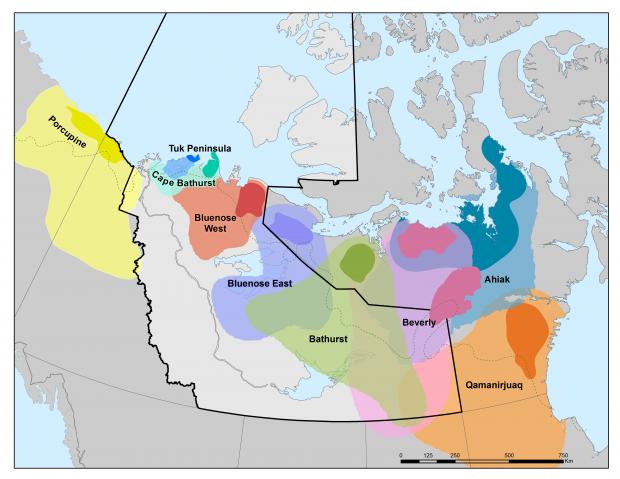
The Beverly and Qamanirjuaq Caribou Management Board now says data from Government of Nunavut biologist Mitch Campbell suggests “there is good news to celebrate.”
Advertisement.
Advertisement.
The Beverly herd had numbered more than 275,000 in 1994.
The neighbouring Qamanirjuaq herd was down from 496,000 animals in 1994 to 252,900 in 2022. That herd remains in slow decline but its numbers may be stabilizing, attendees at a management board meeting in Rankin Inlet were told last month.
The board called the new Beverly figures a “statistically significant increase.”
“While the board is cautiously optimistic given these encouraging signs, attendees highlighted the continued need to assess and mitigate disturbances that affect caribou, such as roadway activities and development,” the board stated in a press release.
Advertisement.
Advertisement.
“We all know that roads are detrimental to caribou,” board chair Earl Evans was quoted as saying, “but we also know they are essential – we need roads to build economies, so people can have jobs and support their families. We have to find ways to lessen the impact as best we can.”
The Slave Geological Province road and an all-season road to the Grays Bay port project on Nunavut’s Arctic coast are two examples of proposals that would cross areas used by migrating caribou.
Following the Rankin Inlet meeting, the board also noted concerns about wastage among other herds and the issue of parasites in caribou.
The board said it is “working with government organizations and harvesters to ensure community members better understand parasites and disease to support the safe preparation of caribou, a critical step to minimizing waste and practising sustainable harvests.”
