



A woman from Yellowknife who joined an international effort to demand humanitarian access to Gaza is encouraging others to take action.
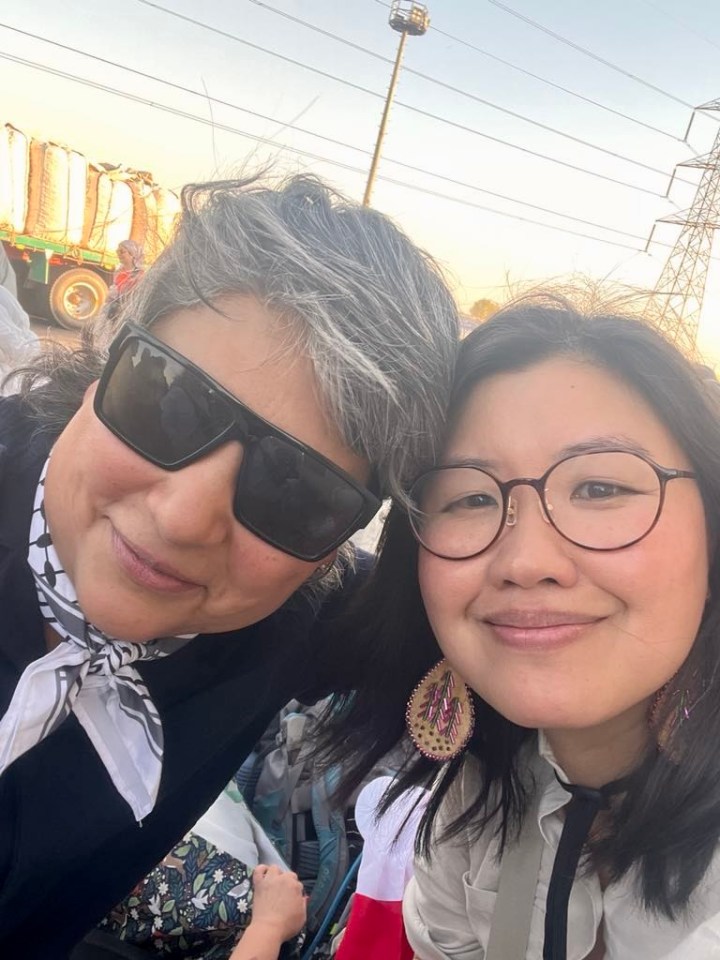
Amy Lam, an organizer with YK Citizens for Ceasefire, was among activists from around the world who travelled to Cairo earlier this summer for the Global March to Gaza.
She said she felt a moral obligation to join the international citizens’ movement, which had aimed to reach Egypt’s Rafah border crossing with the Palestinian territory to hold a peaceful demonstration.
“I’ve been taking action locally, but that hasn’t helped the situation in Gaza,” Lam told Cabin Radio.
“I think the actions we’ve been taking locally have driven a lot of awareness, but it has not stopped what was going on.”
Advertisement.
Advertisement.
Organizers of the march in Egypt said they wanted to bring attention to the lack of aid reaching Palestinians and create international pressure to reopen the only border crossing between Egypt and Gaza, securing a permanent humanitarian corridor.
The march was ultimately halted by Egyptian authorities and there were reports that some participants faced violence.
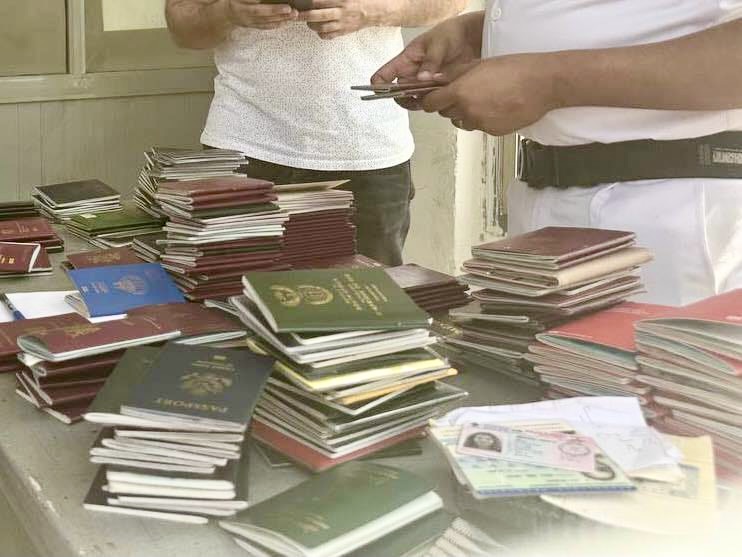
While her passport was temporarily taken at the second checkpoint on the way to Ismailia, Lam was not among those who were detained in Egypt.
Lam said she took part in a peaceful protest at that checkpoint before leaving as tensions rose.
Advertisement.
Advertisement.
“Every step of the way there were challenges and resistance to what we were doing,” she said.
While Lam was in Egypt, around 75 people marched downtown in Yellowknife in solidarity with the Global March to Gaza.
Since returning to Yellowknife, Lam said her biggest takeaway from her experience roughly 10,000 km away is that governments are complicit in what is happening in Gaza.
“Canada is still contributing to the violence and the genocide. So my country is complicit,” she said. “As a Canadian, I feel like there’s a moral obligation to speak up to what Canada is contributing to.”
Lam said she is still connected with people she met during the march in Egypt who continue to be committed to the cause. She encouraged others to speak out and take action.
“Action is still being taken, so we’re not giving up,” she said.
Reports suggest Canada still sending weapons to Israel
The Canadian government says it has refused new permits for controlled goods that could be used in Gaza since January 2024 and, the same year, suspended existing permits that could allow military components in Gaza.
A new report by four NGOs contradicts those claims, stating that data indicates Canadian goods labelled as military weapon parts and ammunition continue to enter Israel.
Advertisement.
Advertisement.
Anita Anand, Canada’s minister of foreign affairs, has described that report as “flawed” and “misleading.” She has said the federal government would not allow Canadian-made weapons to “fuel this conflict in any way.”
A newly leaked Library of Parliament report, however, indicates Canada issued two new permits for exports of Canadian military goods and technologies in 2024. That report states 164 previously existing export permits were used last year.
According to CityNews, Anand maintains Canada has not approved the export of any “lethal” weapons or munitions to Israel since January 2024.
Canada makes first aid drop in Gaza
The United Nations has said Gaza – which has a population of 2.1 million people, many of whom have been displaced – is on the brink of famine as Israel continues to severely restrict humanitarian aid to the area.
More than 1,300 Palestinians have been killed while seeking aid in Gaza since the controversial US-backed Gaza Humanitarian Foundation began operating on May 27, the UN has said, many by Israeli forces.
The Hamas-run Ministry of Health in Gaza has reported that Israel has killed more than 60,000 Palestinians since the Hamas-led attack on Israel on October 7, 2023, which killed 1,195 people according to Israeli figures.
The Gaza health ministry says 193 people, including 96 children, have died from starvation and malnutrition since that date.
Global Affairs Canada said the Canadian Armed Forces recently made their first humanitarian airdrop over Gaza, attempting to deliver around 9,800 kilograms of aid to Palestinians.
Advertisement.
Advertisement.
Prime Minister Mark Carney recently announced Canada plans to recognize the State of Palestine at the United Nations General Assembly next month if the Palestinian Authority commits to certain reforms.
Conservative Leader Pierre Poilievre said any decision to “recognize a Palestinian state now – without peace talks or a rejection of terror – rewards violence, not peace.”
This interview was recorded on July 16, 2025. The transcript has been lightly edited for length and clarity.
Emily Blake: To start off, can you tell me a little bit about why you decided to go to Egypt, to be involved in this?
Amy Lam: I’ve been following what’s happening in Gaza for the last 21 months. So I’ve been seeing things escalate, and governments around the world and institutions around the world that are supposed to prevent genocides from happening not taking action.
So it got to the point where, when I saw this initiative to bring the global citizen community together, I felt compelled to go, a moral obligation to go, to do whatever I can to help stop this. I’ve been taking action locally, but that hasn’t helped the situation in Gaza. I think the actions we’ve been taking locally have driven a lot of awareness, but it has not stopped what was going on.
What sort of planning was involved before you got to Egypt?
It was very grassroots.
Advertisement.
Advertisement.
It started with a few people and then countries started forming delegations. The organization that organized a Canadian delegation is called Palestine Vivra out in Montreal. Any grassroots organization in a country can decide to organize a delegation.
There was a lot of planning ahead of time. I say a lot, I mean, it was two weeks. It was about two weeks where we got notice that this was happening. But I think the global initiative, the planning was taking place about two months beforehand. There’s a lot of logistical things they had to consider.
We started meeting on Zoom. We had chat groups to inform us what the rough plans were, what sort of preparations to take, what sort of things to expect, risks that we might have to face. We were aware of all the different scenarios that could possibly take place so we could make the best decision possible.
Did you have any concerns ahead of time?
I certainly did.
Several scenarios definitely went through my head. I think the scenario that did happen – where the Egyptian authorities really cracked down on what was going on – that was definitely a scenario.
If we did make it to the Rafah border, there were definitely concerns of Israel taking possible action. So we knew the risk of possible violence and putting our bodies on the line. That was grim, but it crossed a lot of our minds. I met people there that prepared a will before going. Those were the realities we were facing.
After you landed in Egypt, what was your experience there?
Advertisement.
Advertisement.
My experience, I would say, is a little bit different than most people that went.
People who have been following what YK Citizens for Ceasefire has been doing in Yellowknife, we have a contact in Cairo from Gaza that evacuated. And they’re the family that has been our connection into Gaza, and they coordinate all our fundraising and help connect us with the families there.
I had actually planned to be in Cairo for two and a half weeks, even though the action itself was going to take anywhere between three days to seven or so. We were given a window of how long to be there, but I planned a two-and-a-half week trip because I wanted to connect with the local community that we had built a relationship with.
I rented a flat out in the suburbs. I wasn’t in downtown Cairo, which actually turned out to be a safer scenario for me. I had a few days to settle in before everyone arrived. I met with the family that we’ve been connecting with, I got a lay of the land, got over jet lag and just settled in. But a lot of people didn’t have that opportunity.
Can you tell me about when you met up with the other groups and the action that happened?
Things were changing by the minute.
The best-case scenario plan that we wanted was to get approval from the Egyptian authorities to actually do the march, and we went through all the proper channels. All the countries that were involved talked to their embassies and were requesting this permission, putting in the applications for the proper permits. But up until the day that we were supposed to march, we still had not received permission. So there was a lot of pivoting going on.
The instruction was to land in Cairo on June 12. I got there a few days early. About roughly a day before we were all supposed to land, we got a frantic message from the Canadian coordination team that we should all switch hotels, because there was information that the hotel list was possibly leaked. So we were all given instructions to scramble to find new places. But I was out in suburbs, I had a flat, so I decided just not to check in at the hotel. I was planning to move out to downtown Cairo but I didn’t, so I stayed in my flat.
Advertisement.
Advertisement.
The day the march was supposed to start, June 13, we got information to all gather in Ismailia, which is about an hour and a half outside of Cairo. The instructions were to get in groups, get an Uber, get a taxi, just make your own way out to Ismailia. Again, I was alone. Because I was in the suburbs, I wasn’t with anyone. So I got a vehicle myself, made my way there.
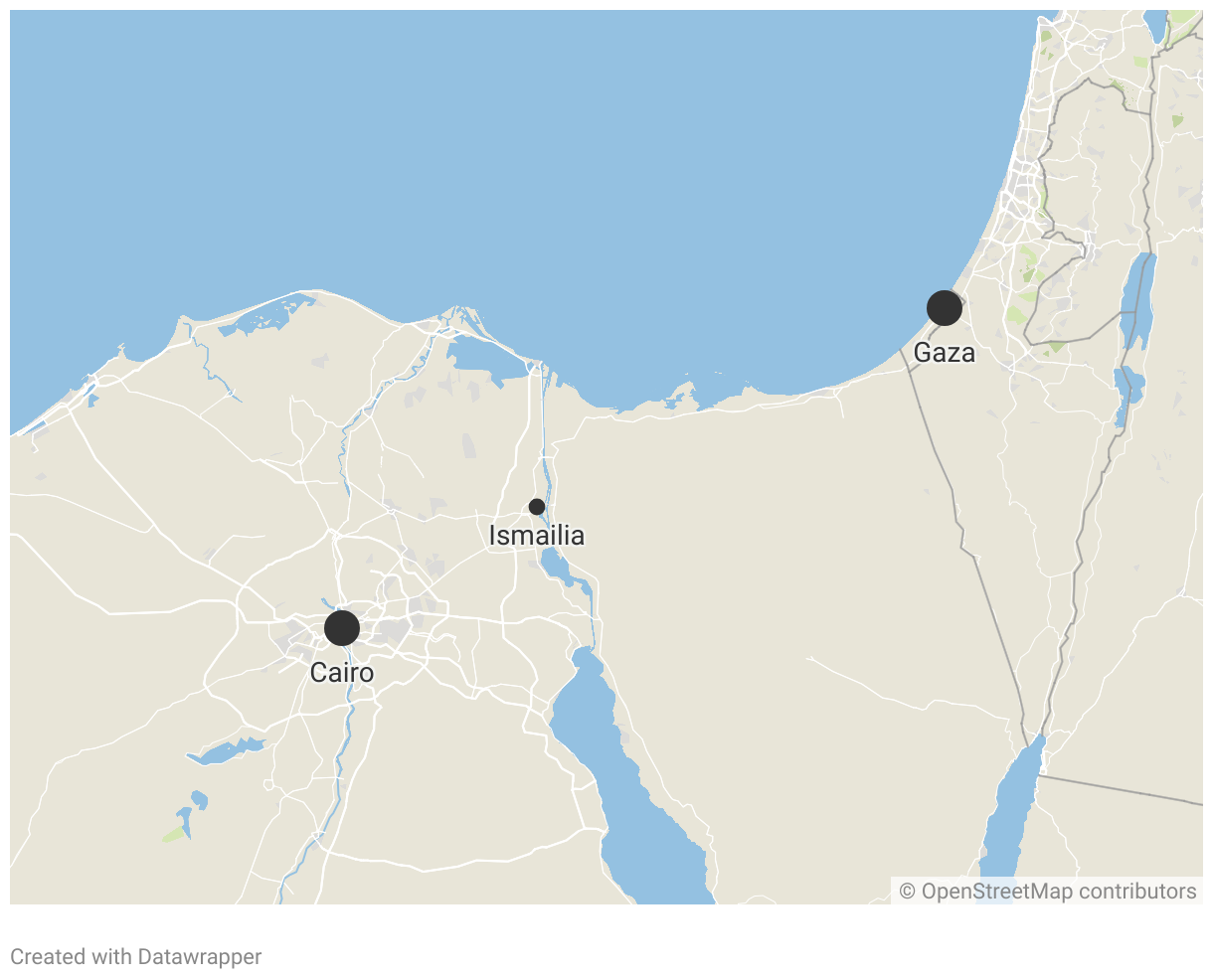
There were various scenarios people faced. Some people never even got out [to Ismailia] because they couldn’t find a vehicle. Some people made it to the first checkpoint. I made it to the second checkpoint. Some people made it all the way to Ismailia. From what I understand, there’s four checkpoints to get to Ismailia, but the majority of the people got stopped at the second checkpoint.
Every step of the way there were challenges and resistance to what we were doing. Some people actually got turned away at the airport. They didn’t even make it into Cairo. Some people got detained the night before. Police were going around to downtown Cairo hotels and basically just picking people up.
I understand, at one point, authorities took your passport. Can you tell me what that was like?
When I got to the second checkpoint there was a long lineup, so I knew something was going on. But I was in the vehicle by myself and I just kind-of played the dumb Chinese tourist. I think other vehicles that had four foreigners together, all with backpacks, that raised a lot of suspicion. They were automatically taken away, passports taken away, and held for five, six hours.
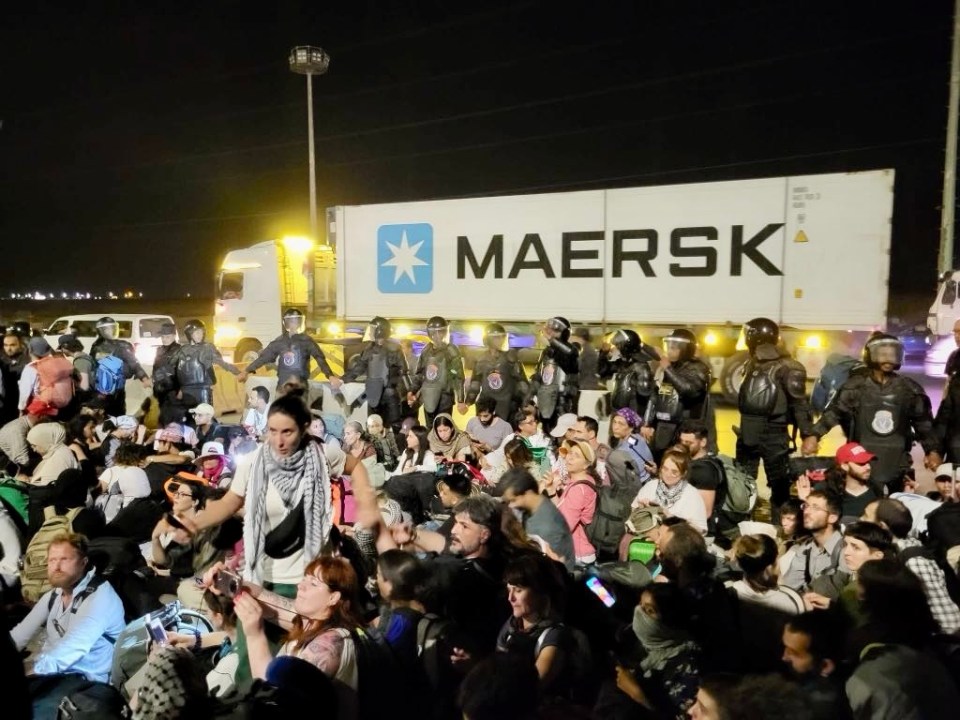
I just played along that I wasn’t part of this. “What’s going on? What’s all this protest? What’s all this commotion?” My passport did get taken away, but I was able to get it back really quickly.
Even though I got my passport back, I joined all the people gathering that did have their passports taken away because I was there for the action. Whether my passport was taken away or not, I wanted to be with the group.
What was your experience after that, at the second checkpoint?
Advertisement.
Advertisement.
There was a lot of trying to figure out what was going to happen next.
At one point, all the delegations decided we were going to stay even though the Egyptian authorities really wanted us to leave and go back to Cairo. At that point, things were still in negotiation phases, so we thought we can still negotiate something with Egyptian authorities. And we were going to camp at the second checkpoint. We were ready to get our sleeping bags out because we all had our camping stuff. But then it quickly escalated to a point where we realized that they don’t want to negotiate with us and they basically just wanted us all out of the country and back to Cairo immediately.
I found a few Canadians. It was just frantic, because I was part of these chat groups and information is just flying and you don’t know what’s going on. Because the people who made it to Ismailia, we were getting information that they were violently thrown onto buses and didn’t know where they were going. At that point, when you’re thrown on a bus, you don’t know if you’re going to be disappeared, you don’t know if you’re going to be detained, you don’t know if you’re getting shipped to the airport, you don’t know what’s going on. So it was safety in numbers. I wanted to stay with my group and figure out what was going to happen next.
I stuck with the group. People started chanting. There were really strong feelings of solidarity and support for the cause that we were there for, to break the siege in Gaza and try to pressure to get humanitarian aid into Gaza and to stop what was going on there.
We were committed to continue to stand for that and speak for that. But as night fell, we were getting kettled by the riot police. Then local Bedouins that were hired by the police – hired thugs is the only way I could describe it – started to violently beat local activists.
We were basically given the choice: get on the bus or, I don’t know, there was just no information. You know, get on the bus to go to where, right? At one point, I did decide to leave. There were a few Canadians that were starting to leave and I had this panicked decision. Trying to make risk assessments and do decision-making on the spot, it became clear to me, whether you stayed or left early on your own, everyone was going to get cleared out. At that point, I made a really quick decision to go with the people I had connected with and sort-of gotten to know, and just hop on a bus.
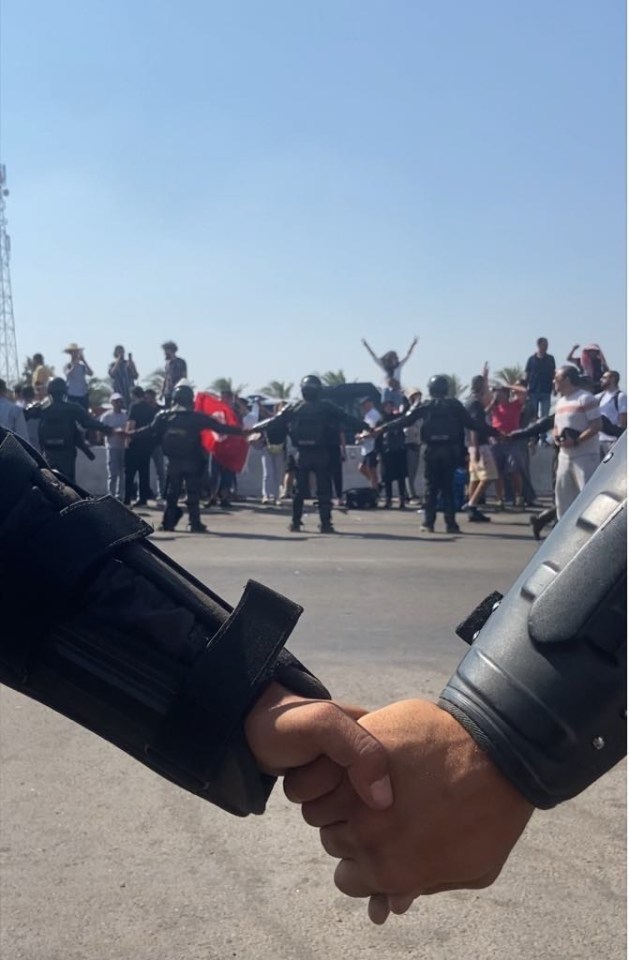
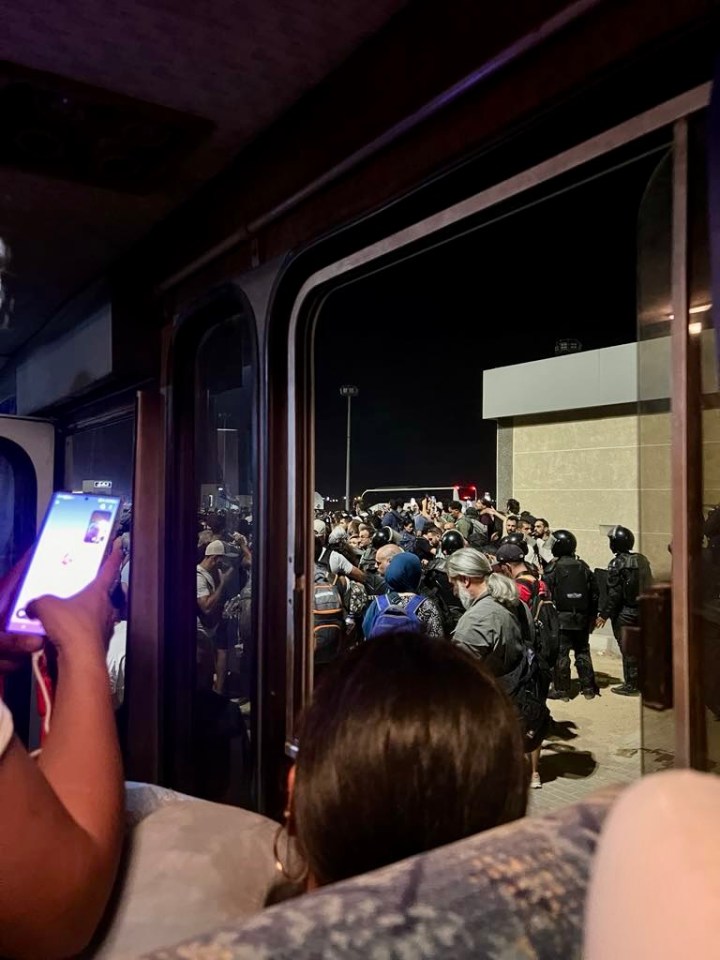
The Canadian delegation was really strong in saying that we want to be the last group leaving, we won’t leave until we’re forced to leave. But at one point, they did start attacking the Canadian organizer. It got pretty violent, so the Canadian delegation did decide to leave. At that point, there were probably about 100 people left. Eventually, we all did get cleared out.
I got on a bus that dropped us off in the middle of nowhere. I had no idea where I was. The battery on my phone was dying, but luckily I borrowed someone’s charger. Everything was just chaotic.
Advertisement.
Advertisement.
There is an Egyptian family I know in Yellowknife that gave me the keys to their apartment, just in case. It’s funny. The day before I left, I was coordinating with them to give back the keys. I was like, “Hey, I rented an apartment. Everything’s great.” And they’re like, “No, keep the keys just in case.” It turned out to be a blessing, because I didn’t want to go back to the apartment I was renting because I was afraid of being tracked and not feeling safe.
I inherited three Canadians, because no one had a place to stay – one from Edmonton, one from Montreal and one from Toronto. We hid out there and tried to figure out what was next.
The next day, the Canadian delegation was meeting to figure out what was going on. That’s when the organizer of the Canadian delegation and his wife got snatched from their hotel, and his wife got deported back to Canada right away. The next 24 hours was just trying to locate all the Canadians to see if everyone was safe and connect with the global group to figure out what we should do next.
We were getting so many messages of people being snatched from their hotels, from cafés. Downtown Cairo wasn’t safe. Within the next day, we got panicked messages saying: “We advise you all to leave within 24 hours, because it’s just not safe any more.” At that point, everyone started rearranging their flights to leave.
Since your return to Canada, have you stayed in touch with folks you met in Egypt?
Yeah, I have.
The Canadian delegation met to do a debrief, learning from the experience and trying to decide what’s next. I’m still connected with the three Canadians I inherited. We’re a little pod now, so we’re still in connection.
We’ve gained alliances, whether it be people from Canada or internationally. And trying to figure out what’s next, I think everyone’s committed to continue taking actions.
Advertisement.
Advertisement.
There’s a bunch of global actions taking place right now that’s in the works. There’s another Freedom Flotilla sailing right now, the one following the Madleen where Greta Thunberg was kidnapped. There’s another one and there’s a Canadian on there, Dr Yipeng Ge. I saw him in Cairo, he was also part of the march. He’s on the Handala. Malaysia is coordinating 1,000 boats to try to get to Gaza. There’s another initiative called A Thousand Madleens heading to Gaza. So citizens are fundraising to buy boats and try to break the siege.
Action is still being taken, so we’re not giving up.
What would you say the biggest takeaway from your experience was?
How much governments are complicit. They’re doing everything possible to shut down activism and global solidarity to what’s going on.
I think there’s a recent Pew Research post out there on people’s impression of Israel, whether it’s positive or negative, and people are seeing what’s happening with the reports coming out of Gaza from local journalists. International journalists are still not allowed in, but we’re seeing what’s happening and we’re not buying into the narrative that’s been the global narrative for decades now.
It’s a complete decimation of a society, culture, history. There’s just so much destruction going on in the most cruel and brutal ways. There’s a moral obligation to try to stop this.
There’s loopholes in our arms embargo. We can still ship parts to the US, which then get shipped to Israel and the supply chain isn’t fully tracked, so things coming out of Canada are still contributing to the violence and the genocide. My country is complicit so, as a Canadian, I feel like there’s more obligation to speak up to what Canada is contributing to.
I was not an activist before this, and I don’t even know if I’m an activist now. I really just think I’m human and trying to do what I feel like is a moral obligation.
I’m not telling everyone to put their bodies on the line and go to Cairo. I know not everyone could do that. We had 4,000 people around the world go, but I know there were millions more that wanted to go but could not go for various reasons.
We need the global community involved in this. Don’t be afraid to speak out. Don’t be afraid of being called antisemitic, because I think that is something a lot of people are afraid of. We are trying to stop the genocide, this has nothing to do with antisemitism.
