


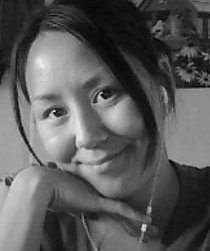
Mahalia Yakeleya Newmark is Tulı́t’a Dene. She describes her life’s work as being reconciliation and advocacy for murdered and missing Indigenous women and girls.
Following the death of Tara Carpenter in Inuvik, Yakeleya Newmark is calling for a renewed focus on MMIWG and violence in the North.
In an interview with Cabin Radio, she set out the steps she believes leaders and residents can take to help avoid tragedies and help families who are dealing with this form of loss.
“When we look at ourselves and we look at our families and we look at our communities, we all know somebody who is MMIWG,” she said. “That is not normal.”
To her, a key question is whether the outcomes of the National Inquiry into Missing and Murdered Indigenous Women and Girls – and the reports and action plans that have followed – are leading to demonstrable change for the better.
Advertisement.
Advertisement.
Tara Carpenter’s death is under investigation. Earlier this month, RCMP said they had charged a 45-year-old man with second-degree murder. Police termed the case a femicide. Proceedings are at an early stage and the charge has yet to be proven in court.
Below, read our interview with Mahalia Yakeleya Newmark. You can also use the player above to listen to the conversation.
This interview was recorded on November 20, 2025. The transcript has been lightly edited for clarity.
Ollie Williams: You got in touch with me by email not so long ago because you had something that you wanted to start a conversation about. What was it?
Advertisement.
Advertisement.
Mahalia Yakeleya Newmark: The most honest answer I can give you is I felt my heart was telling me I needed to reach out, that I needed to raise awareness of the epidemic of violence that’s happening in our families, in our communities, and in particular seeing the loss of life in Inuvik.
When I heard the news that Tara Carpenter was murdered, I was absolutely crushed, and I know I’m not the only one. I know there were many people in the community who were shocked, and it was so hard to understand. I just felt like we need to be open about this. We need to take a stand. We cannot accept this.
You knew Tara Carpenter. I never had that opportunity. Tell us about Tara.
Yeah, thank you, because she was a real person. She wasn’t just an RCMP report or a statistic, and I want to share this with all respect. And I first want to just share my condolences to her family and that her family and her sister have given me permission to speak about her. So I want to make that really clear. I think when you do advocacy work, you still have to do it with respect, because these are still people and still families, and every person’s life has value, and every family deserves justice.
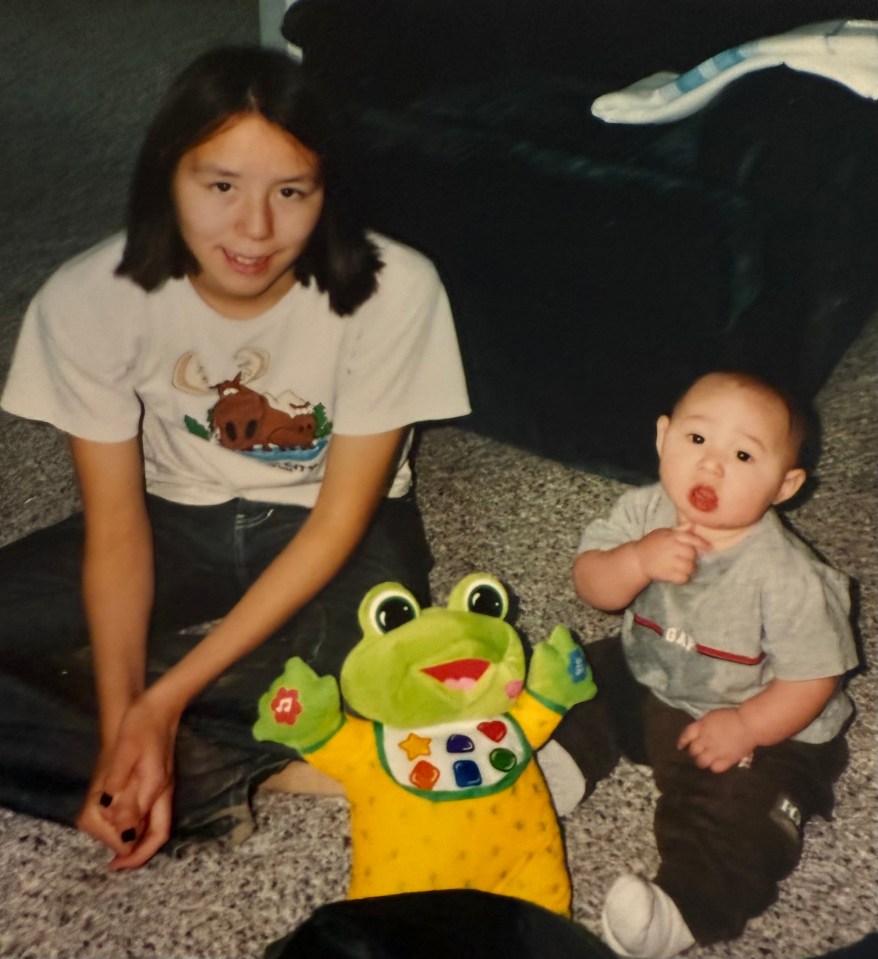
When I think about Tara, Tara was so sweet. She was so kind, gentle, and in many ways, she was a harmless person, you know? She was a sister, she was an auntie, and everybody in the community knew her.
For me, it’s just devastating to think that somebody who is so kind and so gentle could lose their life. Why is that? Tara deserved to have a safe place to live. She deserved to be safe, and her death doesn’t make any sense. That was what propelled me to reach out. We cannot accept this level of violence,
This is a tragedy in its own right that exists within a broader tragedy as well, right? In terms of the scale of the larger crisis that the NWT is facing and has faced now for, frankly, a really long time.
The RCMP declared it a femicide. I think we have to be really clear: this is MMIWG, right?
Advertisement.
Advertisement.
We have over 200 calls for justice and yet we are still facing disproportionate rates of violence nationally. I think we have something like 12 times the number of intimate partner violence. When we look at ourselves and we look at our families and we look at our communities, we all know somebody who is MMIWG.
And I’m going to repeat that: we all know someone. That is not normal. That cannot be normal. We cannot accept that.
You mentioned the national inquiry. There are calls to action, online trackers for those calls to action, reports, territorial and provincial action plans and federal action plans. To what extent, from your perspective, has there been progress?
I think this is the question. How do we measure progress in our communities? How do we know that these frameworks and these beautifully designed documents are actually making a difference? Are we tracking that in the NWT? Do we have some data on that? I’d like to know. I think that’s the question.
We also have active cases going on at the same time.
Mariella Lennie is my relative. When I talk about “everybody knows somebody,” that’s not abstract. We all know somebody and she has a case that is 33 years old.
I actually remember the day that I learned that. I was a little girl, and I just remember how devastated my mom was, and that pain is still something that we carry. So she was 17 years old when she went missing, she was just a teenager. She went to Yellowknife to go to school and she was there, I think, maybe a month, and then she went missing. Later in the spring, her body was found.
I have spoken to Mariella’s parents, who are my relatives – and everybody I’ve spoken about today, I’ve received permission from the family – and one of the things they shared with me is that they don’t receive regular communication from the RCMP. And again, we go back to the calls to justice. This is actually a call to justice: that police have processes and protocols, and one of them is staying in touch with the families.
Advertisement.
Advertisement.
This is something I hear over and over again, that families don’t have regular communication. So again, what is the level of accountability? At least every six months or every three months, like, “We don’t have any updates, but we want to stay in touch with you. We want to let you know we’re still working on this.” When I spoke to Mariella’s parents, what her father said to me was, “We will take all the help we can get. We need to solve her murder.” And I want to share that, because we need to do that. We need to do more.
From what I’ve been able to find through media, we have over 80 cold cases in the Northwest Territories, but I actually can’t look that up. I mean, where do you go? How many of those are Indigenous people? How many of those are MMIWG? We have no public registry. That means we have no public way to have accountability around this, toward both the RCMP, toward the Government of the Northwest Territories. We have to be able to find a way to create some public accountability.
What I’m sharing is not new. These are all grounded in the MMIWG’s calls for justice. What happens is families are left on their own to advocate, families have to raise money, families have to coordinate, volunteers have to find search equipment, have to persuade those in the community to come forward and speak the truth. And so we’re leaving the burden of all of this work on our families and on the advocates, without that level of structural support.
We’re seeing that to some extent with cases like Frank Gruben, where a couple of years has now passed and it’s not clear to me, at any rate, that a whole lot is happening beyond police saying, “Yes, it’s an active file, and if information comes in, we will pursue it.” And family members continuing to raise awareness and continuing to carry that case forward on their own. How do we change that? We’re talking about stopping this from happening in the first place, but we’re also talking about our response when it does. Where do we start with all of that change?
If I can, Ollie, I’d like to just take a pause here, because again, we’re talking about a young man – somebody who was a brother, a son, and his mother and his brother and family have been tirelessly looking for him for two years – and on their own, begging for help. Like, that is disgusting, to have put that all on them. I’m sorry, that’s how I feel.
The town of Fort Smith is a small, small town. Somebody knows something, and I believe that Creator sees all so I really encourage you, if you know something, to call Crime Stoppers. You can report anonymously. The number is 1-800-222-8477.
It is important that we take care of our relatives. This is about us taking care of each other, and about us taking care of Frank Gruben’s family. When I think about what we can do, we need some public accountability. We need leaders to stand up for this. We need leaders to take a meaningful stance that violence is not OK in our communities, that we need to support our family members.
We need to support our community members, and that goes beyond just the GNWT. We really need our elected officials to do that – our MLAs, the executive council, Indigenous governments, NGOs – but it’s more than that. We as community members, I believe we all have the potential to be leaders. We are all leaders, so we all have a role and responsibility to stand up against this.
Advertisement.
Advertisement.
If you were in a room with community leaders themselves, or just regular human beings who felt like they could take a leadership role in their community, what would your message be to them about what leadership looks like here?
This answer is so complex, because there’s so much people can do, but I think the first step is to take a stand. When you see something, you have to say something. When we have victims of violence come forward, or the families come forward, we have to act with compassion.
For those who are in positions of power? Create some funding, create advocacy funding where families can draw on that to search for their loved ones. Again, why are we putting this all on people to raise money, to find volunteers? Do things within your power to create some structural change.
I think the other thing is, for our community members, how do we care for one another? How do we love one another? How do we support that community-led healing? So that when the victims – but also those who perpetrate crimes – come back to our communities, we have ways to support them to be members of our community again.
What I hope people will do is recognize this is an issue that impacts everybody, and that when we stand up against violence, when we take better care of our communities, we have safer families and communities to live in, and we all benefit from that.
But we all have a responsibility to it as well. Every family deserves justice, and every person who has lost their life had value.
