

Advertisement.

The first Wek’èezhìi Land and Water Board public hearing held in Whatì saw Tłı̨chǫ Elders warn of dropping water levels and the legacy of Rayrock, while the Tłı̨chǫ Government pressed Fortune Minerals on its financial capacity and how Indigenous knowledge should shape its mine’s water licence.
Fortune Minerals answered questions from Indigenous, territorial and federal government representatives at the Johnny Nitsiza Community Centre this week as regulators consider a renewed water licence for the proposed Nico mine, about 50 kilometres northeast of the community.
The hearing set the stage for a board decision – expected in July – while highlighting unresolved questions about the company’s finances, the role of traditional knowledge in regulating the mine, and whether Fortune can withdraw additional water from nearby lakes and rivers without substantially altering them.
Some testimony came from Tłı̨chǫ Elders who spoke about the importance of fish, water and traditional medicine in the Marian River watershed.
Advertisement.
Advertisement.
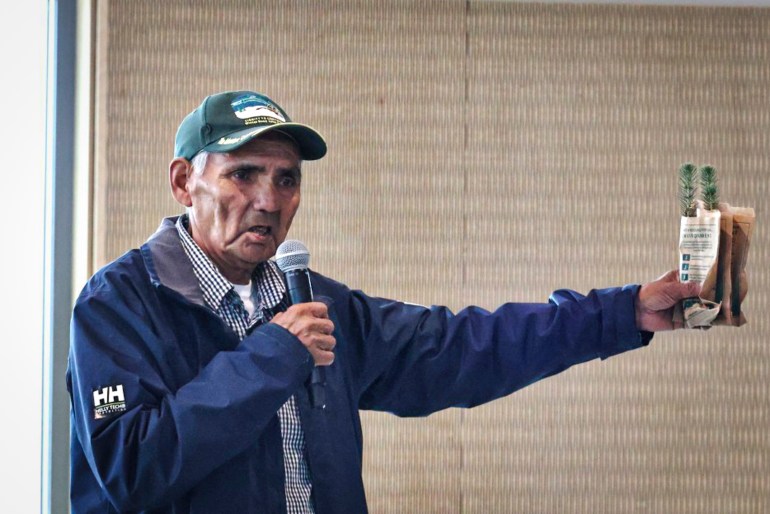
Former grand chief Joe Rabesca described watching water levels drop across the region. He told the hearing he had watched a bear recently walk into the river near Behchokǫ̀ to steal fish from nets because the water is now so shallow.
He also described finding dead fish floating near the former Rayrock uranium mine site only to discover, through testing, they had died not from contamination but overheating in shallow water.
“I got scared because that’s what we live on, so God knows what’s going to happen down the road,” he said.
Rabesca connected climate change, permafrost thaw and falling water levels to broader questions about the mine’s plans to draw additional water from the nearby lake and river.
Advertisement.
Advertisement.
Monfwi MLA Jane Weyallon Armstrong raised the legacy of both Rayrock and Yellowknife’s toxic former Giant Mine.
“I don’t think we want to repeat what Giant Mine has done – and I’m not against development,” she said.
“I’m for that development because we know that our younger generation needs jobs. We’re doing this for the future generation, but I know there’s a lot of concerns.”
Armstrong asked Fortune how it would treat arsenic and other metals at the site of its proposed bismuth, gold, copper and cobalt mine.
Rick Schryer, Fortune’s vice president of regulatory and environmental affairs, said arsenic is naturally occurring at the site but not used in mine processes. The mine would use reverse osmosis to remove metals from discharged water and the effluent would meet drinking water quality guidelines, he said.
“Nobody is allowed to build a mine like Rayrock was built,” Schryer said. “That’s never going to happen again.”
Pressed by Armstrong on possible health impacts, Schryer said he would be happy to drink water from Peanut Lake, where treated water from Nico would end up.
“We know exactly what we’re going to discharge. We know it’s going to be safe for human health,” he said.
Advertisement.
Advertisement.
“I’d drink the water out of Peanut Lake, if I had to. It wouldn’t bother me, because I know the water is safe to drink.”
Cultural use criteria
One of the hearing’s biggest discussions centred on whether Indigenous knowledge should be built into the mine’s regulatory framework and, if so, how.
Cultural use criteria are an emerging tool in northern mine regulation. They allow Elders and community members to assess whether water and the environment remain healthy not just by Western scientific measurements, but also through traditional standards – for example, whether water looks, tastes and sounds right.
The Tłı̨chǫ Government recommended that the water licence require Fortune to propose cultural use criteria before it begins discharging effluent, and that the criteria apply not just at the end of the mine’s life but also during operations.
Fortune proposed an alternative: embedding cultural use criteria within the mine’s aquatic effects monitoring program, where they would sit alongside science-based action levels. Schryer said the company supports cultural use criteria for closure planning, as has happened at other mines like Diavik, but argued that making them standalone licence conditions during operations could risk shutting down the mine.
Patty Ewaschuk, representing the Tłı̨chǫ Government, noted that the Diavik cultural use criteria integrate science and traditional knowledge together rather than treating them as separate measures. She said the Tłı̨chǫ Government would consider whether the monitoring program approach could give cultural use criteria the same regulatory force as science-based limits.
The board asked Fortune directly whether it would accept a licence condition requiring the development of cultural use criteria for board approval. Fortune agreed.
Financial responsibility
The Tłı̨chǫ Government delivered a pointed presentation on financial responsibility, drawing on lessons from the Mount Polley tailings disaster in British Columbia in 2014, the Eagle Gold mine failure in the Yukon in 2024, and delays to progressive reclamation and closure planning at the NWT’s Ekati diamond mine following its recent financial travails.
Advertisement.
Advertisement.
TG lands regulation manager Violet Camsell-Blondin contrasted those cases with the Diavik mine, where she said majority owner Rio Tinto has maintained a consistent closure program.
The TG recommended that before construction, Fortune submit evidence to the board showing it can cover three obligations set out in the Waters Act: building the mine, implementing environmental mitigation, and closing and reclaiming the site. This would go beyond the security deposit, which covers only closure costs.
Schryer said Fortune’s finances would be publicly visible as a listed company and that the act of submitting management plans and security deposits would itself demonstrate the company’s financial capacity. He resisted a water licence condition requiring formal disclosure.
Ewaschuk clarified the Tłı̨chǫ Government was not asking for evidence now – it knows Fortune does not yet have financing – but wanted a licence condition requiring disclosure once Fortune does.
Fortune expects to complete a feasibility study by the end of June or early July and is targeting a financing decision by the end of this year. Schryer estimated operations could begin as early as 2029.
Consultation concerns
The Yellowknives Dene First Nation acknowledged the mine is on Tłı̨chǫ land but raised concerns about downstream impacts on Chief Drygeese territory, caribou health, and limited historical engagement with Fortune.
The North Slave Métis Alliance accused Fortune of repeated bad-faith engagement citing a history of unfulfilled commitments to negotiate an agreement stretching back to 2011. Monica Walker, NSMA’s acting environment manager, said the engagement record filed with the board is incomplete and was developed without the alliance’s input.
Schryer committed to engagement with both groups.
Advertisement.
Advertisement.
Elsewhere, some intervenors raised concerns about Fortune’s plan to increase water withdrawals and pump water from the Marian River to flood Nico’s open pit after closure.
The company and the territorial government have largely agreed on a phased security deposit structure that would see total security increase from about $51 million before construction to about $110 million as the mine expands.
A draft water licence will be circulated on May 11, with closing arguments due in early June. The board expects to make its decision and recommendation to the minister in July.
