

Advertisement.
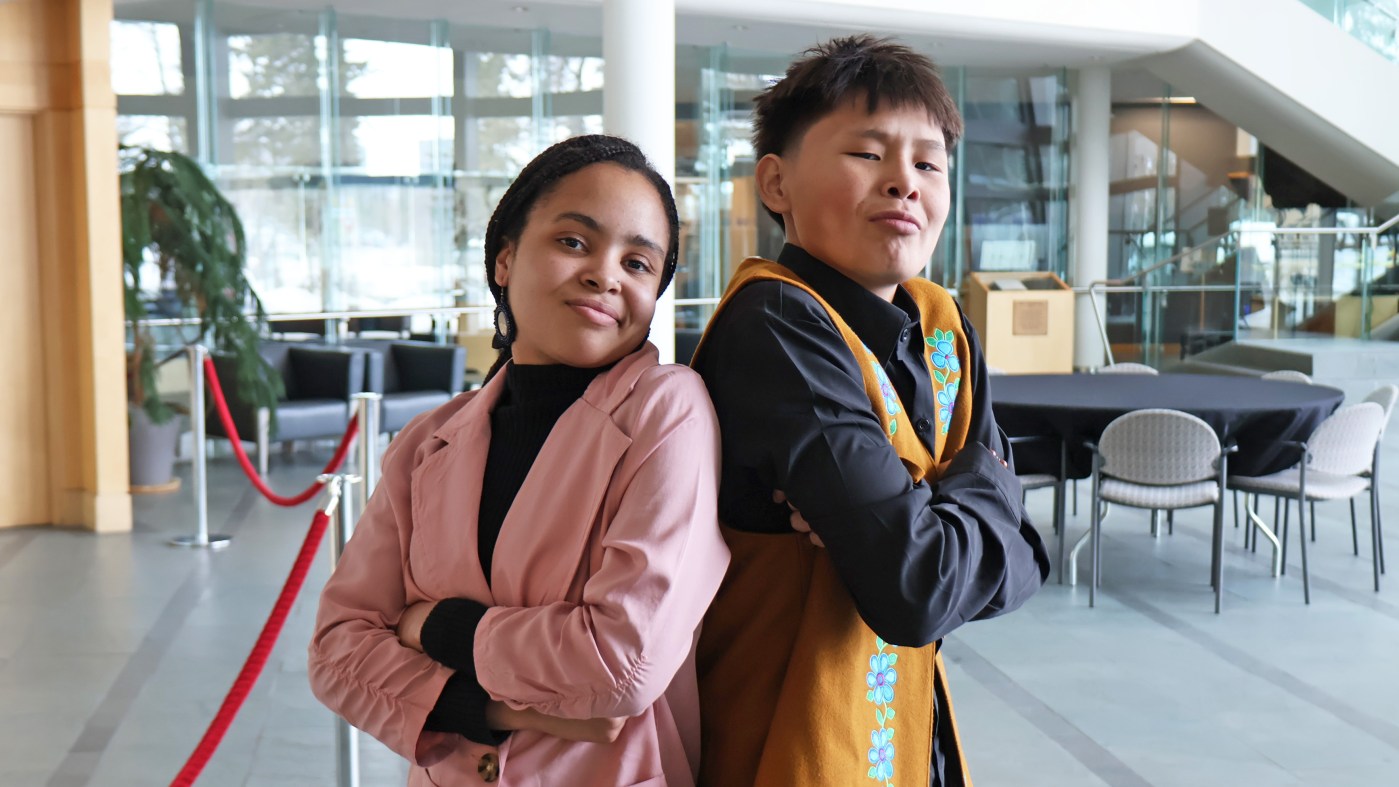
Fewer grey hairs than normal were seen on Thursday as Youth Parliament held its mock session inside the Northwest Territories Legislative Assembly.
The session was the culmination of a week-long program that teaches students in grades 9 and 10 from across the territory about legislative processes and political issues in each electoral district.
Participants also receive mentorship from sitting MLAs.
In the mock session, youth parliamentarians debated everything from boil-water advisories in Colville Lake to support for those living with addictions and mental health issues, the high cost of housing, social promotion in schools and support for immigrants.
Advertisement.
Advertisement.
Some expressed a need for more programming to keep traditions alive.
Representing the Mackenzie Delta, Ryder Ciboci-Gordon of Aklavik said more needs to be done to support drum dancing in his community.
At his school, he said, only seven of 120 students have learned to drum dance.
“It is a part of the Inuvialuit culture and we don’t want to lose it,” said Ciboci-Gordon.
Advertisement.
Advertisement.
“No one will be able to pass it down if nobody wants to learn how to drum dance.”
Another young parliamentarian, Bailey Nigiyok of Ulukhaktok, spoke about youth substance use and insufficient support for those with addictions.
“In a small community like Ulukhaktok or other communities, it’s hard to ask for help. People worry about being judged,” said Nigiyok.
She said the community doesn’t have a regular addictions counsellor.
In her government, transitional housing would be built in all isolated communities for people returning from treatment programs.
“This means people will have a safe place to call home while they are adjusting back to life in their community,” she said.
In partnership with the Department of Health and Social Services, she would also build recovery centres in Ulukhaktok, Tuktoyaktuk and Norman Wells that would have specialized youth programs, talking circles and land-based healing workshops.
The junior politicians brought forward three motions, the first of which was to expand access to health and mental health services across the territory using a hybrid healthcare delivery model – employing virtual and in-person care – with the goal of reducing medical travel.
Advertisement.
Advertisement.
The motion also called for greater mental health supports in schools and more training programs for counsellors.
Representing Thebacha, Rachelle Virassamy expressed concern about how people in communities without reliable internet connections can access virtual care.
She suggested creating a safe and secure place with reliable internet in isolated communities to ensure equitable access to care.
Receiving lots of support on the floor, the motion passed unanimously.
Protecting caribou populations
Next, Ciboci-Gordon put forward a motion to further restrict caribou harvesting and delay major infrastructure projects in sensitive caribou habitat until the populations of declining caribou herds recover.
Some expressed concern that delaying projects like the Mackenzie Valley Highway would mean they may never get built.
Instead, Inuvik Twin Lakes youth MLA Aerayana Reardon suggested travel on the future roads be restricted during caribou migration periods.
Not everyone agreed. Raphelle Joseph, representing Nahendeh, said that given the cultural significance of reliance on caribou for food, they require more protection.
Advertisement.
Advertisement.
“While infrastructure is important, wildlife recovery should come first when there is direct conflict,” said Joseph.
In a vote, the motion passed with 15 voting in favour, one opposing and three abstaining.
Lowering the voting age
One of the more heated debates on the floor was related to a motion to lower the voting age in the NWT to 16, brought forward by Cris Raely Delos Santos-Puspos, representing Frame Lake.
She argued that 16-year-olds are already deemed capable of making significant decisions such as consenting to medical care, paying taxes and deciding to leave school.
Others, such as Virassamy, suggested teens can be susceptible to peer pressure and influencers on social media.
“Only 35 percent of youth in Canada watch the news regularly, while 85 percent are on social media, which is inherently more influential than educational,” said Virassamy.
In an exchange that may have triggered a point of order in a regular sitting, Reardon suggested it was improper for the motion to be brought forward.
“I sense a bias in this motion, as most of us are around the age of 16,” said Reardon, suggesting it was put forward so young politicians could vote in the next election.
Advertisement.
Advertisement.
Some suggested that because 16-year-olds can hold a driver’s licence and have a job, they should be able to participate in the democratic process.
Reardon, though, said children as young as 12 in her community have jobs, and that should be considered too young to cast a ballot.
The motion was narrowly defeated, receiving nine votes in favour and 10 opposed.
Speaking about the experience, 16-year-old Maya Pfupa-Baird said she was surprised to learn how difficult it can be to debate motions and weigh competing priorities.
“For the caribou one, for example, not only do you have to satisfy the Indigenous peoples and people who depend on it, but you also have to think about the economic value of it,” said Pfupa-Baird.
“Mind you, we’re spending $1.8 billion on this – that’s a lot of money,” she said, speaking of the Mackenzie Valley Highway.
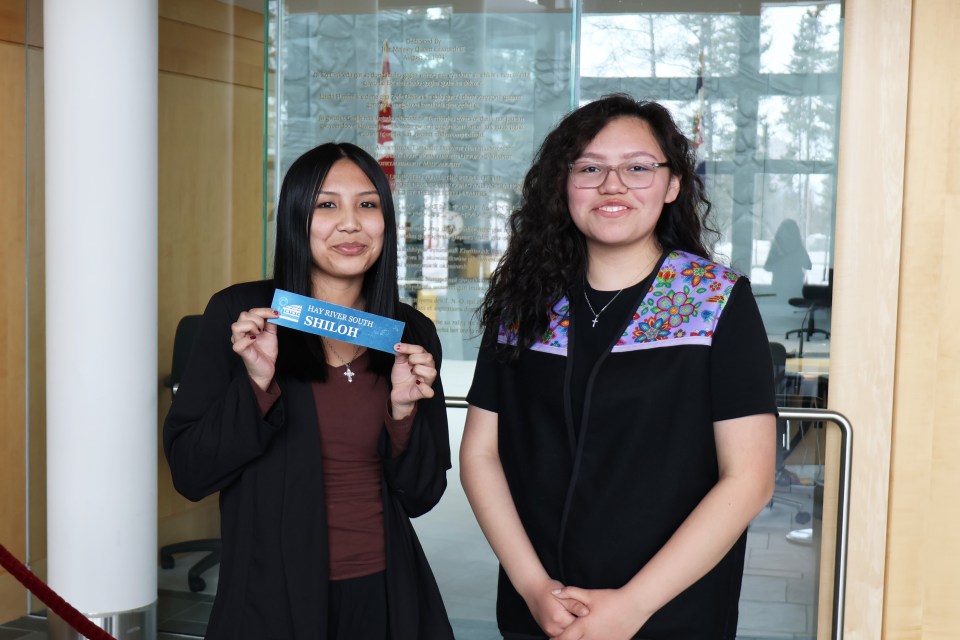
Shiloh Simpson and Julieuna Mackenzie, both of Behchokǫ̀, said debating in the legislature was an intimidating experience.
“It was really scary, but I got used to it because no one was judging you and you were just talking,” said Simpson.
Advertisement.
Advertisement.
“At first, it was really scary, but at the end there was the debate about 16 and 17 [year-olds getting the right to vote], and they were really getting into it,” said Mackenzie.
She said she wanted to put forward the motion to make healthcare more accessible in isolated communities because she has friends and family who have had to leave home for extended periods to access care.
Recently, she said, her brother had to spend about a month in Edmonton for dental care.
“So many people always have to go to Edmonton just for healthcare that could probably be done here if there was the resources, but there’s not,” said Mackenzie.
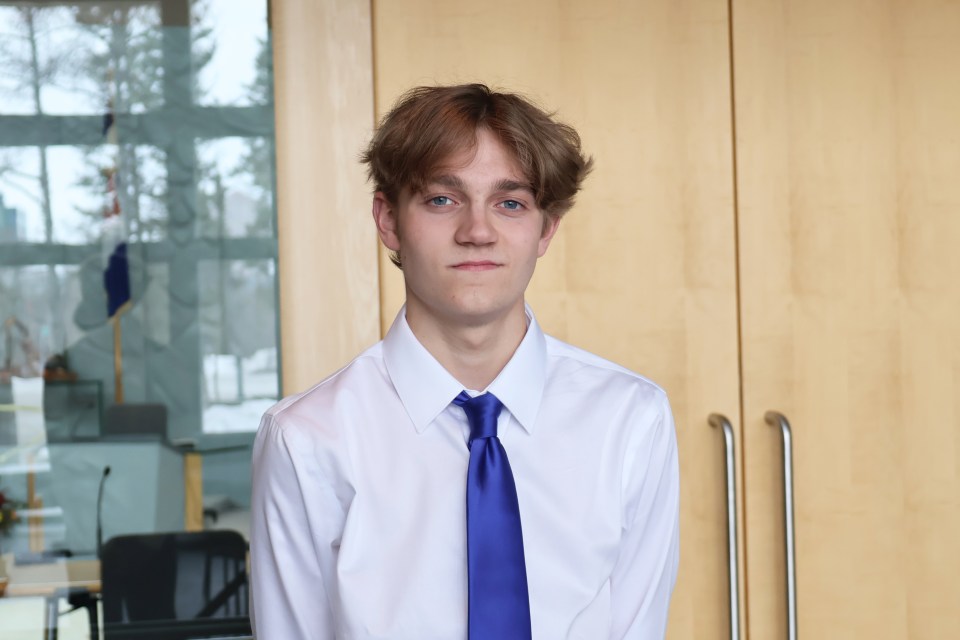
Hudson Hirst of Hay River sat in for the premier during the mock session, which he said was his favourite part of the program.
“I think we had a lot of good debates,” said Hirst. “We all worked really hard on our statements, and to see them being put to use is really important because it shows that our hard work can sort-of pay off.”
He said that while it was easy to think of retorts during the debate, expressing them in the heat of the moment was a different story.
“Thinking on the fly and saying it out loud as it’s happening is a really important skill to have, especially as I plan to run for that exact position that I was just representing,” said Hirst.
Advertisement.
Advertisement.
In preparation for the mock session, he said he received some advice from Premier RJ Simpson, who told him about the late nights and early mornings required to campaign for his position.
Asked if the premier expressed any concern about Hirst running against him someday, Hirst said Simpson was “friendly about it.”
“He was helping me get on the right path to be able to eventually run,” said Hirst, while acknowleding competition might be inevitable in the future.
“I think I will have to run against him at one point,” he concluded.
