



Advertisement.
The NWT government says it is “committed to help resolve” the 60-year-old Taltson hydro dam’s impact on Indigenous communities as it prepares an expansion proposal for the federal Major Projects Office.
The Deninu Kųę́ First Nation, or DKFN, this week formally withdrew its support for the Taltson hydro expansion and Arctic Corridor projects.
The First Nation said it was not consulted and did not provide consent when the original Taltson dam was constructed and has since faced negative impacts.
Chief Louis Balsillie said DKFN had experienced a “historical pattern of marginalization” and been largely excluded from the economic benefits of major projects in the area.
Advertisement.
Advertisement.
Caroline Wawzonek, the NWT’s major projects minister, acknowledged DKFN’s claims and said when the dam was created in the 1960s, it flooded the region and destroyed the community of Rocher River, including homes, grave sites and traditional land.
Wawzonek told Cabin Radio she has heard from families who “can’t go back to grave sites of parents or grandparents” during discussions about expanding the hydro plant.
She said all Indigenous governments who signed a 2021 memorandum of understanding on the expansion project, which includes DKFN, have “that legacy of history” that has not been resolved.
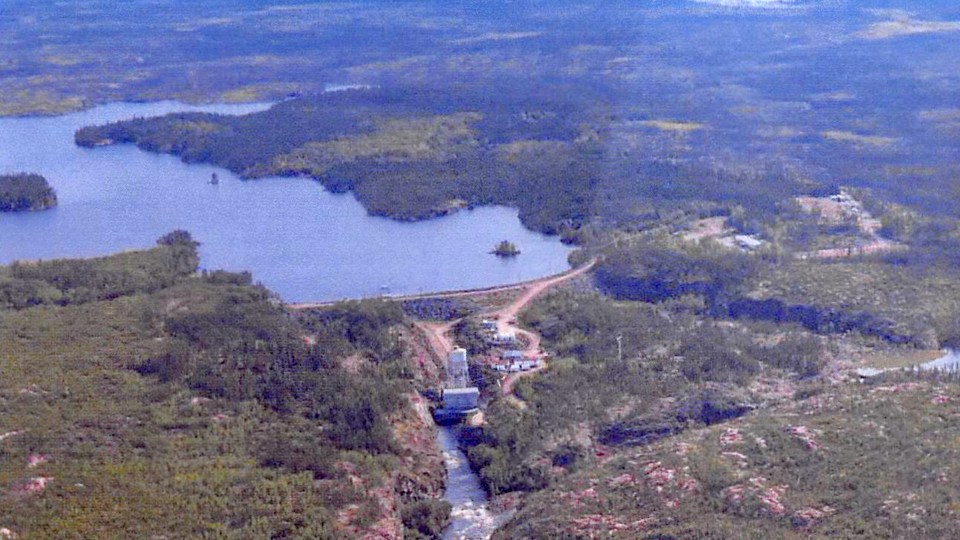
The proposed expansion would increase the hydro facility’s 22-megawatt power generation capacity by 60 megawatts and connect it to communities in the North Slave region like Yellowknife through a transmission line across Great Slave Lake.
Advertisement.
Advertisement.
The expansion is as much an opportunity to do things differently and give Indigenous governments ownership over Taltson hydro, Wawzonek said, as it is to address negative historical impacts.
She said the GNWT has helped foster relationships so each Indigenous government that signed on to the 2021 agreement can discuss directly with the Canadian government the harm caused by construction of the initial Taltson facility.
DKFN has argued it “will disproportionately bear the burden of any adverse environmental impacts” resulting from the expansion. Wawzonek, however, believes impacts “will be fairly limited.”
The minister said the GNWT and Indigenous governments have formed a steering committee and are ready to talk about creating a commercial structure and deciding how ownership of the facility will be shared.
‘Partnerships and relationships take time’
Wawzonek said she hopes to see DKFN back at the table soon and has spoken with Chief Balsillie about other topics since the First Nation pulled its support for major projects.
“I hope we can get to a place where we can demonstrate that by owning a piece of this future, that they will then benefit in ways that these member nations didn’t benefit in the past,” said Wawzonek.
“Partnerships and relationships take time and they evolve, and [it] doesn’t mean we’re always going to get along at every stage of the way.”
The First Nation has said its support will only return when the GNWT and participating Indigenous governments formally recognize DKFN “has suffered the most severe legacy impacts from the original Taltson generation facility,” and commit to sharing the benefits of development in the North Slave with DKFN.
Advertisement.
Advertisement.
Not having DKFN’s support will not stop the Taltson hydro expansion or Arctic Corridor from progressing, Wawzonek said.
“There’s a lot of support across the territory. That doesn’t mean that every single issue has been resolved,” she said.
While the GNWT is taking steps to address DKFN’s concerns, Wawzonek said other Indigenous governments also have a responsibility to repair relationships.
“We also in the North want to, I think, get to a place where we can respect that there’s nation-to-nation relationships between Indigenous governments,” said Wawzonek.
