


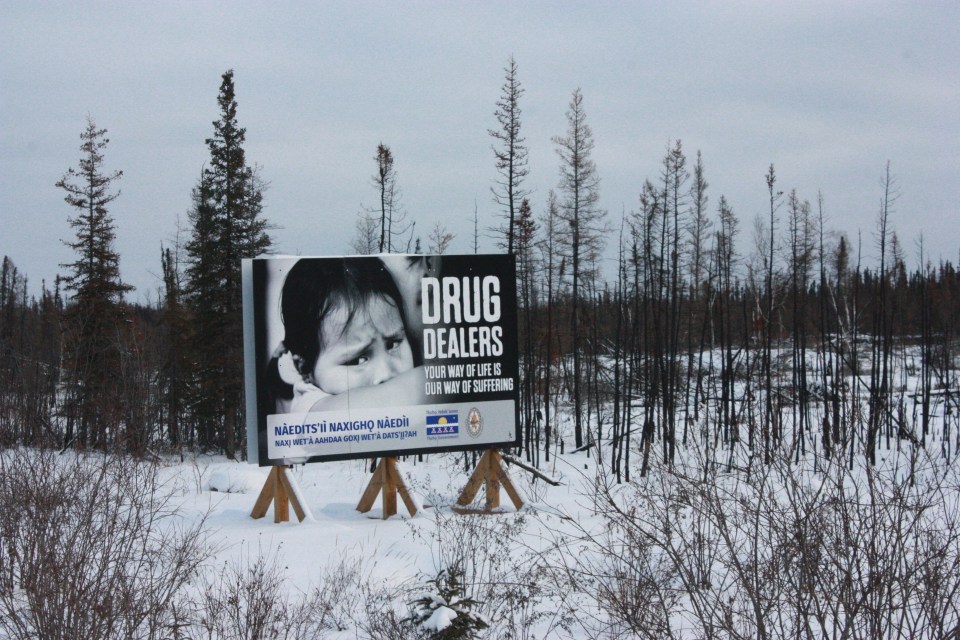
As communities across the NWT grapple with the devastating impacts of drugs and violent crime, Indigenous governments are considering banishment as one potential solution.
Dene leaders have identified barring people causing harm from communities – particularly people suspected of dealing illicit drugs – as one of several priorities for a newly formed task force to examine.
“Together we will explore innovative solutions to combat the challenges of drugs, alcohol and crime, fostering environments where our families can live in safe, healthy and vibrant communities,” Dene National Chief George Mackenzie said during a public forum last month, where leaders passed a resolution to form the task force.
NWT RCMP and territorial government officials have said members of organized crime groups are targeting young mothers, youth, people struggling with addictions and people living in public housing in order to traffic drugs in NWT communities.
The Dene Nation has been critical of current efforts to address violence and drug-related crime in Dene communities, calling for enhanced policing and addiction supports while examining community-led solutions like Indigenous policing.
Advertisement.
Advertisement.
Banishment in the provinces
Under the Indian Act, First Nations may banish people from communities through band council resolutions supported by Indigenous bylaws such as a trespass law.
First Nations may also banish people under customary laws, while those with a land code under the First Nations Land Management Act may include provisions for banishment.
There have been several cases in the provinces where First Nations have banned suspected or convicted drug dealers from reserves. In some of those cases, First Nations banned their own members.
Lawyer Jay Herbert represented the Mississauga First Nation in a landmark Ontario case involving the banishment of a woman suspected of dealing drugs. The Mississauga First Nation successfully convicted the woman, who was not a member of the First Nation, of trespassing and failing to comply with an order to leave the community under the First Nation’s community protection law.
Advertisement.
Advertisement.
“In a lot of First Nations, banishment has been ongoing within their communities for as far back as their records show,” Herbert said.
He stressed that First Nations have the legal authority to create and enforce laws banishing people from communities. He said they may not have always done so, however, due to a lack of ability to enforce those laws through police and the courts.
“I think this is going to start changing,” he said.
“Courts recognize that there are a lot of health and safety concerns on First Nations that really are unique to First Nations.”
In Ontario, for example, Herbert said there are concerns about fentanyl being moved from large cities like Toronto to First Nations communities that are underpoliced.
The NWT context
The NWT’s Indigenous governance landscape is complex.
The territory has just two reserves: Kátł’odeeche First Nation and Salt River First Nation. The NWT also has some off-reserve First Nations governed by the Indian Act, some First Nations with finalized self-government agreements, and others that are negotiating self-government agreements.
Most communities in the territory have a majority Indigenous population.
Advertisement.
Advertisement.
NWT lawyer Toby Kruger, whose practice includes Indigenous law, said courts have upheld that First Nation bands governed by the Indian Act can banish people from communities.
When it comes to First Nations with self-government agreements, he said they may also be able to enact banishment laws.
“I think that the whole idea around self-government would support that type of power or the ability to pass that kind of law,” he said.
Kruger said under territorial law, the NWT Cities, Towns and Villages Act allows communities to create bylaws around health and safety and the protection of people and property. He said under that act, communities may enact bylaws denying people access to certain municipally owned facilities.
Kruger said designated authorities in the NWT, such as Jean Marie River, are in “a grey area.”
He said he’s unaware of any banishment case involving such a community that has been tested by the courts, but said that does not necessarily mean those First Nations could not legally banish people.
Beyond First Nations’ powers, Canada’s criminal code allows courts to impose banishment as a condition of sentences, release orders and probation.
There have been several NWT cases where judges ordered people who do not normally reside in the NWT – and who were accused of trafficking drugs – to remain outside the territory as part of bail conditions and other court orders.
Advertisement.
Advertisement.
RCMP have highlighted some cases, however, where people violated those conditions.
Banishment limitations
Peter Jones and Tara McDonald are lawyers at Woodward & Company LLP, a law firm with offices in Victoria and Toronto that serves Indigenous communities.
In 2023, they published a blog post stating that First Nations should consider several factors when developing banishment laws and orders.
Jones told Cabin Radio there is still some uncertainty about the scope of lawful banishment as there are limited court decisions providing clear guidance.
He said he regularly advises clients about banishment as First Nations have raised concerns that police are not acting as quickly as they would like to address serious crime in communities.
“Communities kind-of feel a bit powerless to address it, and certainly chiefs and councils feel a lot of pressure to try and do something,” he said.
“That’s often where you lead into this banishment discussion … in the sense it’s an extreme remedy to be able to try and deal with a problem.”
Jones said one thing First Nations should consider when developing a banishment law is whether it infringes on Charter rights and freedoms such as mobility rights, the presumption of innocence, and the right to be free from double jeopardy.
Advertisement.
Advertisement.
Some Indigenous leaders in the NWT have expressed frustration, saying they believe Charter rights – such as the right against unreasonable search and seizure – are limiting law enforcement and communities’ ability to deal with drug dealers.
The Charter aims to protect fundamental rights and freedoms to ensure a free and democratic society, including a fair and just legal system.
Advocates of the Charter have said the right against unreasonable search and seizure is crucial for limiting state power and protecting people’s privacy and dignity.
Another factor Jones said First Nations need to consider is procedural fairness.
He said that means providing the person a First Nation plans to banish with notice about the decision, reasons for the decision, the chance to respond and possibly the right to appeal.
Jones said members of First Nations on reserves may be entitled to a higher degree of procedural fairness than non-members as they have a right to use and benefit from reserve lands.
Other factors Jones said First Nations should consider include what type of conduct is worthy of banishment, whether banishment will apply to youth, how long a person will be banished for, and – particularly if banishing First Nation members – conditions they must meet to be reintegrated into the community.
Sacha Paul, a Manitoba-based lawyer who practises Indigenous law, also highlighted the importance of procedural fairness.
Advertisement.
Advertisement.
He said banishment needs to be done thoughtfully and slowly.
“If you don’t follow that process, you are leaving the nation up to significant risk that the federal court will set aside the banishment order because you haven’t given basic fairness,” he said.
“Every government, including a First Nation government, needs to live up to fairness ideals.”
Paul said due process gives people accused of serious wrongdoing “a fair shake” and allows governments to make decisions on the best facts available rather than “idle speculation.”
“Due process and fairness is inherent in self-governance. It’s not antithetical. It is part of the process of governing in the interests of everybody.”
Enforcing banishment
Jones said First Nations also need to consider how banishment laws can be enforced.
He said police may be worried about enforcing a banishment order against a person who is alleged to have committed a crime but has yet to be convicted.
“Typically, the RCMP will look at this stuff very conservatively,” he said.
Advertisement.
Advertisement.
Herbert said enforcement is one of the greatest challenges facing First Nations’ banishment laws.
“A lot of the times police are not enforcing those, and that has been the biggest issue,” he said.
In the Mississauga First Nation case, the First Nation turned to private prosecution after police declined to enforce its banishment decision.
Paul said, in his experience, most people have accepted banishment orders.
He said, however, that issues can sometimes arise and police may be reticent to enforce banishment orders due to unfamiliarity with Indigenous laws. In those cases, he said, First Nations may have to go to court to enforce banishment.
How do NWT RCMP see this?
In the NWT, 21 of 33 communities have a permanent RCMP detachment while other communities are served by regional detachments.
NWT RCMP declined to speak to Cabin Radio about bans from communities.
“We understand that this is a concern for many communities in the territory but further exploration is required before we can comment on the matter,” the police force stated.
Advertisement.
Advertisement.
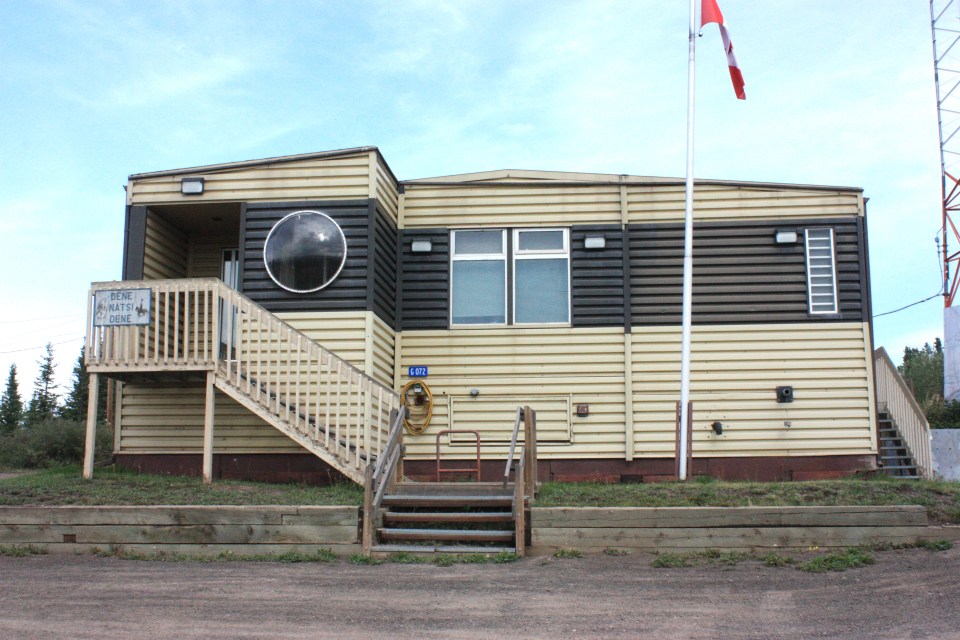
Sgt Marshall McPhail, who is responsible for the territorial crime reduction unit, did speak about challenges RCMP face and efforts police are taking to tackle drug trafficking, illegal firearms possession and violent prolific offenders.
He said one of the challenges is identifying offenders from outside the NWT and where they are operating.
“They come from down south and they go in and out of our communities. [They] might be in a community, Fort Resolution one day, they might pop up somewhere else another day,” he said.
McPhail added that offenders have leveraged information-sharing issues within the NWT and between jurisdictions, a gap RCMP are working to fill.
“Having one central unit that has hands in all the detachments, those contacts and new contacts in other communities, it’s an easier, much more fluid ability to share that information,” he said.
Other efforts NWT RCMP are undertaking include developing a top offenders list, collaborating with Housing NWT to address drug trafficking in public housing, and working to develop a combined health and police response.
‘Law and social policy have to work hand in hand’
The NWT government has promised to introduce a suite of new legislation aimed at improving community safety and giving the territory more powers to combat drug trafficking.
Jay Macdonald, the NWT’s justice minister, said he expects a Trespass Act will be introduced later this year. He said a Safer Communities and Neighbourhoods Act and a Civil Forfeiture Act will likely be presented to the Legislative Assembly in the winter of 2026.
Advertisement.
Advertisement.
Beyond laws and enforcement, Paul said it is important to provide appropriate supports for people experiencing addiction.
“Law and social policy have to work hand in hand,” he said.
“It is easy to try and think that you can legislate your way out of these problems. I think experience shows that you can’t.”
Sgt McPhail also highlighted the importance of non-police responses to address addictions, such as wellness court.
“Enforcement is important when we especially have people from down south coming into our communities and taking advantage,” he said.
“Other multi-department responses are really required and that’s what we’re looking to define and search and build.”
