

If you’re a city planner whose job feels arduous some days, good news: a Grade 7 class in Yellowknife feels your pain.
Some of the students at William McDonald School loved the challenge of being told: Here’s a city plan showing an empty block, go figure out how to fill it responsibly and develop your community well.
Others, not so much.
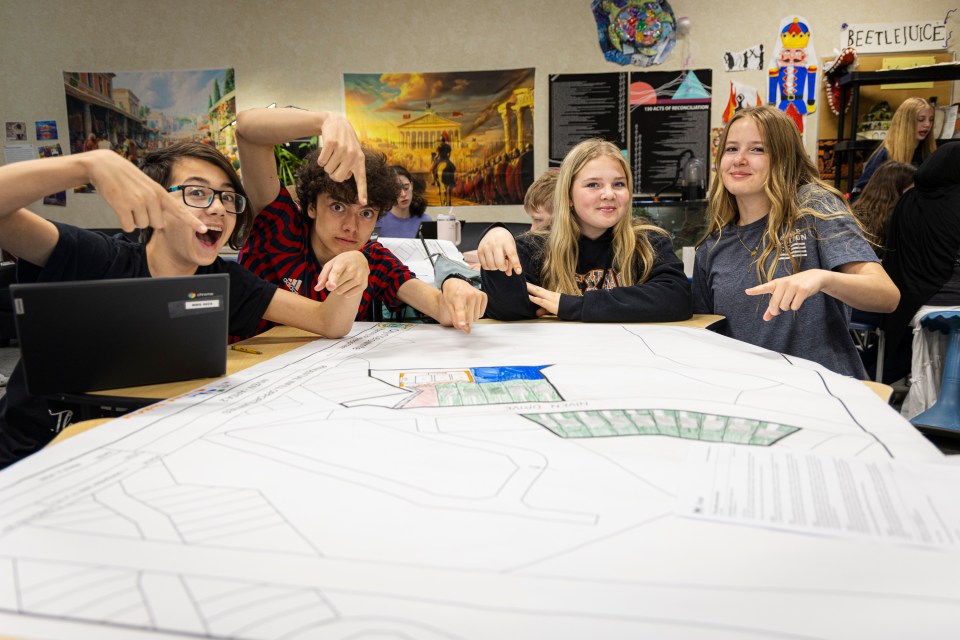
“It was stressful,” one student reported. Another said they struggled to care because the neighbourhood they’d been given to develop wasn’t the one they live in.
Advertisement.
Advertisement.
Now, just like real city planners, they have to present their plans to Yellowknife City Council at a noon meeting on Wednesday.
The task the students were given is a real one. The five areas of the city they worked on are lots the city does indeed intend to develop – and with which the real planners are currently wrestling.
In one case – a patch of rocky green space along Burwash Drive and Con Road – the students and the city planners came up with surprisingly similar concepts.
One key difference? The students put in a pet-friendly café. The city planners did not. (“It’s like a Starbucks but you can bring your pet in,” explained the student team, pointing out where the city had gone wrong.)
Advertisement.
Advertisement.
Another group got into an argument about whether or not Niven Drive needs a Booster Juice.
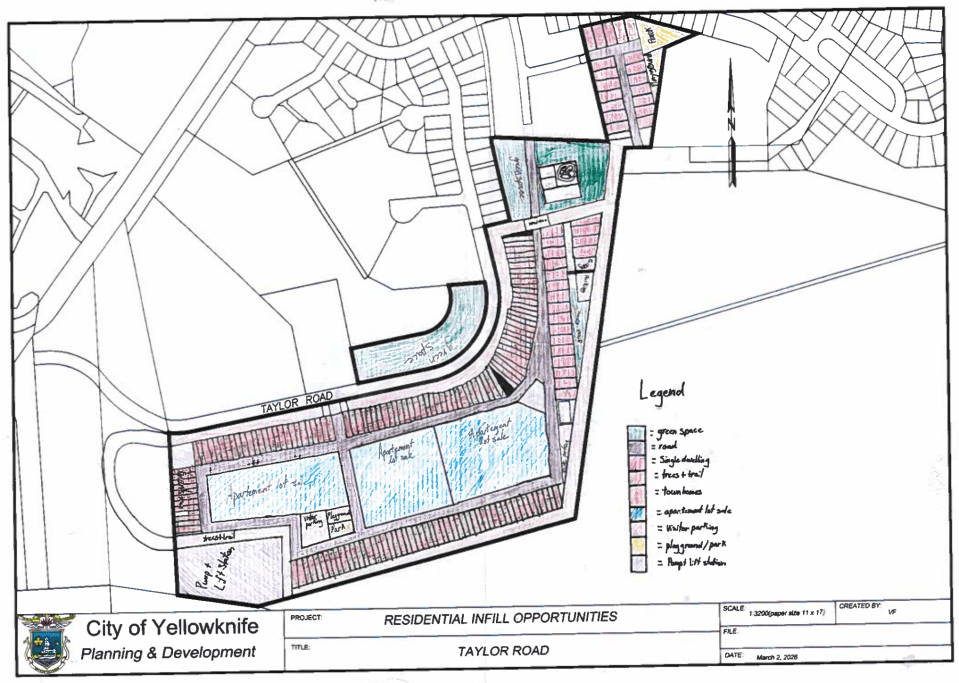
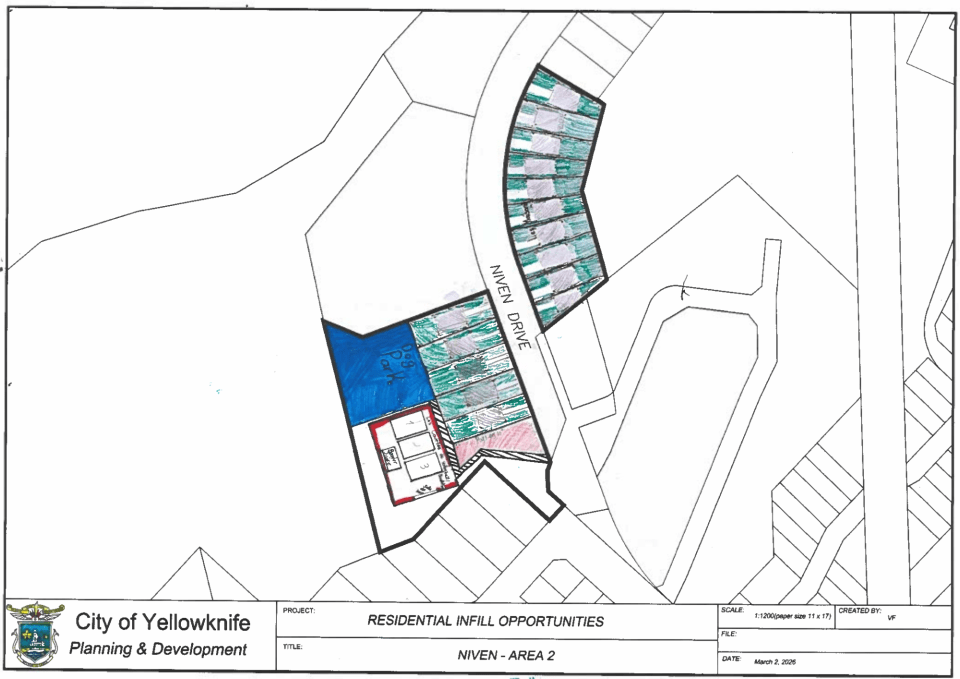
The class project had its roots in discussion among students, parents and staff about how the school’s parking lot could be redeveloped to address concerns that it can be hard to safely navigate.
Ultimately, that led teacher Kim Poitras to conclude that city planning offered a great way to teach her students real-world math.
She contacted Charlsey White, the planning director at City Hall, who supplied the plans and walked students through the things planners keep in mind when working out how to develop a neighbourhood.
White made multiple trips to the school to help the students turn their ideas into blueprints on giant maps.
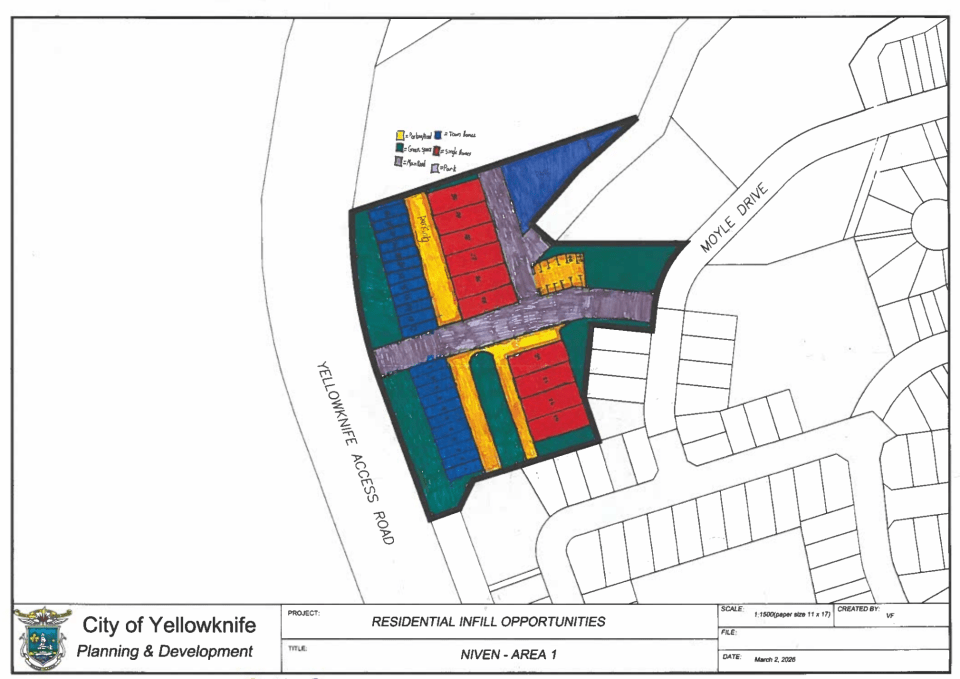
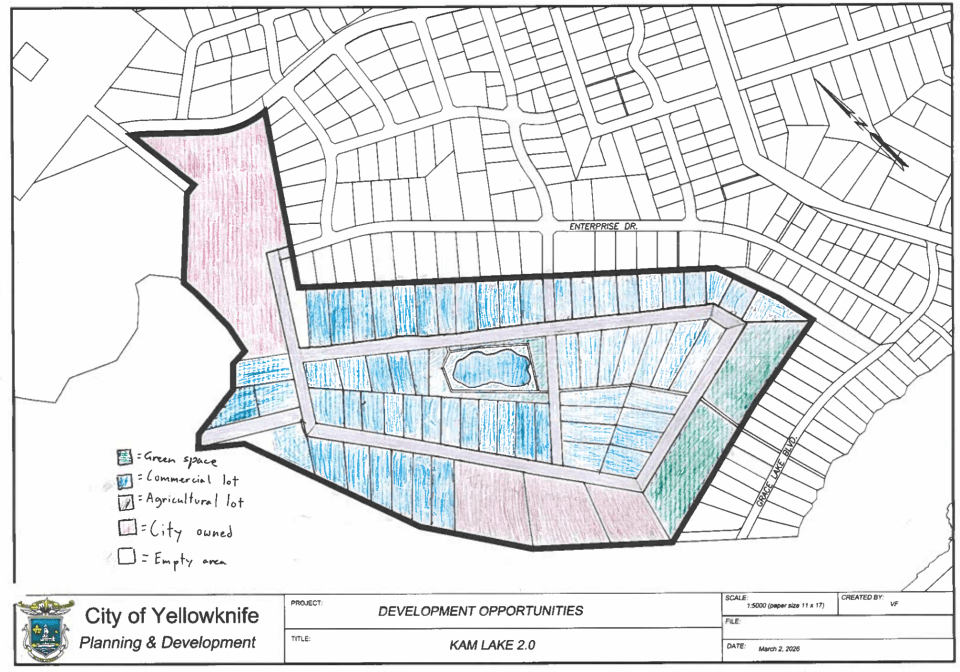
On Wednesday, the students will find out what council thinks. The day before, the class could be found going through questions they can expect to face and rehearsing answers about why they put a park here or a stretch of townhomes there.
“I think they had a lot of fun. They were very creative and they tried to do a good mix of keeping some nature corridors, some trees so the houses are not right next to the road. They considered so many things,” said Poitras.
“It was not like normal math. It’s problem-solving and trying to think of a bigger plan.”
