



Advertisement.
The NWT government addressed what it called “myths and misconceptions” about emergency management during a Monday presentation to Yellowknife city council.
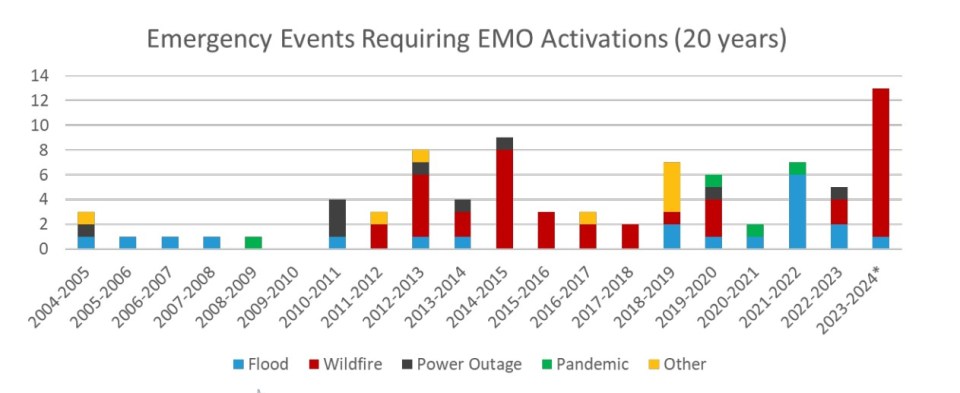
Emily King, the GNWT’s director of public safety, said those misconceptions include the notion that everything is an emergency and that the territorial government is always responsible for emergency management.
King told council most emergencies are handled at the individual and community level. She said the role of the NWT government is to help community governments plan and support them if emergencies exceed their capacity.
“We don’t have the authority over community government emergency plans,” she said.
Advertisement.
Advertisement.
City manager Sheila Bassi-Kellett said emergency management is one of the clearest examples of collaboration between residents and various levels of government.
“I don’t need to say that summer 2023 was an intense reminder for all of us on the importance of emergency planning and preparation,” she said.
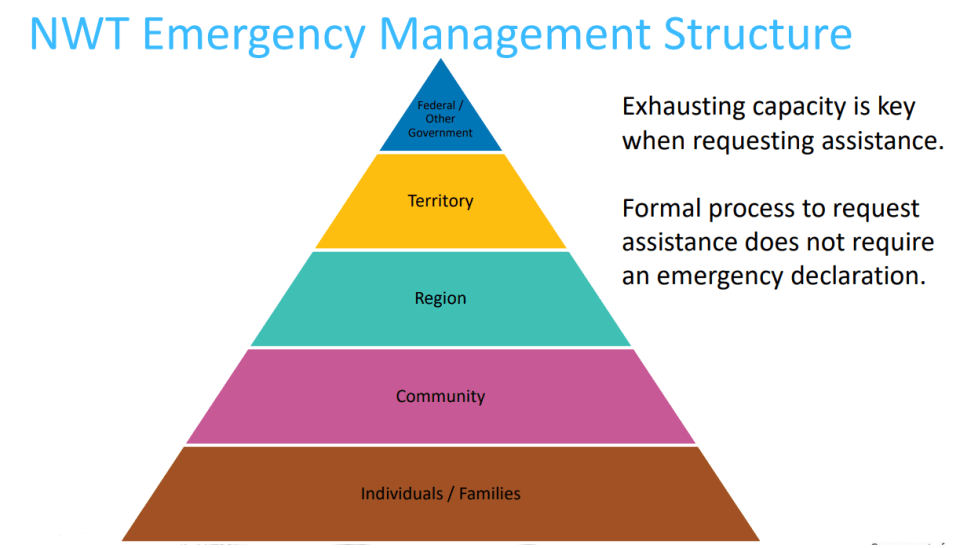
Another misconception, King said, is that the NWT government can “simply call the military or the Red Cross.” She said specific criteria are required to do that, including demonstrated proof that the territory has exhausted its capacity to address an emergency on its own.
For the “vast majority” of emergencies in the NWT, King said, “community governments and the GNWT have capacity and don’t require assistance.”
Advertisement.
Advertisement.
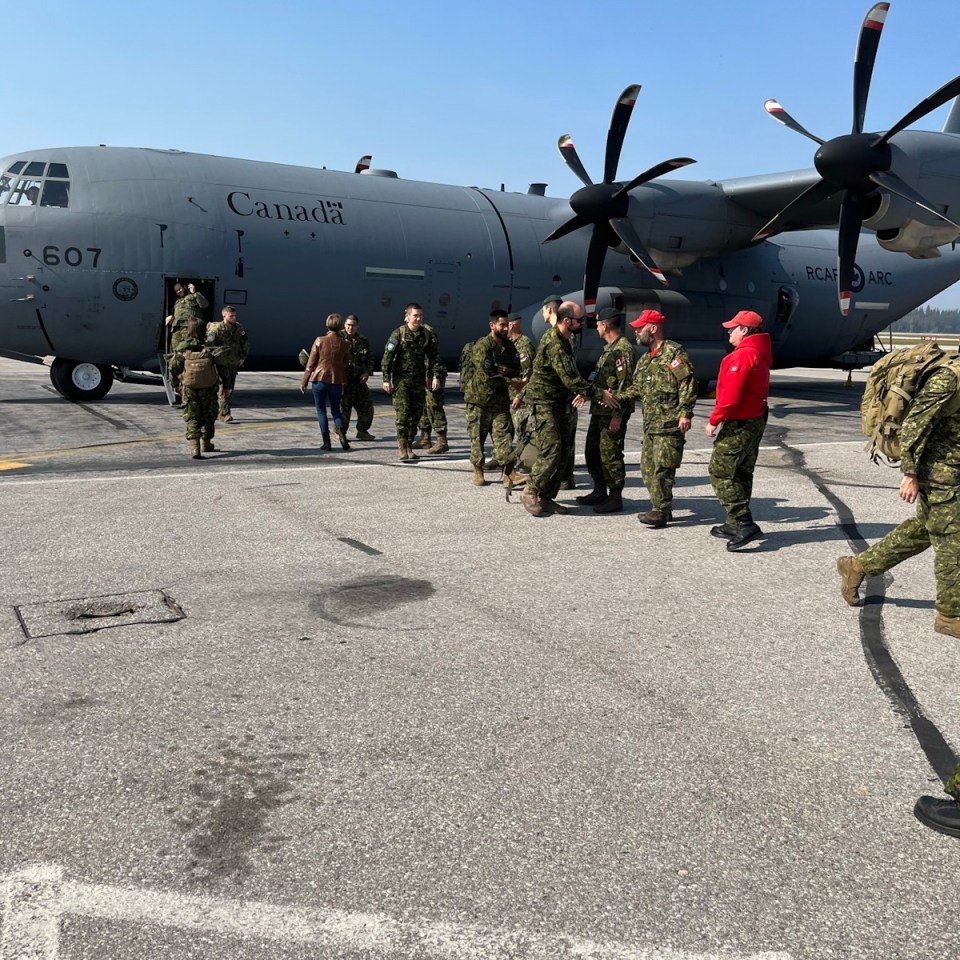
The NWT government requested help from the Canadian Armed Forces last August only once several communities were under evacuation orders and Yellowknife was working to increase its wildfire defences.
King said it’s a myth that declaring a local state of emergency is related to funding. She said funding for emergencies in the NWT, beyond the help provided by insurance, comes through a disaster assistance policy that she described as a “program of last resort.”
The City of Yellowknife declared a local state of emergency last August, one day before the NWT government declared a territory-wide state of emergency, as a means of commandeering resources to build wildfire defences.
Finally, King claimed it’s untrue that other jurisdictions in Canada offer more support during emergencies than the NWT. She said all jurisdictions provide evacuees with access to basic shelter and food, while in some places they also offer a one-time stipend.
“In totality, the supports provided by GNWT are in line with supports from other EMOs [emergency management organizations] across Canada,” she said, asserting that the GNWT’s disaster assistance program is one of the “highest in the country” in terms of money for recovery.
During the 2023 wildfire season, financial supports offered by the territory included a new set of one-time payments related to evacuation travel and income disruption.
The city and territorial government have each said they are preparing for another potentially difficult wildfire season this year.
Craig MacLean, the city’s director of public safety, said on Monday that Yellowknife’s emergency management objectives for 2024 include revising its emergency plan, carrying out training and improving communications.
The city has also contracted auditing firm KPMG to complete a review of its response to the 2023 wildfire season, with the aim of better preparing for future emergencies. A public engagement session is scheduled for the evening of March 27 as part of that review.
The NWT government has issued a request for proposals for its own review of how the 2023 wildfire season was handled. The territory has said that review will include public consultation.
