



Warning: This story contains mention of sexual violence against children that may be distressing to some readers.
When she first arrived in Iqaluit as a reporter with Northern News Services in 2003, Kathleen Lippa said she was intrigued by a story her colleague had written about an old school portable being set on fire in Kinngait.
The classroom was where former teacher Edward Horne had sexually abused several young Inuit boys, which had a devastating impact on the community.
“Sometimes something just hits you differently and the hair kind-of stood up on the back of my neck,” Lippa said, adding the story reminded her of the Mount Cashel orphanage abuse case in St John’s, Newfoundland, where she grew up.
As she continued reporting in Nunavut, Lippa said she heard more about Horne, the impact his crimes had across the North, and his connection to powerful people.
Advertisement.
Advertisement.
“A lot of people had stories about this teacher,” she said.
“They would talk about his language ability, that he spoke Inuktitut, that he was Indigenous himself” – which Lippa has since debunked – “that he was married to an Inuk woman and had Inuit children … but he also had been one of the worst criminal pedophiles in recent history of the North.”
What she learned inspired Lippa to dig deeper, including fighting to unseal court records, speaking with many survivors of Horne’s abuse, and sitting down with Horne himself.
Now, more than 20 years after she first learned about the “North’s most infamous pedophile,” Lippa has published a book titled Arctic Predator: The Crimes of Edward Horne against Children in Canada’s North.
Advertisement.
Advertisement.
The book explores Horne’s time working as a teacher and principal in Kinngait, Sanikiluaq, Kimmirut, Grise Fiord and Iqaluit from 1971 until his arrest in 1985. It documents the crimes he committed against many Inuit boys and the resulting intergenerational trauma, violence, addiction and suicide.
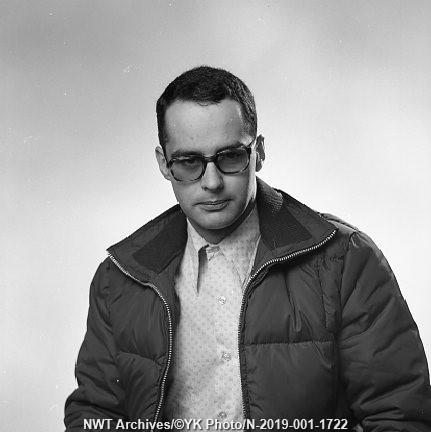
“This book has been a long time coming,” Lippa said. “I felt it was really important for Canadians to know what happened in the North … This is one part of the history of the Eastern Arctic that I felt should be told.”
The book spans from Horne’s upbringing in BC to when Lippa met the then-78-year-old in Toronto in 2022, where he was working as a bike courier.
Lippa explores how Horne was able to get away with abusing children for so long despite allegations being reported as early as 1971, and the disconnect between his admirable reputation among government officials and his crimes.
‘It’s not a myth any more’
Lippa said the book contains information that has never been published before. She said she wants to dispel some of the mythology that has been created around Horne over the years.
“When people talk about Ed Horne, it’s not a myth any more. I was really pissed off that he had become mythologized because that’s dangerous, right? If somebody is mythologized it lets them off the hook, it’s like it never even really happened,” she said.
“People speaking out about what happened to them, it’s a very empowering thing to experience.”
Lippa said Canadians need to know the truth of what happened so the country can do better, adding that the book also contains moments of hope.
Arctic Predator: The Crimes of Edward Horne against Children in Canada’s North will be available on February 4.
