




The NWT government says it plans to introduce licensing requirements for child and youth group facilities following an investigation into Home Base Yellowknife.
The GNWT began investigating after it received a complaint in July 2024 alleging “serious concerns about safety risks to children and youth” at Home Base, which supports NWT youth at risk of homelessness, and the Foster Family Coalition.
The Department of Health and Social Services, or HSS, concluded its investigation in December 2024 and completed a report on that investigation in May 2025. Cabin Radio has since obtained a redacted copy of the investigation report through an access to information request.
The report reveals one of the findings from the investigation was that, aside from contribution agreements with the GNWT, Home Base management is responsible only to its board of directors.
The report says that means if the territorial child and family services division has issues that are not covered by contribution agreements, “the only recourse they have is to make recommendations to the board of directors and to hope that they take them seriously and act accordingly.”
Advertisement.
Advertisement.
As a result, the report states, the division has started developing licensing requirements for organizations and individuals working with children and youth in a group setting and amendments to the Child and Family Services Act.
“A structure of this type would ensure transparency in the decision-making process and might even encourage service providers interested in providing [redacted] to consider operating in the NWT,” the report states.
In a separate report released in May – which found “serious shortcomings” in NWT’s child and family services – Canada’s auditor general also recommended that the territory establish standards and procedures regarding the care of children in group settings and review existing arrangements to ensure compliance.
The NWT health department said in an October 2025 email to Cabin Radio that “all necessary follow-up actions were completed in accordance with established procedures” after its investigation into Home Base concluded.
Advertisement.
Advertisement.
The department said, however, it was “not in a position to share specific details” from the investigation. All of the findings from that investigation remain unclear as the report obtained by Cabin Radio was heavily redacted.
“We remain committed to ensuring the safety and well-being of children and youth in our care,” the department stated.
Cabin Radio separately requested comment from Home Base’s board of directors, the Foster Family Coalition’s board of directors, and the organizations’ executive director, Tammy Roberts.
In a joint statement attributed to the Home Base board and Roberts, board chair Ryan Doherty wrote that Home Base “takes the safety of its clients very seriously” and had “cooperated fully with all aspects of the investigation.”
“We welcome any future legislative changes brought forward by the Department of Health and Social Services as we work toward our shared goal of protecting youth,” the statement read.
The president of the Foster Family Coalition’s board of directors did not respond to Cabin Radio’s request for comment.
Here’s what we know about Home Base and the circumstances of the investigation.

What is Home Base Yellowknife?
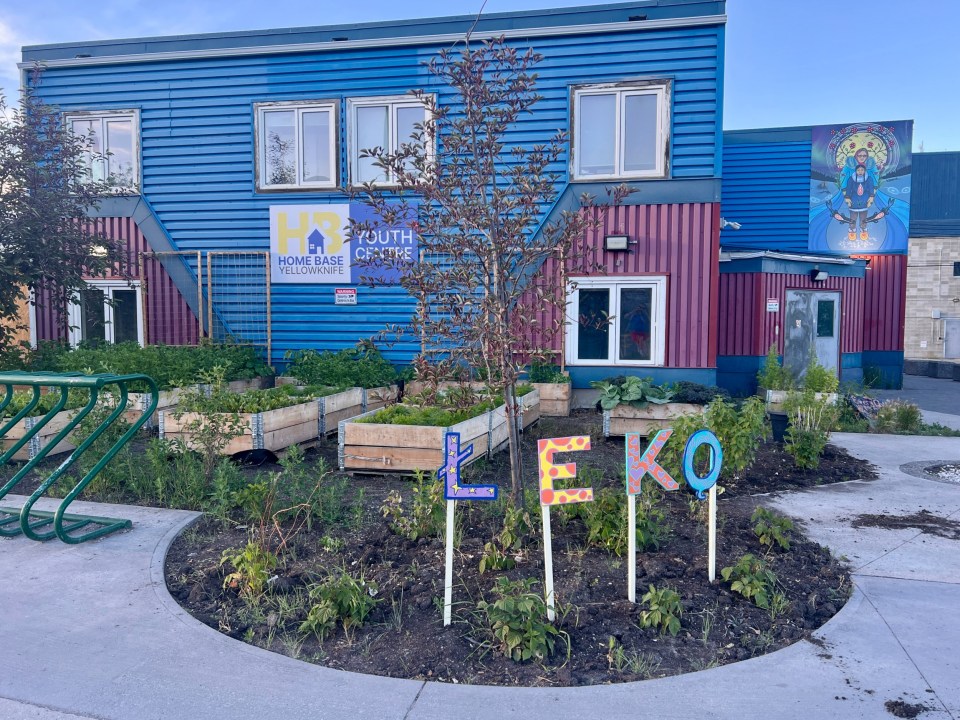
Home Base, formerly known as SideDoor Ministries, operates the only emergency shelter for youth in the territory. It also manages youth dorms, supported individual housing and a youth housing program in Yellowknife. At its drop-in youth centre, the organization offers traditional food, recreation and gender-based violence programs.
Advertisement.
Advertisement.
Since May 2025, Home Base has managed Yellowknife’s enhanced street outreach program. Late last year, city council extended that contract from one to three years.
Roberts has served as the executive director of Home Base since late 2020 and as the executive director of the Foster Family Coalition of the NWT since 2009.
She is known for fostering around 250 children and youth in the North and was inducted into the Order of the NWT, the territory’s highest honour, in December 2025 for “significant contributions to the wellbeing of children and youth.” She was previously awarded a Queen Elizabeth II Golden Jubilee Medal, a Wise Women Award and a King Charles III Golden Jubilee Medal for her work supporting youth experiencing homelessness.
Earlier this year, Home Base, the NWT government and Yellowknife school boards announced the Home Base Stabilization Education program. The wraparound program combines housing, wellness and education supports for youth with complex needs. The program is expected to open in September 2026 and serve up to 12 students at a time.
In the longer term, Home Base hopes to construct a nine-storey building, dubbed Home Base Stadium. Roberts has said the proposed building would combine all of the organization’s services under one roof.
What were the allegations against Home Base?
The 2024 complaint against Home Base contained claims of “human rights violations, abuse and negligence” among other concerns.
A spokesperson for HSS told Cabin Radio that “due to the nature of the allegations, a department-level investigation was required rather than the standard frontline investigation typically conducted” by child and family services.
The spokesperson said, in some cases, the department may request that RCMP conduct a separate investigation into child and family services matters. NWT RCMP told Cabin Radio in October 2025 they had no ongoing investigation into Home Base or the Foster Family Coalition.
Advertisement.
Advertisement.
According to the redacted report, during the investigation, complainants alleged staff mistreatment, misappropriation of programming funds, insufficient staff training, issues with human resources processes and a workplace culture of bullying, racism, discrimination and favouritism. Complainants also perceived conflicts of interest between the executive director and the organization’s board of directors, which they believed led to staff complaints being dismissed.
Home Base’s human resources coordinator told investigators the organization provides “a suite of training through Google classroom.” The report states a policy and procedures manual for Home Base was approved by its board of directors in November 2023.
Alleged incident in Zama City
Before the complaint was lodged with the NWT government, eight former employees of Home Base and the Foster Family Coalition shared their workplace concerns with Cabin Radio. Cabin Radio granted them anonymity because they feared retribution.
One former employee said they loved their work at the Foster Family Coalition but resigned due to a toxic workplace environment. They alleged managerial issues including favouritism and unprofessional behaviour toward staff.
In particular, some of the former Home Base employees raised issues with the handling of an alleged incident involving a youth in Zama City, Alberta. Some youth and staff from Home Base had temporarily relocated to the hamlet following the evacuation of Yellowknife due to wildfires in August 2023.
According to the former employees, late one evening, the youth was experiencing addiction withdrawal and not complying with staff directions. They said several staff followed the youth in a vehicle and by foot as the youth began walking away from the community into the forest.
Concerned for the youth’s safety, they said staff called a security guard, who had been working under a contract with the NWT Health and Social Services Authority, for help restraining the youth. The former employees said what followed was a troubling incident in which three staff and the security guard tried to restrain the youth in the cramped back of a vehicle as the youth resisted.
The former employees said staff ended up calling the RCMP for help. The closest detachment was in High Level, located about an hour and a half away. Staff allegedly restrained the youth with zip ties with towels underneath them before bringing the youth outside the vehicle to sit down while they waited for officers to arrive.
Advertisement.
Advertisement.
In response to a request regarding whether officers had responded to an incident matching that description, Alberta RCMP told Cabin Radio: “Unfortunately, we cannot deal with this type of issue via email or phone for obvious reasons.” The statement directed Cabin Radio to contact the High Level detachment, which did not respond to requests for information.
Former Home Base employees said the alleged incident in Zama City led to unnecessary pain, discomfort, embarrassment and trauma for the youth. One person described feeling that the youth was treated like “a caged animal.”
‘There’s this huge grey area’
The former employees said the incident highlighted the lack of a restraining policy or formal training of Home Base staff on how to restrain someone.
“There’s this huge grey area that’s dangerous because of a lack of policies,” one person told Cabin Radio.
An email to staff following the incident stated that Home Base did not have a policy for restraining youth and claimed doing so was not allowed by the NWT social services authority.
“We are not allowed to restrain a youth under any circumstance,” the email stated.
Other communications to staff from management seen by Cabin Radio advised them to rewrite their reports about the incident to remove any information about what occurred after the security guard arrived. One former employee described that as a “shady” directive while others said they felt the request was inappropriate.
Following the incident, former employees said Home Base management made the decision to administer the youth cannabis to help with withdrawal while in Zama City.
Advertisement.
Advertisement.
They raised concerns that the cannabis was allegedly administered by a security guard, rather than a person with a mental health and addictions background. They also questioned whether the decision had been approved by social services or a doctor, particularly as the youth was underage, and whether a plan had been established regarding the dosage and timing of cannabis given to the youth.
One person pointed out that in 2024, the Manitoba government decided to cut ties with a private company running foster and youth group homes in the province after it came to light the company was giving underaged youth cannabis as a form of harm reduction.
The unredacted sections of the GNWT’s investigation report obtained by Cabin Radio do not reference the alleged incident in Zama City nor allegations of cannabis being administered to a minor.
In their statement to Cabin Radio, executive director Roberts and Home Base’s board said they could not “share details of the alleged incident for privacy reasons,” but said the matter had “been resolved to the satisfaction of all parties.”
Board declined to investigate
While the NWT government determined the allegations against Home Base required a department-level investigation, the GNWT’s report on that investigation states Home Base’s board of directors dismissed the concerns as “not being serious enough to warrant an investigation.”
According to former employees and documents seen by Cabin Radio, following an invitation to share workplace feedback, staff from Home Base and the Foster Family Coalition met with board members in December 2023.
While several staff that attended the meeting said they loved their work, they alleged a toxic workplace and said they had lost trust in the board and upper management.
Staff discussed a range of issues, including allegations regarding a lack of proper oversight, misunderstanding of board responsibilities, and concerns about the same person serving as the executive director for both organizations.
Advertisement.
Advertisement.
Staff also raised concerns about a lack of policies and an unclear complaints process, describing feeling like they were “walking on eggshells.” They said they feared repercussions for speaking out.
Employees said they were ultimately worried those issues would affect youth.
“If the staff crumble, the youth crumble too,” one person told the board.
Employees recommended the board hire an external human resources contractor to complete an investigation.
Meeting notes suggest board members expressed support for the executive director and felt some issues could be related to miscommunication and generational differences. They said they were concerned paying for an external investigation or mediator would take money away from youth.
In an email to staff following the meeting seen by Cabin Radio, a board member said concerns had been addressed about pay differences between Foster Family Coalition and Home Base staff as well as the lack of benefits for Foster Family Coalition employees. One former employee told Cabin Radio the board member in question had not attended the meeting and those topics were not the main issues raised by staff.
The email to staff further stated the board for the Foster Family Coalition was a governance board, not a management board, and had “no role in the day to day operations of the organization.” The email said any staff concerns should be addressed to their direct supervisor and, if not resolved within the organization, the Employment Standards Office or Human Rights Commission.
Paula Minnikin is principal of Minnikin Resources, a consulting firm specializing in governance, leadership and strategic planning for boards and senior leadership teams. She told Cabin Radio that, generally, a board of directors “must act immediately, or as soon as is reasonably possible, upon becoming aware of staff wrongdoing to satisfy its fiduciary duty of care.”
Advertisement.
Advertisement.
“Delaying action can be interpreted as condoning the behaviour, thereby weakening the organization’s ability to discipline the employee and later exposing the board to liability,” she wrote.
The president of the Foster Family Coalition’s board of directors did not respond to Cabin Radio’s request for comment.
Standards for ‘in-territory specialized placements’
HSS said it continues to hold a contract with the Foster Family Coalition. The NWT Health and Social Services Authority holds a contribution agreement with Home Base.
HSS told Cabin Radio in May 2026 it had begun developing “a policy approach to licensing requirements” in February 2025 and the initial elements of those requirements have been completed, based on legislation in other jurisdictions.
The department said “there is still substantial work to be done” before a public draft of new regulations will be available. In the interim, the department said it is developing standards for in-territory specialized placements, which will apply to any facility that wants to provide residential child and youth care in the NWT. The department expects the standards will be complete by March 2027.
“It is intended that creating standards for in-territory specialized placements will improve oversight, clearer roles and expectations, and strengthened accountability, ultimately contributing to higher-quality and more consistent care for children and youth residing in group homes and similar residential settings,” HSS stated.
The department added that a bill introducing proposed amendments to the NWT Child and Family Services Act to align it with the federal Act respecting First Nations, Inuit and Métis children, youth and families is expected to be introduced during the Fall 2026 sitting of the Legislative Assembly. NWT MLAs are scheduled to sit 12 days in the legislature between October 20 and November 6.
Beyond establishing licensing requirements for child and youth facilities, unredacted recommendations in the May 2025 investigation report included signing a memorandum of understanding that captures areas of collaboration and accountability beyond contribution agreements. It did not state which organization the memorandum of understanding would be with.
Advertisement.
Advertisement.
The NWT Health and Social Services Authority told Cabin Radio it is working with HSS to “explore options for service agreements that will ensure appropriate accountability and performance monitoring that can be used with various NGOs who provide care directly to clients.” The authority said, for example, there may be cases where a contract is “more appropriate” than a contribution agreement.
Further recommendations involve revamping or developing an organizational communication and accountability framework, and developing a policy that encourages staff feedback and outlines how complaints will be handled without fear of retribution.
HSS said since the investigation, a directive was put in place requiring all employees at Home Base and the Foster Family Coalition who work directly with children and youth to complete criminal record checks, vulnerable sector checks and child protection record checks.
A former employee of Home Base told Cabin Radio they do not feel the NWT government’s response to the allegations is adequate.
“It seems like they’re just hiding behind, ‘oh we actually have no responsibilities because we just have an administrative oversight role, we have no other role,’ which I don’t think is true,” they said of their takeaway from the investigation report.
The former employee said they would like to see greater accountability for Home Base leadership as well as stronger leadership within child and family services. Ultimately, they said, their concerns are about the kids.
“At a workplace where your staff are constantly being belittled and treated poorly, there’s no world in which the kids … could ever possibly be treated any better than that. It would be trickling down.”
Both the Department of Health and Social Services and Home Base said they are committed to the safety of youth in their care.
Advertisement.
Advertisement.
Beyond the department’s investigation, after more than a year in limbo, unionized staff at Home Base and the Foster Family Coalition ratified their first collective agreement in December 2025.
According to the Public Service Alliance of Canada, the agreement includes access to grievance arbitration concerning discipline and discharge, a formalized complaints process with clear recourse, enforceable protections around health and safety and discrimination, and access to union education.
More broadly, regular MLAs have repeatedly called on the NWT government to establish a child and youth advocate office. The territory is the only jurisdiction in Canada that does not have such an advocate, an independent office that is responsible for representing the rights and interests of children and youth, particularly those who are receiving government care.
Minister of Health and Social Services Lesa Semmler has said the NWT government will assess the need for a child and youth advocate or whether enhancing existing structures “could achieve the same or better outcome for young people.”
In response to the auditor general’s report on NWT child and family services, Semmler said the territorial government has accepted all of the recommendations and work to improve those services is under way.
Ollie Williams contributed reporting
