


Family members of Roland “Rollie” Lamalice remember him as “a quiet young man with a heart of gold.”
Roland, a member of Kátł’odeeche First Nation, was one month shy of his 25th birthday when he was killed in January 2022 outside Hay River in an incident connected to the drug trade.
In nearly 20 victim impact statements submitted to the court, Roland’s family members described him as a well-loved, kind, dependable and soft-spoken young Indigenous man who was connected to the land and his culture. He loved fishing, gaming and spending time with his friends and family.
They said his death has had a profound impact.
“Rollie was loved by everyone. He often dropped by family homes just to visit and check in – small gestures that meant so much,” his older sister, Raelene Lamalice, wrote.
Advertisement.
Advertisement.
“Rollie’s loss has changed our lives forever. His absence leaves a permanent ache in our hearts.”
Lamalice added that, as her brother died during the Covid-19 pandemic, restrictions made it difficult for her family to grieve.
Jolene Lamalice, Roland’s youngest sibling, said her brother’s life was cut far too short.
“My brother deserved a future – he deserved the chance to live, grow and be part of all the moments he’ll now miss,” she wrote.
Advertisement.
Advertisement.
Roland’s father, Tom Gauthier, described his son as his best friend whom he loved and trusted.
“I’ll never hear his voice again or his laughter and I will never feel hugs from Roland again,” he wrote.
“I was robbed of my son’s life and his presence and life without Roland has left a void in our family, forever.”
Josephine Lamalice, Roland’s mother, said celebrations will never be the same without him.
“All this love was taken away from us and we are scarred for life,” she wrote.
‘Our sense of safety and trust was shattered’
Many of the victim impact statements, as well as two community impact statements, expressed concerns about safety due to the drug trade and related violence affecting Hay River and Kátł’odeeche First Nation.
Kátł’odeeche First Nation Chief Elaine Auger wrote that the impact of Roland’s death is “insurmountable” and has resulted in “a sense of fear, hurt, sadness and devastation” in the community.
“The impact of this loss goes far beyond one family. The entire community feels it,” wrote Shirley Lamalice, a councillor and sub-chief of the First Nation.
Advertisement.
Advertisement.
“Our sense of safety and trust was shattered. Where we once left our doors unlocked, we now double-check locks, install cameras and live with a heightened sense of awareness. We are more vigilant of who is around, of where we go and of how we interact in our own neighbourhood.”
She said people now avoid the area where Roland was killed, which was once a popular area for quadding, as “the memory of what happened there hangs in the air.”
“We carry the weight of Roland’s absence in everything we do,” she continued. “We grieve not just for him, but for what we lost as a community – our safety, our sense of peace and the simple joy of living without fear.”
Moyah pleads guilty
Riley Jordan Moyah, now aged 25, pleaded guilty to manslaughter in Lamalice’s death earlier this year.
Chief Justice Shannon Smallwood sentenced Moyah to 12 years’ imprisonment in Hay River last week, as first reported by the CBC. Smallwood also ordered that Moyah be prohibited from possessing firearms for life.
With credit for time served in pre-trial custody, Moyah has one month shy of seven years of his sentence left to serve.
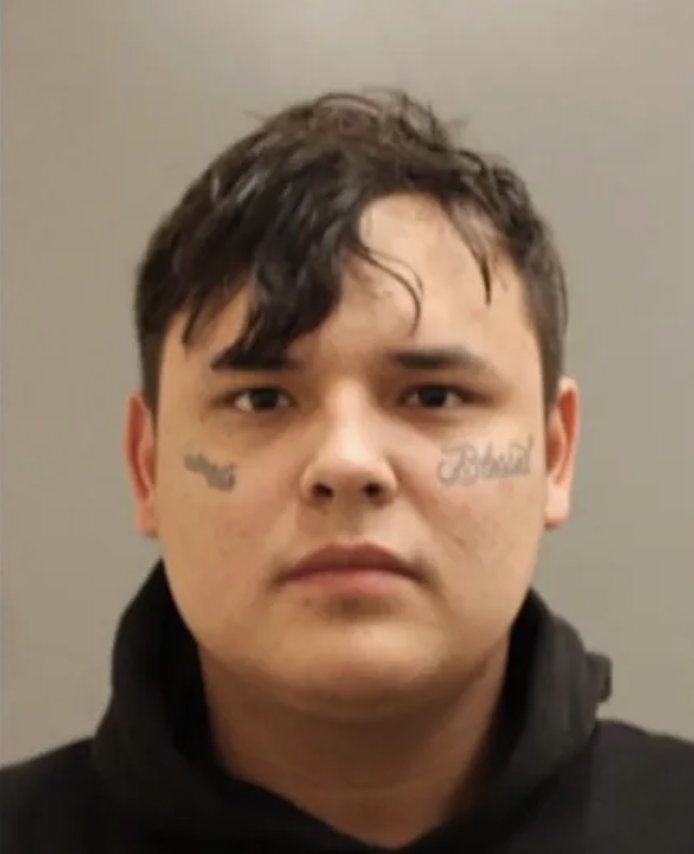
According to an agreed statement of facts, Moyah, who is from Alberta and was involved in the illicit drug trade, believed that Roland had stolen money from him, although there is no evidence that was true.
Moyah told one person that he planned to shoot Roland in the leg with birdshot to teach him a lesson. He told another person that he planned to drive Roland out to the highway to leave him there naked, forcing him to walk back to town in the cold, alone.
Advertisement.
Advertisement.
On the evening of January 15, 2022, when the temperature was below -20C, Moyah and Julia Fabian drove Roland to a remote area outside Hay River on Lagoon Road.
Moyah and Roland exited the vehicle. While the agreed statement of facts states it was unclear what words were exchanged or how things unfolded, Moyah admitted to shooting Roland in the upper right thigh with a 12-gauge shotgun using birdshot ammunition.
Afterward, Moyah got back into the vehicle and instructed Fabian to drive away. Roland was able to cling to the rear passenger side door until the vehicle crashed into a snow bank, after which it drove away in the direction of Hay River.
Roland walked three quarters of a kilometre back toward the town before he collapsed.
An autopsy determined Roland died of blood loss due to the close-distance gunshot wound to his upper thigh.
RCMP began investigating after a motorist informed police they had found a man’s body on Lagoon Road shortly before 9am on January 16.
Following the shooting, Moyah fled to Alberta and RCMP issued a Canada-wide warrant for his arrest. Shortly afterward, police arrested Moyah in Alberta and subsequently charged him with murder in Roland’s death.
At the time of the crime, Moyah was under a probation order. His probation officer said he did not appear to take the order seriously or be motivated to comply with the conditions.
Advertisement.
Advertisement.
‘I’m very sorry for what happened’
Moyah told the author of a pre-sentencing report that he takes responsibility for what he did, feels deeply ashamed for causing Roland’s death, and often thinks of Roland and his family.
“I’m very sorry for what happened. If there was a way I could take my life to give back Roland’s, I would,” he was quoted as saying.
“I’m very sorry for the pain I put them through and I really wish I could take that night back.”
Moyah said he did not know Roland well, and claimed they met after he sold Roland drugs and hung out with him for a couple of days.
Moyah said he had a large quantity of Xanax pills, alcohol and cocaine in his system at the time of the crime.
He said while he does not fully recall what happened due to being intoxicated, he knew immediately that what he did was wrong.
Moyah said he was angry at Roland and wanted to teach him a lesson, but “things went too far.”
Moyah said he has struggled with substance abuse “since he was old enough to figure out how to get drugs and alcohol” and began selling drugs at the age of 18.
Advertisement.
Advertisement.
Moyah said he wants to change his life, be a good role model to his children, and not return to that lifestyle. He has completed his Canadian Adult Education Credential and programming including substance use management while incarcerated at the North Slave Correctional Complex.
“Back then, I enjoyed the money and the drugs but, now that I’m sober, I realize I don’t need the drugs and I can make money doing other things,” he said.
“I don’t want my kids and my family to be ashamed of me. I’m glad I turned myself in and went to jail because, if I was out, I’d probably be dead by now.”
Moyah has been involved in multiple “negative events” at the Yellowknife jail, including being disrespectful and swearing at correctional officers, physically fighting with other inmates and possessing contraband.
The pre-sentencing report states that Moyah is a member of Frog Lake Cree Nation in Alberta and has family members that attended residential school. The report said there are links between Moyah’s familial residential school history and his involvement in the criminal justice system.
Moyah said he would like to learn more about his Indigenous background and pass on that knowledge to his children.
He said, in the future, he is interested in applying to a trade school to become a journeyman pipefitter or welder.
